Choking game cases among students: Dubai session for parents highlights who is at risk, what gives them the high
DHA holds first-of-its-kind parent session, launches AI video in wider prevention drive
Dubai: More than 1,000 parents in Dubai on Thursday evening attended a virtual parental awareness session that is described by parents as a first-of-its-kind.
Organised by the Dubai Health Authority (DHA) in partnership with the Knowledge and Human Development Authority (KHDA), the session revealed concerning details about the dangerous trend of choking game incidents among students.
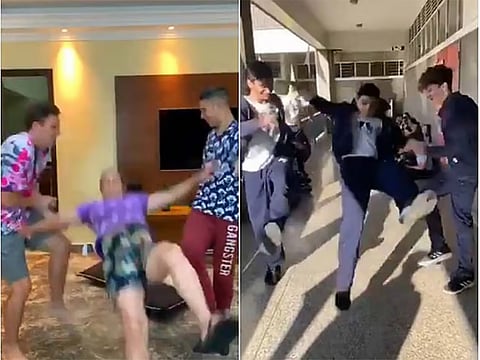
This followed a recent warning issued to Dubai schools about such risky games trending on social media including the viral Skull Breaker challenge that has recently re-emerged.
During the session, the release of an AI-generated awareness video and plans for school-based activities were also announced.
However, no details about any harm to children here were announced.
What is it?
There have been documented cases of deaths linked to the choking game in several countries.
The choking challenge, also known as the blackout challenge, pass out challenge or knockout game, involves children intentionally restricting oxygen and blood flow to the brain to induce dizziness or euphoria, explained psychologist Simran Bhambhani from Monarch Health Centers.
"This represents a developmental vulnerability rather than bad behaviour," she said while leading the awareness session organised by DHA's Public Health Protection Department.
Who is at risk?
Cases have been documented in children as young as seven, though the practice most commonly affects those aged 10 to 16.
When parents asked whether boys or girls were more involved, Bhambhani said cases showed no gender difference.
Children highly sensitive to peer pressure, high-sensation seekers and adolescents with developing impulse control are particularly at risk, the psychologist warned.
Euphoria, seeing stars
The session highlighted a critical misunderstanding: what children perceive as a harmless "high" is actually a neurological crisis.
"Sensations of euphoria or 'seeing stars' are signs of brain cell distress," Bhambhani explained.
She said dizziness and lightheadedness are symptoms of acute hypoxia, a condition where the body or a part of the body is deprived of sufficient oxygen at the tissue level. “The [adrenaline] “rush” reported by children is actually a physiological crisis,” she pointed out.
It was emphasised that the brain is struggling to maintain basic functions during these moments, with brain cells beginning to die within minutes of oxygen deprivation.
The longer children can hold the choking position before fainting, the more they consider it a “win,” a particularly dangerous misconception, officials pointed out.
Why is it dangerous
The challenge is particularly difficult to detect because it involves no substances, typically happens in private spaces like bedrooms or bathrooms, and children often don't perceive it as dangerous enough to mention.
Medical consequences extend far beyond the immediate event, officials warned, including potential memory loss, cognitive impairment, difficulty concentrating, academic decline, behavioural changes and permanent neurological damage.
Warning signs
Parents were urged to watch for physical indicators including bloodshot eyes, small red spots around the eyes, unexplained marks or bruising on the neck, and frequent severe headaches or disorientation after time spent alone.
Behavioural red flags include unusual interest in ligatures such as belts, ropes or scarves, excessive time behind locked doors, and sudden social withdrawal or secretive behaviour.
How to talk it out
The expert stressed that parents should initiate conversations even if children are not on social media, as the challenge spreads through school peers and after-school activities. The key is education without instilling fear.
For children under 12, parents should focus on how the brain needs oxygen to function and explain that not all games are safe games. For teenagers, discussing the medical facts together helps develop critical thinking skills.
Crucially, parents must avoid accusatory phrases like "how could you be so stupid?" or threats such as "you'll be in big trouble." Instead, creating a safe space where children can report concerns about peers without the fear of punishment or feelings of betrayal is essential.
"Early and informed conversations actually save lives," Bhambhani stressed, encouraging parents to approach the topic without fear-based language.
The psychologist recommended phrases like "I'm worried about this because I care about your safety" and "Have you or your friends heard about this challenge?" rather than accusatory or dismissive statements.
The session emphasised that silence increases risk, and proactive, informed conversations remain the most powerful tool for prevention.
Prevention campaign
Officials revealed that DHA has released an AI-generated video featuring a boy addressing students about the risks of dangerous trends and dares. The boy wearing a kandura talks about how one risky trend or one wrong move can cause real harm.
“You don’t need a challenge to fit in…you don’t need a dare to impress anyone. Choose what lifts you up, not what puts you at risk. Choose safety over [peer] pressure,” he says among the messages meant for students.
Officials also confirmed plans to release additional awareness materials and conduct school activities in partnership with KHDA.
An Arabic-language online awareness session is scheduled for next week.
How to get support
Parents seeking support can contact DHA at info@dha.gov.ae or reach out to licensed mental health facilities across the UAE.


