Back to school UAE: How children with autism are finding safety with support from parents and educators
The child isn’t choosing to react; the nervous system is replaying the alarm
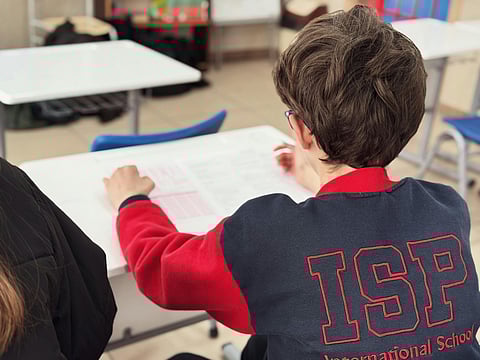
For seven years, Qurratulain Jawad’s son was homeschooled.
As she explains, “It was a big transition for him. We also wanted him to use the school bus to build independence, but he had never used one before,” she explains. And so, she requested the centre if she could accompany him on the bus for first few days. “They were kind enough to allow it. I went with him on the bus for just one day, and he settled sooner than expected. That initial support made a difference.”
It did, especially after weeks of disrupted routines during the US-Israel-Iran war, when schools were shut for over a month and learning moved online, her son began to look forward to returning. “Speaking from my experience, my son is non-verbal, and enjoys school very much. He goes to a Special Needs School,” adds Jawad. “When school reopened, he was very excited to return. He felt happy and more relaxed in a structured environment, which had been disrupted during that period.”
'The child isn't always choosing to react, the nervous system is replaying the alarm'
So, in this case, returning to school actually helped his nervous system relax.
And on days when that calm feels fragile, comfort travels with him, in the form of a toy. “He has had the toy since he was two months old, and it is very dear to him. It helps him feel safe and comfortable,” explains Jawad.
When there are jets, sirens, heavy sounds, and vibrations, children on the autism spectrum can respond very differently. For some children who are verbal, you can offer verbal reassurance repeatedly; both in the moment and when they later recall the sensory experience...

And yet, even with that sense of safety, the return can be rife with a sense of unease. For neurodivergent children, especially those on the autism spectrum, the classroom is is a sensory environment, one that can quickly become overwhelming.
As Jawad says, “When there are jets, sirens, heavy sounds, and vibrations, children on the autism spectrum can respond very differently. For some children who are verbal, you can offer verbal reassurance repeatedly; both in the moment and when they later recall the sensory experience.”
However, the impact of those sounds does not fade quickly. Children do not only remember frightening events through words or images, explains Dr. Rita Figueiredo Licensed Psychologist and Managing Director of Peninsula Psychology. "They can also remember them through the body. A sudden loud sound can become linked with fear, confusion, or a sense of danger. Later, a similar sound such as a school bell, a chair scraping, a loud announcement, or children shouting in a corridor may trigger the same alarm response."
It is common for children to re-express this later through play, repeated questions, increased startle responses, or avoidance of certain environments. This is the nervous system trying to process and make sense of what happened.
As Dr Vivek Mundada, Consultant Paediatric Neurologist at Medcare Royal Speciality Hospital, explains, sudden, intense sounds activate the brain’s threat-detection circuitry, the amygdala and limbic system, encoding the experience with a strong emotional tag.
“In neurodivergent children, this circuitry is often more reactive and less easily switched off, so the memory of a siren or a low-flying jet can resurface days or weeks later, triggered by something as small as a car horn, an aeroplane overhead, or a fire drill at school. The child isn’t choosing to react; the nervous system is replaying the alarm,” he says.
Reassurance without words
Care doesn’t always need words. It needs to be felt. As Jawad adds, for children who are non-verbal, it can be a lot more complex. In her son’s case, he needs physical assurance like a hug or a cuddle.
And as she also reminds other parents, if you are outside and such situations occur, the responsibility lies on the adult to remain calm. “If you panic, the child may not react to the noise itself but to your visible anxiety, which can increase their distress. So staying calm during these moments is very important.”
That calm, experts say, must continue long after the moment has passed. As Dr Mundada adds, when the child expresses fear, adults should acknowledge it, rather than minimising it. “Avoid long, detailed rehashing of the event, as this can deepen the memory trace. Instead, anchor the child in the present: a slow breath, a familiar object, a predictable routine, physical closeness if welcomed,” he says.
Sudden, intense sounds activate the brain’s threat-detection circuitry, the amygdala and limbic system, which encodes the experience with a strong emotional tag. In neurodivergent children, this circuitry is often more reactive and less easily switched off, so the memory of a siren or a low-flying jet can resurface days or weeks later, triggered by something as small as a car horn...

Moreover, children regain confidence when the adults around them are calm, aligned, and predictable. Parents and teachers should communicate early, especially if a child is sensitive to sound, has a diagnosis, or was already struggling before the disruption, explains Dr. Rita Figueiredo.
The first days back should not be treated as a return to 'business as usual' for every child. Some children may need a softer landing and more support. This can include a morning check-in, a known safe adult, advance warning before loud activities, a quiet place to reset, or a visual schedule that shows what will happen next.
The transition period
School can, in many cases, become a place of safety.
However, getting there isn’t always immediate. The return can take time.
As Dr Vivek Mundada explains, the autonomic nervous system in many neurodivergent children is already working harder than in their peers to regulate arousal, attention, and sensory input. A prolonged break, especially one that includes frightening events, can further destabilise that system.
As a result, the transition can be difficult. A period of regression may last one to three weeks, showing up as meltdowns, shutdowns, clinginess, disrupted sleep, bedwetting, reduced appetite, or increased stimming.
Beneath it all, the nervous system is under load.
Many neurodivergent students experience heightened sensory sensitivity. Practical tools such as noise-cancelling headphones, sunglasses, fidget tools, scheduled quiet breaks, and access to low-stimulation study areas can significantly reduce overload. Equally important are self-advocacy strategies, encouraging students to communicate preferred learning environments, processing time, or adjustments early in the semester....

Stimming, short for "self-stimulatory behavior," refers to repetitive physical movements, sounds, or actions used to manage emotions, sensory input, or stress.
Reading the signs: What stimming tells us
Often, that load reveals itself in ways that are easy to misread. Most children on the autism spectrum have specific stimming habits, and these vary from child to child, adds Jawad. “Some may make loud noises, others may move their hands in certain ways, and some may start jumping.” It helps regulate their nervous system.
When they experience a sensory overload, one of the first signs is an increase in their stimming. It is far more frequent or intense than their baseline behaviour. “Some children may also have multiple stimming habits, each helping them regulate different aspects of what is overwhelming them. So, increased stimming is often the earliest indicator,” she says.
Clinically, the distinction matters. “Sensory overload is involuntary; defiance is volitional,” Dr Mundada explains. A reliable test: if the behaviour improves rapidly once the sensory trigger is removed , the child is taken to a quieter area, for example, that points strongly to overload rather than defiance.
Why predictability becomes protection
What helps most, across home and school, is consistency.
As Dr. Kirin Hilliar, Assistant Professor of Psychology at Heriot-Watt University Dubai, OpenMinds Psychiatry, Counselling and Neuroscience Centre puts it: As students on the autism spectrum return school and university following regional conflict and disruption, they require a sense of predictability and psychological safety. “Families and educators should focus on gradual re-entry routines, clear communication about expectations, and opportunities for students to visit school or university campus spaces in advance where possible,” she says.
Finding relief through small tools
For many children, the challenge is sensory. So, the practical tools involve noise-cancelling headphones, sunglasses, fidget tools and scheduled quiet breaks, access to low-stimulation study areas that can significantly reduce overload, explains Dr Hilliar.
It’s what Jawad has built into her son’s life: “He is also sensitive to noise, so we use noise-cancelling headphones, especially during running events where there are loud announcements. These small supports can make a significant difference,” she says.
Apart from noise-reducing headphones, preferential seating away from doors, windows, and softened lighting help, along with reduced wall clutter in the child’s direct line of sight, and scheduled movement breaks every 30-45 minutes.
That sense of predictability can be reinforced through the environment itself.
The power of communication
Yet, tools and routines can only go so far. What holds everything together is the power of communication. Each child has different sensitivities, triggers, and responses, which is why a personalised approach is essential.
No two children on the autism spectrum respond in the same way, emphasises Jawad. “Strong communication between parents and teachers is key. In our case, instead of formal meetings, we rely on regular voice notes. If I observe something, I inform the teacher, and she does the same,” adds Jawad.
She recalls one instance when her son was unusually disengaged and low in energy. “His teacher reached out because it was unlike him. When I reflected, I realised he had not slept well the night before. Once we addressed his sleep, many of the issues were resolved.”
Parents and teachers should compare notes rather than work separately, explains Dr. Rita Figueiredo. What happens before school? What happens at drop-off? What happens during the school day? What happens after school? Patterns across settings usually reveal more than any single incident.
If symptoms persist, intensify, or significantly interfere with daily functioning, it is appropriate to involve a mental health professional, and for neurodivergent children, possibly an occupational therapist as well.
After a period of heightened alertness, children need more than reassurance. They need structure, sensory support, clear communication, and adults who work together. Safety is rebuilt through repeated experiences of predictability.
Designing safety into schools
The same emphasis on care and communication is now being built into schools themselves.
At Al Khaleej International School, it is carefully built into daily practice. As Muna Hajir, Elementary Assistant Principal, who oversees the inclusion department, says, “At our school, supporting neurodivergent students, including those with ADHD and other needs, is a priority, especially during transitions such as the recent return to on campus learning,” says Muna Hajir.
They take a proactive approach to ensure that all students feel safe. “For example, school wide emergency announcements are delivered as spoken messages in a calm, neutral tone, whether prerecorded or live, rather than loud alarm sounds, and are intentionally designed to be clear without being startling.”
In addition, the teachers are trained in emergency procedures and explicitly prepare students in advance. This includes the use of visuals in presentations and age appropriate explanations of different scenarios, so students know what to expect. For Students of Determination, staff are also provided with simple, reassuring scripts such as ‘Stay with me, you are safe’ which help reduce anxiety and provide consistency in moments of uncertainty.
A similar approach is echoed at Arcadia British School, where safety is personalised. As Chad Witcomb, Assistant Headteacher of Inclusion and Wellbeing explains, “At Arcadia British School, we have created detailed, personalised safety plans for our neurodivergent students. These plans have been designed in line with their Individual Education Plans (IEPs) and Educational Psychologist assessments. Some recommendations on plans include having quick access to ear-defenders, reading social stories and additional practising of the evacuation procedure with trusted adults.”
Support continues beyond planning and into everyday interactions. “During the first week back at school, our neurodivergent students have received personalised sessions and check-ins with our dedicated Inclusion Teachers, School Counsellors and Pastoral Mentors. The sessions have created a sense of safety and reassurance for the students, which has allowed them to flourish in their lessons.”
“It has been wonderful seeing all of our students back in school, and we are particularly proud of how well our neurodivergent students have settled back into their learning.”
School wide emergency announcements are delivered as spoken messages in a calm, neutral tone, whether prerecorded or live, rather than loud alarm sounds, and are intentionally designed to be clear without being startling.Muna Hajir, Elementary Assistant Principal at Al Khaleej International School
Calm, not alarms: Rethinking emergency responses
Regular drills are conducted throughout the year to build familiarity and confidence for all students, too as Hajir says. “During last week’s return to school, teachers practiced sheltering in the closest safe zone several times with their students, in addition to a whole school shelter in place drill. These practices ensure that responses become predictable rather than alarming.”
Teaching regulation, not just discipline
There’s also an emphasis on self-regulation techniques. The teachers are familiar with strategies, such as box breathing, and equipped with classroom resources, including sensory tools, fidget toys and where needed, noise cancelling headphones to help students manage sensory input and anxiety levels, adds Hajir.
“Students who require additional support have individualised Personal Emergency Evacuation Plans, PEEPs. These plans are carefully designed, shared with relevant staff, and implemented alongside the support of Learning Support Assistants to ensure each student’s needs are fully considered.”
We have created detailed, personalised safety plans for our neurodivergent students. These plans have been designed in line with their Individual Education Plans (IEPs) and Educational Psychologist assessments.Chad Witcomb, Assistant Headteacher of Inclusion and Wellbeing at Arcadia British School
When a child resists returning to school, adults should avoid jumping to one explanation. Anxiety, sensory overload, and trauma-related responses can overlap. The key is to ask: what is the child trying to avoid, and what happens in their body when school is mentioned?
When words aren’t enough
A little story time is balm. The frightening experiences might just recede.And for non-verbal children, physical reassurances such as hugging, holding hands and guiding calmly helps them. You let them know that you are there for them. Everything will be okay, says Jawad.
And let the child lead, adds Dr Mundada. “Some children need to talk; others need not to. Forcing a conversation, or repeatedly checking ‘how are you feeling about what happened?’, can embed the memory more deeply in children who already replay sensory events.”
Creating spaces that don’t overwhelm
Safety has a language.
These sensory safe adjustments are dependent on the needs of the child, so they cannot be generalised. Every child has different sensory activities. Yet, what does work, is decluttering, says Jawad. “During periods of heightened alertness, if a child needs to move quickly or exit a space, a clutter-free environment helps them do so easily. It also reduces sensory overwhelm.”
If a child knows that a certain sound means they need to leave, the pathway should be clear and familiar. The specifics may vary, but the goal remains the same: to remove friction, not add to it.
And then, there is one rule that underpins everything else, protect sleep.
As Dr Vivek Mundada explains, “Sleep is when the brain processes and consolidates stressful input; without adequate sleep, the sensory threshold drops further the following day and a cycle of dysregulation sets in.”
Finally, safety moves beyond just what the child is told, it is about what their body is able to feel.


