Parents cannot raise resilient children in a society that leaves them to struggle alone
From digital exposure to financial stress, modern parenting demands stronger support
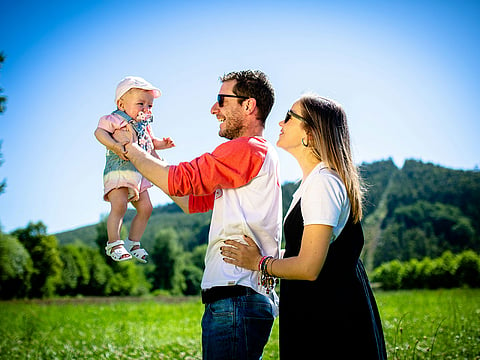
Every parent knows the quiet pressure of wanting to get it right. It is there in the morning rush before school, in the late-night worry after a difficult conversation, in the decision to stay firm when it would be easier to give in, and in the hope that every sacrifice made today will help a child grow stronger tomorrow.
Parenting has always carried responsibility. What has changed is the weight of the world around it.
For previous generations, parenting was often shaped by proximity. Families lived closer, routines were more predictable, and children grew within a wider circle of grandparents, relatives, neighbours and community figures who helped carry the responsibility of care. Parents still faced hardship, uncertainty and sacrifice, but the pressures around childhood were easier to see and, in many ways, easier to contain.
Fast-changing environment
Today’s parents are raising children in an environment shaped by digital exposure, academic pressure, financial responsibilities, fast-changing social norms and constant comparison. Many are caring for children while also supporting ageing parents, managing demanding careers and trying to protect the emotional wellbeing of the household. The family remains the safest place for a child to grow, but even the strongest homes can feel the strain when pressure becomes constant.
Globally, this strain is becoming clearer. The World Health Organisation estimates that one in seven young people aged 10 to 19 experiences a mental disorder, with anxiety, depression and behavioural disorders among the leading causes of illness and disability in adolescence. UNICEF has also stressed that protecting children’s mental health must include support for parents and caregivers.
Global Day of Parents
That is why the conversation on Global Day of Parents must move beyond appreciation. Gratitude matters, but it is not enough. A society cannot ask parents to raise resilient children while leaving parents to navigate constant pressure alone.
And this matters deeply for the UAE.
When we speak about strong societies, we often speak about education, healthcare, employment and community development. These are essential. But before a child reaches any of these systems, they first experience society through their parents. The home is where a child learns safety, trust, discipline, empathy and belonging. In that sense, parenting is the first layer of social infrastructure. If that layer is under constant pressure, the impact does not remain inside the home. It eventually reaches schools, workplaces, communities and public systems.
Family stability
As the nation marks the Year of Family, we are reminded that family stability is not a sentimental idea. Strong families shape confident children, connected communities and a society that can face change without losing its values. In the UAE, where family cohesion, respect, care and intergenerational connection remain central to our social fabric, the Family Care Authority continues to play an important role in strengthening family wellbeing and empowering parents, who remain at the heart of carrying these values forward.
Yet we must be honest. Celebrating parents cannot mean placing every burden on them.
For too long, society has treated parenting pressure as a private matter. If a child is struggling, parents are expected to know what to do. If a household is tense, parents are expected to absorb it. If a young person is anxious, withdrawn or overwhelmed, parents are expected to respond with patience and strength, even when they themselves are exhausted.
This is where our thinking must change.
Parents do not need judgement. They need guidance. They need safe spaces to ask questions early, before challenges become crises. They need access to counselling, family guidance, protection services and integrated community programmes that recognise the realities of modern family life. They need systems that see the family, rather than responding only when something has already gone wrong.
Parents hold the first and most lasting influence in a child’s life. Our responsibility as a society is to ensure they do not have to hold that responsibility alone.

Salama Al Ameemi is Director General, Family Care Authority – Abu Dhabi


