Dileep case verdict controversy: Anonymous letter sparks judgment leak, triggers legal uproar
Alleged judgment leak and courtroom controversies keep the Dileep trial in the spotlight
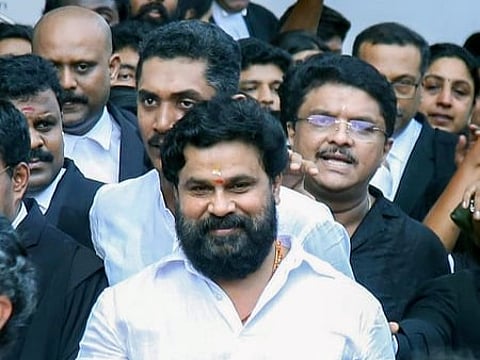
The Dileep case, one of Kerala’s most high-profile legal battles, ended with the Malayalam actor’s acquittal in the 2017 abduction and sexual assault case. While six others, including prime accused Pulsar Suni, were convicted, the verdict has sparked intense public debate. Controversies over an alleged judgment leak, courtroom conduct, and the handling of sensitive evidence have kept the spotlight on the trial.
Advocates, legal experts, and citizens have voiced strong opinions—some questioning the authenticity of an anonymous letter predicting the verdict, others condemning courtroom celebrations, and many praising the survivor’s courage. The case continues to raise important questions about judicial transparency, integrity, and the delicate balance between confidentiality and justice.
Anonymous letter raises leak alarm
Ahead of the verdict, the Kerala High Court Advocates’ Association (KHCAA) forwarded an anonymous letter to the Chief Justice on 2 December, raising concerns that the judgment had been leaked. Signed by “Indian citizen,” the letter detailed the case timeline: from 2018 to 2025, the 7th accused was Charly Thomas, leaving nine remaining accused.
It predicted the discharge of the 8th accused, Gopalakrishnan (alias Dileep), and the 9th accused, Sanilkumar (alias Mesthiri Sanil), while six others would be convicted.
The letter also made several disparaging claims about Judge Varghese, questioned the fairness of the trial, and alleged that the judgment was prepared with the involvement of Judge Varghese’s associate, Mrs. Shirley, and shared with Sarath, a hotel businessman connected to the 8th accused. It further named senior Kerala High Court judges—Justice Muhammad Mushtaq, Justice Jayasankaran Nambiar, and Justice Raja Vijayaraghavan—as allegedly encouraging Judge Varghese, which drew widespread public attention.
KHCAA response: Advocate seeks probe
KHCAA President Advocate Yeshwanth Shenoy clarified that the letter was forwarded strictly to address a potential breach of confidentiality and not to question the integrity of Judge Varghese or the lawyers involved. He confirmed receiving the letter via registered post on December 6 and forwarding it to the Chief Justice on December 8, 2025.
On social media, Shenoy explained: “The subject clearly mentioned 'Potential Breach of Confidentiality,' and the letter sought an inquiry only into the leak of a judgment before it was pronounced. I have never questioned the integrity of the Judge or the advocates who all laboriously worked close to a decade to complete the trial. Every advocate has to ensure the integrity of the judicial system, and only then will ‘We the People’ have faith in the system.”
He emphasised that the focus was on protecting judicial integrity, not on the case outcome or the judge’s conduct, noting that past incidents of alleged unauthorised access to court evidence underline the need for vigilance.
Legal observers say the claims, even if unverified, highlight public concerns about transparency and confidentiality in high-stakes cases. The Kerala High Court is yet to announce whether a formal inquiry will be initiated.
Questions over the anonymous letter
The verdict and the anonymous letter triggered strong reactions. Advocates and citizens voiced support for the survivor while raising concerns about confidentiality and courtroom conduct.
Several advocates questioned the authenticity of the anonymous letter forwarded by KHCAA President Yeshwanth Shenoy, warning that if it were fake, forwarding it could have serious consequences.
Advocate Antochan Adipuzha voiced strong dissent, questioning whether the letter had been verified before being sent to the Chief Justice, and asking, “If fake, what are the consequences?” Similarly, advocate Vijayamohan Kaippallil queried whether Shenoy received the hard copy on December 6 or only saw a photocopy circulating in WhatsApp groups before the 8 December verdict, noting that an early leak would require immediate enquiry.
These comments reflect concerns within the legal community about potential breaches of confidentiality and the implications of circulating unverified claims ahead of a high-profile verdict.
Criticism of courtroom celebrations
Lawyers have voiced strong disapproval of the celebrations following Dileep’s acquittal, arguing that such behaviour undermines the dignity and decorum of the courtroom.
Advocate Dhanuja M. Sasi commented: “Judgments are not always perfect… He was set free due to lack of evidence, not declared innocent. The dignity of the gown matters. Let the case be won or lost, but public celebration in court is unacceptable.” #StrictlyMyPersonalView
Support for the survivor
Many legal experts praised the survivor’s courage. Advocate Boby M. Sekhar wrote on social media: “You became a symbol. Your fight wasn’t just yours, it became ours… Yet even when predators walk free, I’m not ready to lose hope. Because you fought!! You refused to stay silent.”
Verdict and ongoing debate
The Dileep case continues to spark discussions on judicial integrity, courtroom procedures, and survivor rights. Allegations of a judgment leak and courtroom conduct have intensified public scrutiny, highlighting the delicate balance between transparency, confidentiality, and justice.
Judge Honey Varghese under spotlight
The trial, under intense media scrutiny, faced criticism: emotionally taxing testimony, undervalued evidence, late-night cross-examinations with 30+ defence lawyers, and delayed forensic reports. Transfer requests were denied.
Controversies linger: Delays in a 2020 forensic report, prosecution challenges, and questions about political influence persisted. Two Special Public Prosecutors resigned amid dissatisfaction.
Judge’s evidence-focused approach: Judge Varghese blends firmness with empathy, especially in domestic abuse cases. She has stated that conviction is the prosecutor’s responsibility to society, not just the court.
Verdict outcomes: Dileep and three others were acquitted; six—including Pulsar Suni—were convicted of rape, abduction, criminal conspiracy, and outraging modesty. Dileep claimed he was framed, implicating his ex-wife and a senior police officer, and criticised media reports as “baseless.”
Next steps and reactions
Women’s rights groups expressed disappointment. The Kerala government and prosecution plan to appeal, reaffirming support for the survivor. Retired IPS officer B. Sandhya highlighted the challenges of proving conspiracy but said the investigation addressed systemic issues in the Malayalam film industry.
Ongoing debate
The case continues to fuel discussions on judicial transparency, handling of digital evidence, and public expectations in high-profile trials.
Reactions and next steps
Women’s rights groups expressed disappointment over the acquittal. The Kerala government, along with the prosecution, plans to appeal, reaffirming support for the survivor.
Retired IPS officer B. Sandhya, who led the investigation, highlighted the challenges of proving conspiracy in high-profile cases but noted that the probe addressed systemic issues in the Malayalam film industry.
The case continues to fuel debate on judicial transparency, handling of digital evidence, and public expectations in sensitive trials.


