Dubai has 96,585 homes entering the market in 2026, 83% are already sold
Nearly 83% of 96,585 homes due this year are sold, with villas at 95%
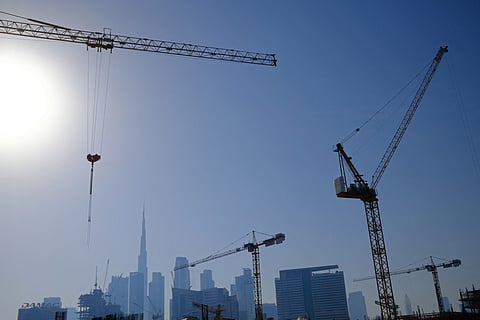
Dubai: More than eight in ten homes scheduled for completion in Dubai this year have already been sold, with villas recording a 95% absorption rate and several residential areas reaching 100%, according to a new market analysis from fäm Properties.
Get updated faster and for FREE: Download the Gulf News app now - simply click here
Of the 96,585 homes due for handover in 2026, 80,127, or 82.9%, have already been sold. The figure includes 91,209 apartments, with an absorption rate of 82%, and 5,376 villas, where 95% have been sold.
Dubai has a substantial pipeline of new housing under construction. A total of 564,072 residential properties are currently being built across the city, with most scheduled for handover by 2028.
Of those homes, 425,863, or 75.5%, have already been sold.
Villas record stronger absorption
Demand has been particularly strong for villas, according to the analysis.
Of the 68,297 villas currently under construction, 58,349 have been sold, giving the segment an overall absorption rate of 85.4%.
Apartments account for the bulk of the construction pipeline, with 495,775 units being built across Dubai. Buyers have already purchased 367,514 of them, representing an absorption rate of 74.1%.
Investors commit to buying properties before completion because they have confidence in Dubai, its transparent regulatory framework and the consistent quality being delivered by developers.Firas Al Msaddi, CEO of fäm Properties
Some areas reach 100% for 2026 handovers
Data from DXBinteract shows that some areas have already sold every home scheduled for delivery this year.
Al Wasl has recorded a 100% absorption rate for 637 apartments due for handover in 2026.
Several villa communities have also reached full absorption, including Wadi Al Safa 5 with 854 villas, Nad Al Sheba First with 235 and Al Hebiah Sixth with 476.
Palm Jumeirah has sold 93.5% of the 2,397 apartments scheduled for completion this year, while Jumeirah Lakes Towers has sold 92.8% of its 2,324 units due in 2026.
Downtown Dubai and Business Bay see strong sales
High absorption rates are also being recorded in two of Dubai's major apartment markets.
Downtown Dubai has 6,248 apartments under construction, with 92.2% already sold. Among the 3,981 apartments scheduled for handover there this year, the absorption rate rises to 96.6%.
Business Bay has a much larger pipeline of 30,317 apartments currently being built, of which 82.8% have been sold. The absorption rate reaches 88.7% among the 16,938 apartments due for delivery this year.
Other areas recording high absorption rates for apartments under construction include Ras Al Khor, where 93.5% of 6,950 units have been sold, and Al Barsha South 2, where the rate stands at 85% across 12,655 apartments.
Villa communities see rates above 94%
Several villa locations are recording absorption rates above 90% across homes still under construction.
Al Hebiah Fifth has sold 98.7% of 2,060 villas, while Nad Al Sheba First has reached 98.2% across 1,569 units.
Wadi Al Safa 5 has recorded an absorption rate of 96.4% across 8,216 villas, while Al Yufrah stands at 94.7% across 6,429 units and Dubai South at 94.5% across 5,698.
Al Msaddi said Dubai's population and wealth base were also supporting its appeal to buyers.
“Dubai’s population has now surpassed 4.58 million, and that it’s now home to more than 80,000 millionaires. All this reinforces Dubai’s position as one of the world's most attractive destinations to live, work and invest.”
Dubai adds more homes
The high absorption rates come alongside a rise in new housing supply across Dubai. Dubai Land Department data showed that 24,537 new real estate units were completed in the first half of 2026, up more than 36% from 18,043 during the same period last year.
A total of 104 real estate projects were completed during the six months, compared with 75 in the first half of 2025, an increase of more than 38.7%. Their combined investment value exceeded Dh111 billion, up 52% from Dh73 billion a year earlier.
Completed and ready-for-handover built-up area increased by more than 23.4% to 1.95 million square metres, compared with 1.58 million square metres in the first half of 2025.
The value of land allocated to projects also rose to Dh19.46 billion from Dh8.27 billion a year earlier, an increase of more than 135%.