Condo or house-and-lot for OFWs? What 'honeymoon' finance means as home loan rate battle heats up
Which Philippine bank offers the better deal for OFWs and homebuyers?
MANILA: “Honeymoon” rates offered by banks and lenders can look enticing on paper.
For "Kabayans" planning to buy a house, condominium or lot — including overseas Filipino workers (OFWs) — the real cost of a home loan often emerges after the introductory period ends.
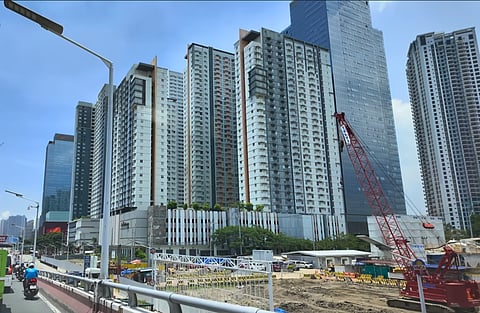
Currently, Metro Manila’s condo market is facing a glut, though prices remain sky-high, with industry watchers expecting a potential "correction" of up to 40%.
Take note: The current environment favours a selective buyer, instead of those who go for a broad “buy anything” strategy.
Get it: Fast, verified news for FREE ... download the Gulf News app — simply click here
The apparent edge of certain banks offering "honeymoon" (i.e. lower initial rates) financing is meaningful only if reckoned over the full term of the "marriage" (payment period).
For an OFW, a three- to five-year fixed period is usually the more prudent comparison point: it gives payment certainty while avoiding the higher cost of locking in a rate for 10 years or more.
For borrowers, especially OFWs facing uncertainty in foreign employment, it’s best to obtain a written loan disclosure and projected monthly amortisation before paying a reservation fee.
Here, we run the latest published home loan schedules, comparing the lowest advertised short fixed rate, and published long-term fixed-rate menu.
Home loan rates (selected lenders)
| Bank | 1-year fixed | 3-year fixed | 5-year fixed | 10-year fixed | READ THIS CAREFULLY |
|---|---|---|---|---|---|
| BDO | 6.00% promo | 6.50% | 7.75% | 8.50% | Promo stated for loans booked by March 31, 2026; annual repricing follows the initial period. |
| Security Bank | 7.00% | 7.25% | 7.75% | Not shown | Official schedule for regular home loans; the website also markets a 6.99% low rate. |
| BPI | 7.00% | 7.75% | 8.00% | 10.25% | BPI’s July promo, now expired, had offered 6.50% for a 1-year fix, 7.00% for two years and 7.25% for five years. |
| PSBank | 7.00% | 7.25% | 7.50% | 9.25% | For acquisition/construction loans; it also lists 15-, 20- and 25-year options. |
| China Bank | 7.50%* | 7.50% | 8.00% | Not shown | HomePlus lists 7.50% for 1–3 years and 8.00% for 4–5 years; no 10-year rate is shown. |
| EastWest Bank | 7.00% | 7.75% | 7.99% | Not shown | Indicative board rates; the bank says rates may change without prior notice. |
As of Sept. 1, 2026, unless otherwise stated | Sources: Published Bank Loan data
Why it's called a 'honeymoon' loan?
It simply means the borrower gets an attractive payment during the early years — the “honeymoon” period — when expenses associated with buying a house are often highest.
Once the introductory/fixed period ends, the loan gerts "repriced", potentially pushing monthly payments higher.
A real Philippine example of the concept is a payment plan, which deliberately starts with lower payments and increases them annually.
For a simple illustration, a ₱3 million, 10-year loan where payments rise from about ₱25,132 in Year 1 to ₱36,796 in Year 5; after the five-year fixed period, the remaining balance is repriced at the prevailing rate.
Condo or house-and-lot? As for the lateston Manila condo glut, industry tracker Colliers reported roughly 80,000 unsold condominium units in the second quarter, including 32,600 ready-for-occupancy (RFO) units. For buyers and OFW, this creates a potential bargaining power when buying RFO condo. Tip: Pick a location with real rental demand — near job centres, rail links, universities or hospitals.
Points to consider
Avoid buying solely on a promised rental yield: verify comparable rents, vacancy rates, association dues, property taxes, furnishing costs and an allowance for months without a tenant.
Know your use case: A house-and-lot is generally better if the goal is family use, a long holding period and land-value exposure, particularly in a well-connected “growth corridor”.
In other words, before comparing offers, it’s best to know your main objective – a home for family use, monthly rental income, or long-term capital appreciation.
Practical considerations for OFWs: It is usually less practical for an OFW seeking hands-off rental income (are you open to hiring a property manager?) because maintenance, security, tenant turnover and property management are more operationally demanding.
TIP: Shop around for the best home loan deals; take a closer look at the details. The actual gap between a 6% and 8% mortgage rate can translate into thousands of pesos in monthly payments. Potentially, it could mean paying hundreds of thousands more over the life of a loan.
BSP and timing
The Bangko Sentral ng Pilipinas (BSP) raised its target reverse repurchase rate by 25 basis points to 5% on Aug. 27, its third consecutive increase since April, as it sought to contain inflation risks tied to volatile oil prices and wage adjustments. The BSP also increased its overnight deposit and lending facility rates to 4.5% and 5.5%, respectively. Governor Eli Remolona Jr. said he hoped it would be the final increase in the current tightening cycle, but that is not a guarantee that bank mortgage rates will fall soon.
Before signing up for the home loan, it’s best to compare the repricing formula, fees and required down payment — not just the introductory rate.
But borrowers should look beyond the rate advertised in large print: the initial fixed rate is not necessarily the rate they will pay for the entire loan.
Ask for discounts, waived association dues, parking inclusion, furnishing packages, flexible equity terms or a lower all-in price.
What happens after the "cheap" rate expires?
This is where many prospective homeowners can underestimate the true cost of a mortgage. While rates are annual and typically reset after the selected fixed period, a 5-year fixed rate does not normally mean the borrower gets that rate for the entire 20- or 30-year loan. Once the fixing period ends, the loan can move to a repricing rate based on the bank's prevailing pricing.
Certain lenders explicitly state that a home loan shifts to "repricing" after the fixed-rate period. For borrowers, therefore, the real question is not simply "Which bank/lender has the lowest rate today?"
It is: "What rate will I pay after the promotional period, and how often can it be repriced?"
Pag-IBIG changes the comparison
Private banks are also facing competition from state-backed Pag-IBIG Fund, particularly for borrowers who qualify for its housing programmes.
Pag-IBIG has extended promotional housing rates in 2026, including 5.75% for open-market homes, while qualified borrowers under certain affordable-housing programmes can access rates as low as 4.5%.
Eligible socialised-housing borrowers under the Expanded 4PH programme can access a 3% annual rate.
Pag-IBIG home loan amount raised to ₱10 million: The government has also increased the maximum Pag-IBIG housing-loan amount to ₱10 million, broadening the financing available to qualified members. That makes Pag-IBIG particularly relevant to middle-income Filipino workers and OFWs who might otherwise assume that a commercial bank is automatically their best option.
Rates matter more for long-term borrowers: A rough calculation
Consider a simplified ₱5-million home loan over 20 years. At a hypothetical 6.25% annual rate, the monthly principal-and-interest payment would be roughly ₱36,600.
At 8%, it would rise to roughly ₱41,800. That's a difference of about ₱5,200 every month before insurance, taxes, bank charges and other costs.
Over a long repayment period, even relatively small differences in interest rates can therefore have a major effect on household cash flow.
Actual amortisation will vary depending on the bank's calculation method, fees, insurance, loan-to-value ratio, repricing provisions and the borrower's approved terms.
BSP rates: Uncertainty factor
The home-loan market is also being watched against the backdrop of monetary policy. The BSP's move to raise the target reverse repurchase rate by 25 basis points to 5.00% on Sept. 1, 2026 matters because commercial banks price loans against their funding costs and broader market conditions.
A borrower locking in a five-year rate is effectively buying protection against increases during that fixed period — but also accepting the possibility of a higher rate when the loan is "repriced".
BSP data show that lending rates in the Philippine financial system vary significantly depending on loan type and lender, reinforcing the importance of comparing the actual offer rather than relying on a single advertised rate.
What OFWs should watch
For OFWs, the calculation can be even more important because a home loan is often funded from income earned in a foreign currency.
A weaker peso can increase the peso value of remittances, but currency movements can also change the amount needed to service a peso-denominated loan when converted from dollars, dirhams, riyals, euros or other currencies.
Before signing, OFW borrowers should compare:
Fixed rate and fixing period
Rate after repricing
Maximum loan term
Monthly amortisation
Down payment requirement
Loan-to-value ratio
Processing, appraisal and registration fees
Mortgage redemption insurance and fire insurance
Prepayment or early-settlement penalties
Whether promotional rates require bundled products
The cheapest headline rate is not always the cheapest loan.
The property industry's bigger bet
Lower mortgage rates can potentially unlock demand from buyers who have been waiting for financing costs to become more manageable.
That is significant for developers, brokers and the broader property market because financing affordability directly affects how much house a buyer can afford.
The competition is particularly interesting as banks, developers and Pag-IBIG seek to attract buyers at different segments of the market.
Pag-IBIG's lower promotional rates are explicitly aimed at making homeownership more accessible and supporting the government's affordable-housing agenda.
While promo offers (covering initial months/years) can materially change that comparison. The crucial point is that a home loan should be compared over its entire expected life — not just by the promotional rate printed on an advertisement.
For OFWs and Filipino families committing to a 15-, 20- or 30-year mortgage, the most important number may ultimately be the repricing rate after the "honeymoon" period ends.
Home Loan Rates
Here’s the short-term (1-3 years), 5-year and 10-year fixing/repricing rate where the lender publishes one (with Sept. 1, 2026 as the cut-off). Note: a 10-year home-loan term is not necessarily the same as a 10-year fixed-rate period.
1. Pag-IBIG — 7.125%
The latest 2026 rate information available indicates a 7.125% standard rate for a 10-year repricing period, alongside 5.75% for one year, 6.25% for three years and 6.50% for five years. The longer fixing periods rise to 7.75% for 15 years and 8.50% for 20 years.
2. PSBank — 9.25%
PSBank is one of the clearest cases because its official rate table explicitly lists 9.25% for 10-year fixed home acquisition/construction loans. It rises to 10% for 15 years and 10.50% for 20-25 years.
3. BDO — 8.50%
BDO's published 2026 home-loan rate sheet lists 8.50% for a 10-year fixing period. The same schedule shows 6.00% for one year, 6.50% for three and five years, and says loans are repriced annually after the initial fixing period.
4. China Bank — no current 10-year rate posted
This is where I would not carry the 2025 chart's 10-year figure into your new table. China Bank's current HomePlus page says borrowers can select 1–3 years at 7.50% or 4–5 years at 8.00%. Although older China Bank application forms included a 10-year fixing option, the bank's current public rate page does not publish a 10-year rate.
5. Security Bank — no current 10-year rate posted
Security Bank's current Home Loan page publishes 7.25% for one year, 7.75% for three years and 8.25% for five years. It explains that after the fixing period, the loan is repriced annually. There is currently no 10-year rate on the bank's public regular Home Loan schedule.
6. BPI — 10.25%
BPI's current Housing Loan page explicitly lists 10.25% for a 10-year fixing period, compared with 7% for one year, 7.75% for three years and 8% for five years. It also lists 10.50% for 15 years and 12% for 20 years.
BPI's current promotional offers can be considerably lower, but these are generally for shorter fixing periods. For example, its 2026 promotion offered 6.50% for one year and 7.25% for five years, subject to the promotion's eligibility and booking requirements.
7. Metrobank — no current 10-year rate posted
Metrobank's latest published rate schedule, updated June 16, 2026, lists only 1-, 2-, 3-, 4- and 5-year fixing periods, at 7.625%, 8%, 8.25%, 8.50% and 8.75%, respectively. There is no 10-year fixing rate in its current public schedule.
8. Maybank — no current 10-year rate posted
Maybank's current public schedule gives 7% for one-year fixing, 7.50% for three years and 8% for five years for home acquisition and construction. Its public page does not currently publish a 10-year fixing rate.
9. EastWest — no current 10-year rate posted
EastWest's current official board-rate schedule gives 7% for one year, 7.75% for three years and 7.99% for five years. It does not currently publish a 10-year fixing rate. EastWest also confirms that the loan moves to a repricing rate after the fixed period.


