How politics, rates and risk appetite reshaped markets in 2025
Stocks rose, gold surged, oil slid and bitcoin reversed in a year shaped by tariffs
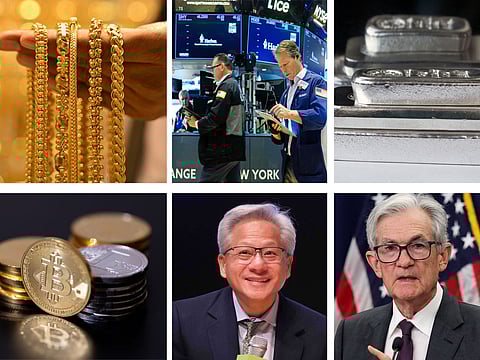
Dubai: Many investors are closing out 2025 with more money in their pockets, even after a year that repeatedly tested risk appetite. Global equities recovered from an April shock linked to fresh tariffs and still finished the year with strong gains, while three US rate cuts lowered borrowing costs and helped keep valuations supported. The real story, though, sat in the cross-currents. Gold delivered its best year since 1979, oil fell hard, the US dollar weakened, and pockets of risk from junk credit to emerging markets produced returns that did not fit the usual script.
Stocks recovered, then kept running
The year’s defining market pattern was a sharp drop followed by an equally sharp recovery. World stocks rebounded from April’s tariff-driven selloff and still added about 20%, extending a run that has now produced double-digit gains in six of the past seven years. The rally looked resilient on the surface, but it was also narrow and politically sensitive, with pricing increasingly driven by policy headlines rather than slow-moving fundamentals.
Gold stole the spotlight, oil disappointed
If equities rewarded stamina, commodities rewarded positioning. Gold rose close to 70% for the year, its biggest jump since 1979, pulling the rest of the precious complex with it. Silver and platinum were even more dramatic, rising about 130% at points, helped by a mix of safe-haven demand, momentum trading and heavy speculative interest.
Oil moved the other way, falling close to 17% over the year. For consumers, cheaper energy acted like a quiet dividend. For producers and oil-linked trades, it was a reminder that even in a year filled with geopolitical noise, supply and demand can still overpower sentiment.
The dollar slid, currencies broke old patterns
The US dollar’s drop of nearly 10% became one of the most consequential macro moves of the year because it amplified returns elsewhere. The euro gained about 14%, while the Swiss franc and Swedish crown rose roughly 14.5% and 19% respectively. Emerging market currencies also posted an unusual cluster of winners, with Mexico and Brazil recording double-digit gains and parts of central Europe strengthening by 15% to 20%.
Bonds sent mixed signals
The bond market captured the year’s underlying tension between rate cuts and debt worries. Three Fed cuts helped support risk assets, but fiscal concerns pushed long-term yields higher, especially when spending plans tightened supply expectations. The 30-year US Treasury yield surged past 5.1% in May, its highest since 2007, before easing back to around 4.8% later in the year. Even with that pullback, investors kept a close eye on the widening gap between long and short rates, a rise in term premia that tends to show up when markets start demanding more compensation for long-duration risk.
The twist was that bond market volatility sat near a four-year low, even while Japan’s long yields pushed back toward record highs and local-currency emerging market debt delivered its best year since 2009. It was not a year of one clean narrative. It was a year of cross-pressures.
AI spending kept the engine running
Artificial intelligence remained the backbone of equity optimism and a major driver of corporate investment. Goldman Sachs estimated that the large AI “hyperscalers” spent nearly $400 billion this year and will spend close to $530 billion next year. That wave of capital expenditure helped support earnings expectations, underpinned the big US tech platforms, and kept investors willing to look through periodic shocks.
At the same time, the “Magnificent Seven” lost some shine as the year progressed, even after Nvidia became the world’s first $5 trillion company in October. Investors began to ask harder questions about concentration risk and whether price already reflected perfection.
Crypto delivered a familiar boom, then a sharp reversal
Crypto traded like a sentiment gauge tied to politics, liquidity and leverage. Bitcoin hit an all-time high above $125,000 in October, then dropped to about $88,000 and headed into year-end down roughly 5.5%. The year also brought headline-driven bursts of activity, including Trump launching a memecoin and issuing a presidential pardon to Binance founder Changpeng Zhao. The message for investors was not that the asset class disappeared, but that timing and liquidity still matter more than ideology in short bursts.
2026 starts with new pressure points
Markets are not heading into the new year with calm, even if portfolios finished 2025 higher. Trump is already gearing up for midterm elections in November and is expected to name a new Fed chair soon, putting the central bank’s independence back in focus. Elections in Europe and emerging markets add more political risk to the calendar, while the AI trade faces its own unknowns.
- With inputs from agencies.