UAE Central Bank reassures public on strength of banks amid regional tensions
Central Bank confirms UAE banks remain strong, liquid and fully operational nationwide
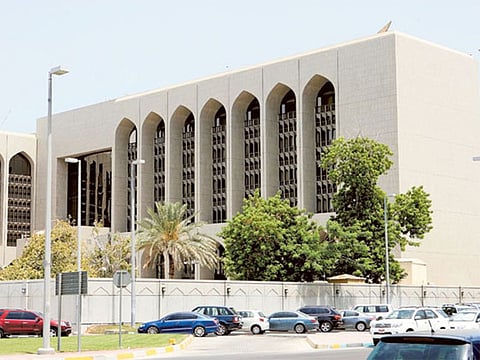
Dubai: Authorities in the UAE have moved to reassure the public that the country’s financial system remains strong and fully operational despite rising geopolitical tensions across the region.
The Central Bank of the UAE said banks, financial institutions and insurance companies across the country continue to operate normally and provide services without disruption nationwide.
Stay updated: Get the latest faster by downloading the Gulf News app - it's completely free. Click here for Apple or here for Android. You can also find it on the Huawei AppGallery.
Khaled Mohamed Balama, Governor of the Central Bank of the UAE, said the sector remains resilient and well positioned to navigate evolving regional developments.
“The UAE’s banking and financial sector continues to demonstrate the highest levels of resilience and stability,” Balama said. “Banks, financial institutions, and insurance companies across the country are operating normally and continue to deliver their services to customers and the public efficiently and without disruption nationwide.”
A financial system built on stability
Confidence in the country’s financial system rests on decades of regulatory development and institutional oversight that have shaped the UAE into one of the region’s most established financial hubs.
More than five decades of financial governance have helped the country build a banking system capable of navigating economic cycles and geopolitical shifts while continuing to support growth across the broader economy.
The Governor stressted that the foundations of the sector rest on strong governance standards, diversified financial institutions and proactive risk management frameworks designed to respond quickly to changing regional and global conditions.
Balama said the Central Bank has consistently worked to safeguard financial stability while strengthening the country’s position as a trusted financial centre.
“Guided by the wise vision of the UAE’s leadership, the Central Bank has played a pivotal role in safeguarding the resilience, strength, and stability of the nation’s financial and banking system,” he said.
Strong capital and liquidity buffers
Financial indicators show the sector entering the current period of regional uncertainty from a position of strength.
The UAE’s banking system maintains a capital adequacy ratio of around 17%, while the Liquidity Coverage Ratio stands above 146.6%. Both measures remain comfortably above international regulatory thresholds recommended by global supervisory bodies.
Balance sheet strength across the sector has also expanded significantly. Total assets in the UAE banking system have now exceeded Dh5.42 trillion, reflecting the scale of financial institutions operating in the country and their ability to sustain economic activity under varying conditions.
These figures signal strong buffers that help banks absorb shocks and maintain lending activity even during periods of uncertainty.
Systems operating without disruption
Authorities also emphasised that the country’s banking and payment infrastructure continues to function smoothly across the financial system.
Digital banking platforms, payment networks and financial infrastructure remain fully operational, supported by advanced technological frameworks designed to ensure secure and uninterrupted services.
Balama said these systems continue to support seamless financial transactions across the country.
“I also reaffirm that the UAE’s banking systems, payment systems, and national financial infrastructure continue to operate with full efficiency and stability,” he said. “These systems are supported by advanced operational and technological frameworks that ensure the seamless, secure, and uninterrupted functioning of banking and financial services.”
Preparedness for evolving risks
Financial institutions in the UAE operate within a regulatory environment that requires continuous monitoring of risk exposures and operational readiness.
Banks are required to implement advanced frameworks for identifying and managing risks while maintaining strong business continuity planning aligned with international best practices.
Authorities maintain ongoing coordination with financial institutions and government entities to monitor developments and ensure that the financial system remains prepared for potential shifts in the regional environment.
“The Central Bank of the UAE continues to maintain close coordination with relevant authorities and financial institutions to closely monitor developments, ensuring full operational readiness and the uninterrupted provision of banking and financial services across the country,” Balama said.
Ongoing supervision and policy support
Regulatory oversight remains a central pillar of the UAE’s financial stability framework.
Supervisors regularly track indicators linked to liquidity, capital and broader financial stability across the banking sector. Stress testing exercises are also conducted to assess the resilience of financial institutions under a range of potential economic scenarios.
Balama said the Central Bank retains a wide set of policy tools that allow authorities to act quickly when needed.
“We continuously monitor key indicators of financial stability and liquidity across the banking and financial sector,” he said. “We also conduct regular assessments and stress-testing exercises to ensure the continued soundness and resilience of the financial system.”
The Central Bank also maintains prudential and monetary policy instruments designed to support financial stability and reinforce confidence in the country’s banking system during periods of uncertainty.
Balama reaffirmed the regulator’s commitment to safeguarding the achievements built over decades while supporting the country’s long-term economic development.
“I reaffirm the Central Bank of the UAE’s unwavering commitment to closely monitor developments, maintain full operational readiness, and provide the necessary support to safeguard the achievements realized over more than five decades of progress and prosperity,” he said.