UAE-India flights: Are airfares dropping as more flights return ahead of summer holidays?
More flights from Indian carriers bring slight fare relief; summer demand keeps prices up
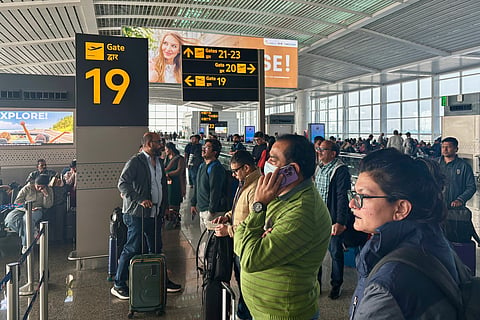
Dubai: Indian expatriates travelling home for the holidays are getting some relief after a short drop in airfares on UAE-India routes, as airlines restore capacity and more flights return to the market.
Travel agents said fares, which had surged earlier this month due to limited flight availability, high summer demand and regional disruptions, have eased slightly on some sectors. However, they cautioned that prices remain higher than last year and could rise again as the peak travel season continues.
Raheesh Babu, COO of Musafir.com, said UAE-India fares that had climbed to around Dh3,500-Dh3,600 have now dropped to about Dh2,600 on some Kerala sectors. “Availability has increased – the number of Indian flights have increased – supply has gone up a bit,” Babu said.
However, he noted that fares remain higher compared with last year. Some July travel sectors had seen fares rise to nearly Dh3,000 earlier this month.
The UAE-India aviation corridor is among the world’s busiest international air markets, driven by strong business, tourism and family travel links between the two countries.
June to August is traditionally one of the most expensive periods for air travel, as millions of passengers fly for school holidays, family visits and summer vacations. For UAE residents, the impact is particularly strong as outbound travel demand to India, Europe and other popular destinations rises sharply during this period.
Airlines typically sell their lowest-priced seats first during high-demand periods, leaving fewer cheaper options closer to departure dates.
More flights return
Travel agents said the recent improvement in fares has been linked to the gradual return of airline capacity after disruptions caused by regional tensions.
Zaid Ameen, owner of Go Kite Tours & Travels, said flight operations had been affected during the period of conflict, with only some airlines maintaining normal schedules.
“During the war, and the early days of the ceasefire, operations were limited — only Emirates and flydubai were operating at full levels. Most of the operations were handled by Indian carriers such as IndiGo, SpiceJet, Air India and Air India Express. Flights have now returned,” Ameen said.
He added, "A lot of international carriers have also resumed operations, and there is a slight respite. If the number of flights increases and more direct flights open, this will help.” “Salam Air’s Muscat operations have also increased supply," he said.
Ameen also said there is a high possibility of these rates sustaining. “Oil flows are improving, and crude prices are also hitting lower levels,” Ameen said, adding that fares had fallen by around Dh300-Dh400 on some routes.
On Kerala routes, he said: “The Kerala sector is high because flights are not completely full and tickets are not sold out, so fares have to be reduced.”
“To Kochi, the fare was around INR25,000. Current rates are still very high. There has been a slight dip to Calicut as IndiGo flights have increased,” he said.
He added that fares could return closer to normal as additional services, including Air India Express flights from regional airports, increase over the next month and a half.
Peak summer demand keeps fares elevated
Despite the recent dip, travel agents said ticket prices remain significantly higher than normal because of the summer rush and reduced flight frequencies.
Safeer Mahmood, general manager of Smart Travels, said there was no clear trend showing that fares were consistently falling. “It is a temporary spike,” he said, explaining that fares can change quickly depending on seat availability and cancellations.
“Sometimes you may see cheaper fares before July 8,” Mahmood said. Compared with last summer, he said fares are still around 15 to 20 per cent higher.
“Compared with last year, fares are at least 15 to 20 per cent higher. It is the summer peak, and compared with summer 2025, frequencies are also lower. Not all flights are fully operating,” Mahmood said. Air India Express has reached around 80 per cent of its operating capacity in the region, an airline source told Gulf News.
“Passengers should look out for occasional drops, as cancellations can free up seats and bring prices down. They need to monitor fares at the moment,” he said.
Mahmood said passengers may occasionally find cheaper tickets when cancellations free up seats, but prices need to be monitored regularly. “Tracking the prices would definitely help,” he said, adding that travel agents sometimes have pre-blocked seats that can offer lower fares.
Small fare drops seen before schools close
TP Sudheesh, general manager of Deira Travels, said a slight drop had been noticed on some routes.
“For Kannur, fares that were around Dh1,500 have dropped by Dh400-Dh500,” Sudheesh said.
“The drop started from June 27. With schools reopening from July 3, some last-minute fare reductions are visible,” he said. “There has been a small drop, but after June 28 fares could go up again. Schedules are getting normal, and airlines have opened up more capacity,” Sudheesh said.
“From July 1, fares could rise again, with rates moving towards the Dh1,300-Dh1,400 level,” he added.
Travellers advised to remain flexible
Sapna Aidasani, head of marketing at Pluto Travels, said UAE-India travel demand remains strong, particularly during the July holiday period.
“Travel between the UAE and India remains very strong, especially during the July holiday season,” she said. She added that flights are operating from Dubai, Abu Dhabi, Sharjah, Fujairah and Ras Al Khaimah, with Emirates and flydubai maintaining schedules, while some airlines continue restoring capacity gradually.
Aidasani said one-way fares on full-service airlines are generally around Dh1,250 to Dh1,500 or more, while budget carriers are typically priced between Dh850 and Dh1,100 depending on the route and availability.
However, she said travellers can still find occasional deals when airlines release unsold seats or cancellations occur.
“We recently secured one-way fares of around Dh550 per person for a family travelling between Dubai and India, and we also saw Emirates fares from around Dh650 to 950 on selected flights,” she said.
“These offers are limited and sell out quickly,” she added. She said some Dubai-India routes have seen a slight softening in fares for August, but expects demand to remain strong.
“While fares are elevated during the peak season, travellers who plan ahead, stay flexible, and monitor the market closely can still find excellent value,” Aidasani said.
Passengers travelling to India should also complete the Air Suvidha 2.0 Health Self Declaration Form before departure. The online form becomes available only within 24 hours of the flight and cannot be completed earlier.


