Bondi Beach shooters identified, driven by 'Islamic State ideology': Australia PM
Authorities said the attack was designed to sow panic among the nation's Jews
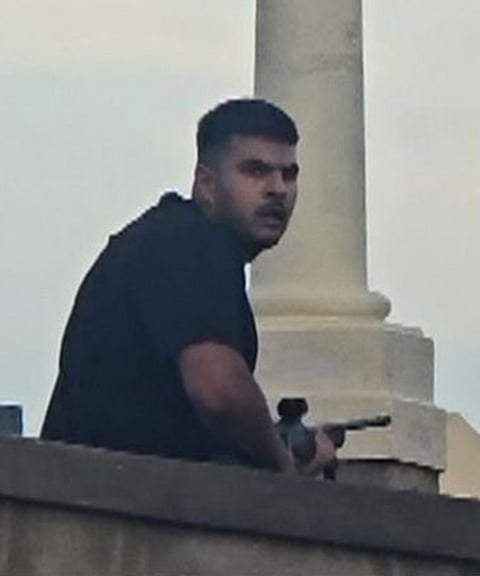
A father and son were likely driven by "Islamic State ideology" when they fired on Bondi Beach in one of Australia's deadliest mass shootings, Prime Minister Anthony Albanese said Tuesday.
Sajid Akram and his son Naveed opened fire on Jewish crowds thronging the famous beach for Hanukkah on Sunday evening, killing 15 people and wounding dozens more.
Improvised explosive devices (IEDs) and homemade ISIS (Daesh) flags were found in the suspect’s vehicle, Australian police stated.


Authorities said the attack was designed to sow panic among the nation's Jews, but have so far given little detail on the gunmen's deeper motivations.
Albanese gave one of the first hints on Tuesday that the pair had been radicalised by an "ideology of hate".
"It would appear that this was motivated by Islamic State ideology," Albanese told national broadcaster ABC.
"With the rise of ISIS (Daesh) more than a decade ago now, the world has been grappling with extremism and this hateful ideology," he said in a separate interview.
Authorities are facing mounting questions over whether more could have been done to foil the attack.
Albanese said Naveed Akram, reportedly an unemployed bricklayer, had come to the attention of Australia's intelligence agency in 2019.
But he was not considered an imminent threat at the time.
"They interviewed him, they interviewed his family members, they interviewed people around him," Albanese said.
"He was not seen at that time to be a person of interest."
Police are still piecing together the duo's movements in the lead-up to the shooting.
A key question is whether they met with Islamic extremists on a trip to the Philippines in November this year, local media reported.
On the day of the attack, Naveed reportedly told his mother he was heading out of the city on a fishing trip.
Instead, authorities believed he was holed up in a rental apartment with his father plotting the assault.
Carrying long-barrelled guns, they peppered the beach with bullets for 10 minutes before police shot and killed 50-year-old Sajid.
Naveed, 24, remains in a coma in hospital under police guard.
Hours after the shooting, police found a homemade bomb in a car parked close to the beach, saying the "improvised explosive device" had likely been planted by the pair.
'Failed' to act
A 10-year-old girl, a Holocaust survivor and a local rabbi were among those killed, while 42 others were rushed to hospital with gunshot wounds and other injuries.
Australia's leaders agreed on Monday to toughen laws that allowed father Sajid to own six guns.
Mass shootings have been rare in Australia since a lone gunman killed 35 people in the tourist town of Port Arthur in 1996.
The Port Arthur Massacre sparked a world-leading crackdown that included a gun buyback scheme and limits on semi-automatic weapons.
The attack has also revived allegations Australia is dragging its feet in the fight against antisemitism.
Australian Jewish Association head Robert Gregory told AFP the government had "failed to take adequate actions to protect the Jewish community".
Israeli Prime Minister Benjamin Netanyahu said Australia's decision to recognise Palestinian statehood earlier this year had poured "oil on the fire of antisemitism".
Desperate to help, Australians have lined up in their thousands to donate blood to the wounded.
Red Cross Australia said more than 7,000 people had given blood on Monday, smashing the previous national record.
A makeshift flower memorial next to Bondi Beach swelled in size on Monday evening as mourners gathered to pay tribute to the victims and mark the second day of Hanukkah.
Hundreds of mourners, including members of the Jewish community, sang songs, clapped and held each other.
Leading a ceremony to light a menorah candle, a rabbi told the crowd: "The only strength we have is if we bring light into the world."


