War of endurance — who breaks first: Markets, Iran or the US?
Hormuz disruption fuels oil shock, market volatility and rising costs in war of endurance
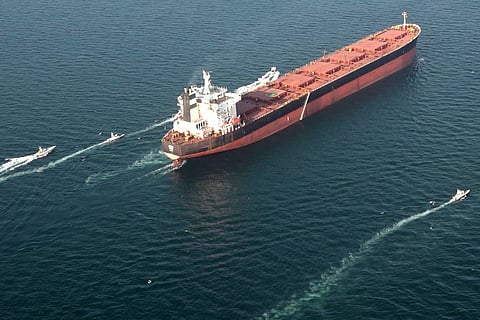
Dubai: The war is raging. The real question isn’t who wins — it’s who breaks first.
As the war enters its second month, pressure is no longer building quietly — it is beginning to show cracks across markets, governments and economies.
By restricting traffic through the narrow waterway — which carries roughly a fifth of global oil supply — Iran has turned geography into leverage. The result is a slow but widening shock to the global economy.
Markets already under strain
Financial markets are no longer reacting in theory — they are already under pressure.
Oil prices have surged nearly 50% in a single month, marking the biggest jump since 1988, in what one economist described as a “mini oil shock”. US crude has crossed the $100 mark, while energy costs are feeding directly into inflation across major economies.
The shock is spreading.
Global equities have slumped, with major indices posting their worst monthly losses since the pandemic, as investors price in slower growth and higher costs. At the same time, government bond yields are rising as markets brace for persistent inflation.
Breaking points — what could crack first?
Markets
Oil surge spills into inflation and growth fears
Equity losses deepen as costs rise
Volatility spikes on every headline
Iran
Economy squeezed by sanctions and war strain
Limited room to boost exports
Risk of rising domestic pressure
United States
Cost of war vs political tolerance at home
Risk of escalation and casualties
Pressure from rising fuel prices
Trigger points
Prolonged Hormuz disruption
Strike on major Gulf energy infrastructure
Sudden market sell-off or liquidity shock
Bottom line: Pressure builds unevenly — but breaks suddenly.
The surge in energy prices is also raising fears of stagflation — a toxic mix of high inflation and weak growth that central banks struggle to manage.
Volatility has surged.
“Things can go in any direction, every day,” said ING analyst Vincent Juvyns, capturing the uncertainty gripping global markets.
Iran’s high-risk strategy
Iran cannot match US military power. But it is not trying to.
By prolonging the conflict and keeping Hormuz under pressure, Tehran is raising the cost of the war for everyone else — particularly its adversaries.
The strategy comes at a price.
Sanctions continue to batter Iran’s economy, limiting oil exports and fuelling domestic strain. But Tehran appears willing to absorb that pain — betting that time is on its side.
Even limited disruptions can impose disproportionate costs. A handful of missile or drone strikes in the Gulf can shake markets, disrupt shipping and amplify uncertainty far beyond the region.
Washington’s dilemma
For Washington, the challenge is increasingly political as much as military.
The United States has the capability to reopen Hormuz. But every option carries consequences.
A direct move to secure the Strait could expose US forces to retaliation and risk casualties. A broader escalation could trigger attacks on Gulf infrastructure, pushing global markets deeper into crisis.
At home, rising fuel prices are already adding pressure.
The longer the conflict drags on, the harder it becomes to balance military objectives with economic stability and political support.
A war of time
What makes this moment particularly dangerous is that time itself has become a weapon.
Iran benefits from prolonging the crisis, increasing costs and uncertainty. The United States, by contrast, may be under pressure to resolve it quickly — before economic and political consequences deepen.
Markets sit in between — reacting instantly, but capable of absorbing shocks only up to a point.
Analysts warn that until there is meaningful progress toward peace, any recovery is likely to remain fragile.
So, who breaks first?
There is no clear answer.
Markets could tip into deeper instability if disruption persists. Iran could face growing internal strain. Or Washington could be forced into a difficult choice between escalation and compromise.
What is clear is that this is no longer a conventional war.
It is a contest of endurance — where pressure, not power, will decide the outcome.
And in that contest, the side that breaks first may not be the weakest — but the one that can no longer bear the cost.


