Who are Hezbollah and Iran’s militias who joined war — and how strong are they? Here’s all you need to know
Iran-backed armed groups open new fronts, expanding conflict beyond Iran and into region
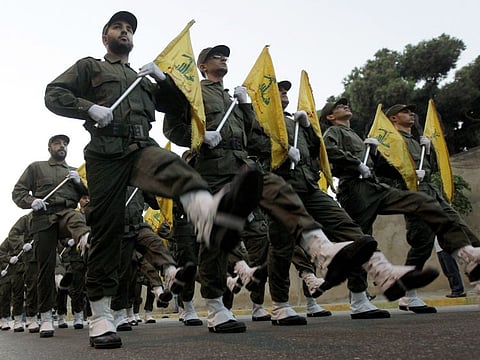
Dubai: As the war between Iran and US-Israeli forces widens, Iranian-backed armed groups across the Middle East are entering the fight, opening new fronts from Lebanon to Iraq and increasing the risk of a broader regional confrontation.
These groups are often described as Tehran’s “proxies.” But they are not identical extensions of the Iranian state. Each has its own leadership, domestic political agenda and military capabilities.
Some — particularly Hezbollah — have been weakened in recent months, even as they remain capable of escalating the conflict.
Here is a closer look at the key players.
Who is Hezbollah?
Hezbollah is Iran’s most powerful and strategically important regional ally.
Founded in the 1980s with support from Iran’s Revolutionary Guards, Hezbollah began as a guerrilla force fighting Israeli troops in southern Lebanon. Over decades, it evolved into a hybrid organization — part political party, part militia and part social welfare network.
It holds seats in Lebanon’s parliament and exerts significant influence over the country’s political and security landscape. Militarily, it has long been regarded as the most formidable non-state armed group in the Middle East.
At its peak, Hezbollah was believed to possess:
Tens of thousands of rockets and missiles
Precision-guided weapons capable of striking deep inside Israel
A battle-hardened force strengthened by years of combat in Syria’s civil war
Has Hezbollah been weakened?
Yes — significantly.
After Hamas’ October 7 attack on Israel and the ensuing Gaza war, Hezbollah engaged in months of cross-border exchanges with Israeli forces. Israel responded with sustained airstrikes targeting Hezbollah commanders, weapons depots and missile infrastructure.
Senior field commanders were killed. Launch sites were damaged. Surveillance systems were degraded. Entire communities in southern Lebanon were evacuated due to the fighting.
While Hezbollah still retains considerable firepower, analysts say it is operating under constraints. Lebanon’s economy is in collapse, public frustration is high, and a full-scale war with Israel could devastate what remains of the country’s infrastructure.
Its entry into the current conflict signals escalation — but not necessarily full mobilisation.
Who are the Houthis and why do they matter?
The Houthi movement in Yemen — formally known as Ansar Allah — is another key member of Iran’s so-called “Axis of Resistance.”
Backed politically and militarily by Tehran, the Houthis control large parts of northern Yemen, including the capital Sanaa.
Over the past several years, they have developed increasingly sophisticated capabilities, including:
Long-range drones
Ballistic missiles
Anti-ship missiles and maritime attack drones
During the Gaza war, the Houthis targeted commercial vessels in the Red Sea and threatened shipping linked to Israel and its allies, forcing rerouting of global trade and prompting Western naval deployments.
If fully activated in the current conflict, the Houthis could:
Threaten Red Sea shipping lanes
Target vessels near the Bab Al Mandeb Strait
Expand the war into a sustained maritime crisis
While geographically distant from Israel and Iran, their ability to disrupt global trade routes gives them outsized strategic importance.
What about Iraqi Shiite militias?
Several Iran-aligned militias in Iraq have also joined the fight, claiming drone and rocket attacks against US forces.
Many operate under the umbrella of Iraq’s Popular Mobilization Forces (PMF), a paramilitary network formed to fight ISIS but deeply influenced by Tehran.
Groups such as Kataib Hezbollah and Saraya Awliya al-Dam have previously targeted US bases and diplomatic compounds.
Unlike Hezbollah, Iraqi militias generally lack long-range precision missile arsenals. Their strength lies in:
Short-range rockets
Armed drones
Hit-and-run attacks
Their objective is not conventional battlefield victory but strategic pressure — raising the cost of US presence in Iraq and complicating Washington’s regional posture.
What is the 'Axis of Resistance'?
Iran has spent decades building a network of allied armed groups across Lebanon, Iraq, Syria and Yemen — often referred to as the “Axis of Resistance.”
This network provides Tehran with strategic depth. If Iran is attacked directly, pressure can be applied on multiple fronts without relying solely on Iran’s own conventional forces.
By activating these groups, Iran can widen a conflict, stretch adversaries and increase regional instability.
That strategy is now visible: Hezbollah firing from Lebanon, Iraqi militias targeting US bases, and energy infrastructure coming under attack.
Can these militias change the course of the war?
Individually, these groups are unlikely to defeat state militaries such as Israel or the United States.
Hezbollah remains the most capable among them, but it has absorbed meaningful damage in recent months. Iraqi militias can destabilize local environments but lack the capacity for sustained large-scale warfare.
The greater risk lies in cumulative escalation.
Multiple fronts increase the chances of miscalculation. Attacks on Gulf energy infrastructure and shipping lanes introduce global economic consequences. Direct clashes involving US forces raise the risk of deeper American involvement.
The war is no longer confined to Iran and Israel. It is evolving into a regional confrontation shaped not only by state militaries, but by powerful non-state actors whose involvement can prolong and complicate the conflict.
Whether these militias act as force multipliers for Tehran — or triggers for wider instability — may determine how far the war ultimately spreads.


