Twin oil chokepoints? Yemen war reignites as Houthis threaten Bab Al-Mandab blockade
Yemen fighting and Houthi shipping attacks deepen strain on oil markets
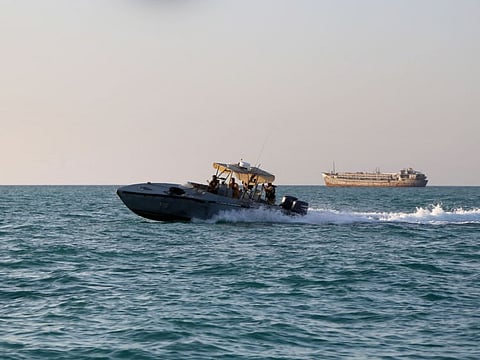
Renewed fighting in Yemen and fresh threats by the Iran-aligned Houthi movement to disrupt shipping through the Bab Al-Mandab Strait are raising concerns that global energy markets could face a second maritime crisis alongside the ongoing conflict in the Strait of Hormuz.
Get updated faster and for FREE: Download the Gulf News app now - simply click here
The latest escalation comes as Yemen grapples with one of the world's worst humanitarian and energy crises, with severe electricity shortages, fuel scarcity and renewed military clashes threatening to further destabilize the impoverished country.
The Houthis have warned they could expand attacks on commercial shipping in the Red Sea if the United States and its allies continue military operations against Iran and its regional partners.
The International Energy Agency (IEA) assesses the Bab el-Mandab as a critical maritime chokepoint through which approximately 4 million barrels of oil flow daily. It acts as a vital conduit connecting Asia and Europe via the Suez Canal, making it essential for moving crude oil, refined products, and LNG to European and North American markets.
Yemen's war flares up again
After several years of relative calm following a UN-brokered truce that sharply reduced large-scale fighting beginning in 2022, violence has intensified again in Yemen as government forces and the Houthis exchange attacks on multiple fronts.
While the truce formally expired in late 2022, many of its provisions largely held, allowing a fragile reduction in hostilities.
Recent regional tensions linked to the widening US-Iran conflict have increased fears that Yemen could once again become a major battlefield.
The Houthis, who control much of northern Yemen including the capital Sanaa, have increasingly linked their military campaign to broader regional events, pledging support for Iran while continuing attacks against vessels they say are connected to the United States and its allies.
Why Bab Al-Mandab matters
The Bab Al-Mandab Strait is one of the world's most strategically important maritime chokepoints, connecting the Gulf of Aden to the Red Sea and ultimately the Suez Canal.
According to the US Energy Information Administration (EIA), millions of barrels of crude oil and petroleum products transit the narrow waterway every day, along with a substantial share of global container shipping between Europe and Asia.
Any sustained disruption forces ships to divert thousands of nautical miles around Africa's Cape of Good Hope, increasing freight costs, fuel consumption and delivery times.
Renewed threats
The renewed threats are particularly significant because they come as military tensions continue around the Strait of Hormuz, another critical energy corridor through which roughly one-fifth of global oil consumption normally passes.
Should disruptions occur simultaneously in both waterways, analysts warn global energy markets could face one of their most severe supply shocks in decades.
Yemen's own energy crisis deepens
While threatening international shipping, Yemen itself is suffering from an acute energy emergency.
In the southern port city of Aden, residents have endured electricity outages lasting as long as 20 hours a day, amid fuel shortages and damage affecting key power stations.
Authorities say limited crude supplies have reduced electricity generation, while infrastructure disruptions have further strained the grid.
The prolonged blackouts have affected hospitals, water pumping stations, schools, telecommunications and businesses during the height of summer, forcing many residents to sleep outdoors because of the extreme heat.
Dangerous alternatives
With the national grid unable to meet demand, many Yemenis have turned to alternative energy sources.
Households increasingly rely on rooftop solar panels paired with battery storage systems. Although solar power has become an essential source of electricity across Yemen, aid organizations and medical workers say improperly installed batteries have led to a growing number of fires and serious burn injuries.
Doctors at burn units, including those serving Taiz governorate, report treating patients injured in battery explosions and electrical fires linked to poorly maintained energy storage systems.
At the same time, soaring fuel prices have encouraged some motorists to convert gasoline-powered vehicles to run on liquefied petroleum gas (LPG) intended for cooking, creating additional fire and explosion hazards, according to local authorities and humanitarian organizations.
Risk to global oil markets
Energy analysts say the Houthis have demonstrated an ability to threaten international shipping using drones, anti-ship missiles, explosive boats and naval mines.
Since late 2023, attacks on commercial vessels in the Red Sea prompted many shipping companies to avoid the Suez Canal route altogether, increasing transport costs worldwide.
A renewed campaign targeting Bab Al-Mandab — especially while conflict continues around Hormuz — could further tighten global energy supplies and drive up oil prices.
Although many major producers maintain strategic reserves and alternative export routes, neither chokepoint can be fully replaced, making both essential to international energy security.
What happens next?
Security experts say much depends on whether the Houthis follow through on threats to intensify attacks in the Red Sea and whether the renewed fighting inside Yemen develops into another prolonged civil war.
The United Nations has repeatedly warned that Yemen remains the world's largest humanitarian crisis, with millions dependent on food aid and basic services.
Any escalation could not only worsen conditions for Yemen's population but also increase risks to one of the world's busiest maritime trade routes.
"The Bab Al-Mandab region has been a powder keg since the beginning of the war," Ibrahim Fraihat, a professor of international conflict resolution at the Doha Institute for Graduate Studies, has warned, underscoring the broader geopolitical stakes as conflict spreads across the Middle East.
The IEA emphasises that threats to this route present "systemic risks" to global maritime energy security.
Because it is a key alternative bypass for Middle Eastern exports, any disruption there forces tankers to detour around the Cape of Good Hope, which drastically increases global transit times, shipping costs, and pressure on global oil inventories.


