Fuel, freight, food: How the prolonged Hormuz crisis could trigger a worldwide price spike
Energy chokepoint under strain as threats, attacks disrupt vital Gulf shipping lane
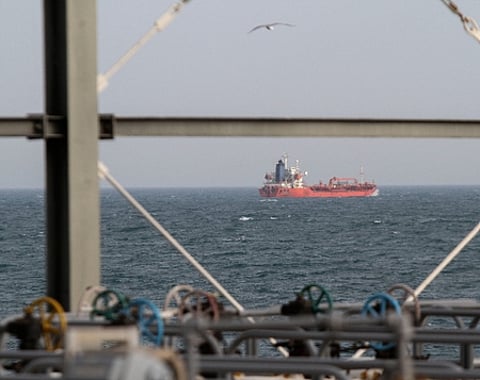
Amid US President Donald Trump's conflicting assurances that a deal to end the Middle East conflict is close at hand, while claiming he's in no hurry to strike a good deal with Tehran, negotiations between the US and Iran appear increasingly deadlocked.
This continues to raise the prospect of a prolonged confrontation, say analysts, who see the footdragging as "beneficial" for both Iran and the United States.
There's a major downside: it keeps one of the world's most important energy chokepoints under pressure, potentially driving oil prices sharply higher in the months ahead due to physical crude supply disruptions.
Conflict drags on
Rather than moving toward a rapid settlement, both Washington and Tehran may see strategic advantages in allowing the conflict to drag on, analysts say.
Get updated faster and for FREE: Download the Gulf News app now - simply click here.


The International Energy Agency (IEA) has cited strategic analysts who view the Strait of Hormuz not merely as a geographic chokepoint, but as the ultimate geopolitical "pressure point", handling roughly 20% of global oil and a massive share of LNG, serving as unparalleled leverage for Iran. The agency noted that "outright blockades are no longer required to inflict systemic global damage."
Others pointed out Washington's immediate goal may simply be a temporary halt to manage political pressures (like the U.S. congressional elections) rather than securing a permanent settlement.
Mohammad Alzghool of the Emirates Policy Centre (EPC), an Abu Dhabi-based think-tank, points to a shift in "strategic equilibrium", given the ground realities that make the prospect of a quick deal-making unlikely.
Risk of confrontation
This shift has led to a renewed risk of US-Iran military confrontation, and continued uncertainty around Hormuz.
"The main factors contributing to the imbalance between the two parties include Iran’s growing resolve, its use of the Strait of Hormuz as strategic leverage, its reliance on time as leverage, and Washington’s declining ability to secure broad international support. Hence, the US may consider limited and targeted military operations to pressure Iran to negotiate from a weaker position, rather than seeking a comprehensive military solution to the conflict," Alzghool writes for EPC.
Even without a formal closure, repeated military threats, attacks on shipping and heightened security risks have effectively disrupted traffic through the narrow shipping corridor, increasing transportation costs and creating concerns over future energy supplies.
Diplomatic impasse
The diplomatic impasse comes as the Trump administration pursues a broader geopolitical strategy focused on reasserting American influence in the Western Hemisphere while reducing China's reach across critical trade and energy networks.
Some analysts have described the approach as the "Donroe Doctrine," a strategy aimed at strengthening US leverage over key maritime routes, energy infrastructure and supply chains stretching from the Americas to the Indo-Pacific.
DonRoe Doctrine: Derived as a pun from his US President Donald Trump's first name and the 19th-century Monroe Doctrine, it marks a shift toward projecting US power, controlling (or extracting) regional resources, and enforcing hemispheric dominance to counter the influence of China and Russia.
Supporters argue that the policy seeks to secure strategic resources and limit Beijing's ability to dominate global commerce, while critics warn it risks increasing tensions with both rivals and allies.
Effect on oil markets
Against this backdrop, energy markets are becoming increasingly vulnerable.
Oil prices have remained relatively contained in recent months, in part because governments and producers have relied on emergency stockpiles and existing inventories to offset disruptions. However, analysts warn that those buffers are beginning to erode.
Commercial crude inventories have been declining across several major economies, while strategic petroleum reserves in some countries remain below levels seen before earlier energy crises. At the same time, instability across the Middle East continues to threaten production and transportation routes.
Meanwhile, Iran has vowed to keep its position over the strategic Strait of Hormuz while condemning new European Union sanctions imposed on individuals and entities linked to Tehran's efforts to assert what it calls its sovereign rights over the critical maritime corridor.
Deputy Foreign Minister Kazem Gharibabadi denounced the sanctions as a “fraudulent move,” accusing European governments of attempting to pressure Iran at a time of heightened tensions across the Middle East.
The latest measures come as concerns grow over Hormuz, a route is widely regarded as one of the most important energy chokepoints in the world, making any disruption a major concern for global markets.
The sanctions also coincide with a deepening standoff between Tehran and Washington following months of military tensions, a dual blockade, failed diplomatic efforts and disputes over regional security.
'Engineered victory' for Iran?
Iranian parliamentary speaker and chief negotiator Mohammad Bagher Ghalibaf sharply criticised the US, accusing Washington of seeking neither peace nor meaningful negotiations.
“The United States is neither seeking a ceasefire nor seeking dialogue,” Ghalibaf said, arguing that Iran must respond firmly to protect the rights and interests of its citizens.
He called for what he described as an “engineered victory” rooted in “authority and rationality,” saying Iran's response should be based on strategic planning rather than symbolic gestures or political slogans.
Ghalibaf also emphasized the need for a coordinated national approach, arguing that military operations, diplomacy, public outreach and domestic governance should be viewed as interconnected elements of a broader strategy.
“Diplomacy cannot be reduced to closed-room talks and diplomatic smiles,” he said, warning that such an approach would fail to address the challenges facing the country.
Global inflation concerns
If disruptions persist through the second half of the year, traders expect prices to face renewed upward pressure as available reserves shrink and supply risks become more difficult to absorb.
A sustained rise in oil prices could reignite inflation concerns worldwide, increasing costs for transportation, manufacturing and electricity generation.
Higher energy prices would also complicate efforts by central banks to reduce interest rates and support economic growth.
For consumers, the consequences could be felt most directly at fuel pumps and through higher prices for goods and services that depend on transportation and global supply chains.


