Trump’s 20% Hormuz fee plan rattles global shipping
Proposal to charge tankers using the vital oil route could sharply raise freight costs
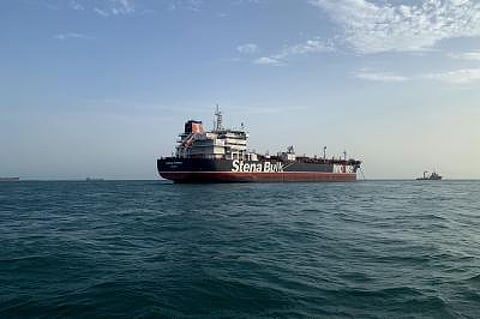
Dubai: US President Donald Trump’s proposal to impose a 20 per cent fee on cargo passing through the Strait of Hormuz has triggered alarm across the global shipping industry, with analysts warning it could dramatically increase the cost of transporting oil, disrupt supply chains and undermine long-standing international rules governing one of the world’s busiest maritime chokepoints.
The announcement came as the US launched another wave of military strikes against Iran on Monday, escalating tensions around the strategic waterway through which roughly one-fifth of the world’s oil and gas supplies normally pass. Trump said the fee would compensate Washington for providing security to commercial vessels transiting the strait, while also announcing the reinstatement of a US naval blockade on Iranian ports. AP reported that Brent crude rose 7.8 per cent to $81.92 a barrel following the developments.
Protection
“We’re protecting a very rich portion of the world. We are going to be reimbursed for protection,” Trump told reporters at the White House.
Under the proposal, vessels transiting the Strait of Hormuz would pay a fee equal to 20 per cent of the value of their cargo. Trump said the revenue would help cover the costs of safeguarding commercial shipping in the region.
The move marks a sharp reversal of long-standing US policy, which has consistently opposed charging tolls for passage through international waterways. Only weeks ago, US Secretary of State Marco Rubio had argued that no country should levy fees on ships using the Strait of Hormuz, citing international law.
According to the Associated Press, the International Maritime Organisation also said there is no legal basis for imposing mandatory transit fees on international straits, reinforcing concerns that such a policy could violate the principle of freedom of navigation.
Shipping costs could more than double
Shipping executives and logistics experts told The New York Times that the proposed charge could significantly increase transportation costs for oil and other commodities.
Rico Luman, senior economist at ING Research, estimated that transporting Gulf crude to Europe currently costs about $10 per barrel. If Trump’s proposed fee is calculated on the value of the cargo, it could add roughly $16 per barrel, pushing total shipping costs to around $26 per barrel.
For a very large crude carrier transporting two million barrels of oil, the additional charge could exceed $30 million, costs that would likely be passed on to refiners, businesses and ultimately consumers.
Neil Crosby, head of oil research at Sparta, said the proposal would leave shipowners facing an impossible choice between paying steep US fees or risking attacks by navigating routes favoured by Iran.
“I see this as a reason for shipowners to get less comfortable in the region, alongside the attacks,” Crosby told The New York Times.
Higher prices, inflation risks
Market analysts say the proposal comes at a time when investors are already grappling with heightened geopolitical uncertainty in the Gulf.
David Cooney, co-founder of MahiMarkets, said renewed military action and the proposed blockade were likely to keep upward pressure on oil prices and inflation expectations.
“A fresh blockade and wave of US strikes will fuel rising oil prices, reminding investors that volatility has become the new normal,” Cooney told Gulf News. While markets have reacted more calmly than during previous escalations, he noted that investors increasingly view the conflict as a prolonged crisis that could take months or even years to resolve.
Iran rejects US role
Iran, which maintains that it has sovereign authority over traffic through the Strait of Hormuz, rejected Washington’s actions while seizing on Trump’s proposal to argue that countries providing security should be compensated.
Foreign Minister Abbas Araghchi mocked the US proposal on social media, saying Iran had always been the “guardian” of the strait but adding that a 20 per cent fee was excessive.
The latest developments come amid renewed US air strikes targeting Iranian military infrastructure. The US military said the attacks were aimed at degrading Iran’s ability to threaten commercial shipping, while Tehran vowed to resist what it described as unlawful interference in the strategically vital waterway.
The Strait of Hormuz remains one of the world’s most critical energy corridors, linking Gulf oil producers with markets in Asia, Europe and beyond. Any disruption to shipping through the narrow passage has immediate repercussions for global energy prices, freight rates and inflation, making Trump’s proposed transit fee a development with potentially far-reaching economic consequences.