Will a new Hormuz fee make oil and shipping more expensive?
Iran's proposed levy could generate $6.8bn a year while raising shipping costs
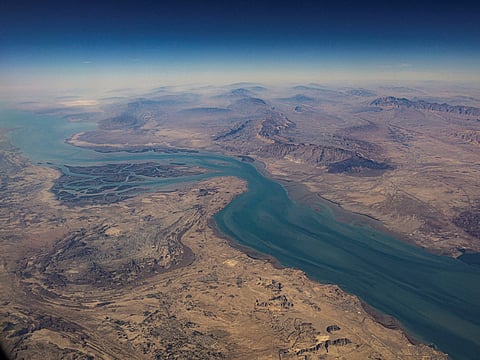
Dubai: A proposal by Iran and Oman to introduce transit charges for ships passing through the Strait of Hormuz could create one of the world's largest maritime revenue streams while adding a fresh cost to global energy trade.
The proposed levy could generate around $6.8 billion a year based on pre-war shipping volumes, according to research from Oxford Economics.
Get updated faster and for FREE: Download the Gulf News app now - simply click here.
That figure would exceed the estimated $4.7 billion Egypt generated from Suez Canal transit fees during the 2025-26 financial year.
Around a fifth of global oil consumption passes through the Strait of Hormuz.
What would the fee look like?
Iran has suggested a charge equivalent to around $1 per barrel of oil moving through the Strait.
Based on current Brent prices of about $86 per barrel, that would amount to roughly 1.2% of the value of the cargo.
"Iran's implied $1 per barrel levy on oil transiting through the Strait would equate to roughly 1.2% of the current Brent price ($86pb)," said Maya Senussi, Lead Economist at Oxford Economics.
"The proposed fee would markedly exceed the effective charges applied in other strategic waterways in the region, such as the Turkish Straits and the Suez Canal."
Prior to the signing of the earlier memorandum of understanding, Iran reportedly sought payments of around $2 million per vessel on an ad hoc basis.
For very large crude carriers carrying two million barrels of oil, that translates into approximately the same $1 per barrel charge.
Why consumers should care
The direct impact of a $1 levy may appear small relative to the value of an oil cargo, but every additional shipping cost eventually feeds into the wider supply chain.
Fuel, air travel, freight and imported goods all rely heavily on shipping costs remaining predictable.
Oxford Economics argues that paying a fee could still prove cheaper than repeated disruption or temporary closures in the Strait.
"A transparent, non-discriminatory fee structure that restores smooth transit conditions would likely more than offset any direct cost of the levy through lower risk premia and improved confidence," Senussi said.
"But even a well-negotiated framework would be vulnerable to future breaches by Iran or other parties."
Markets have repeatedly shown that uncertainty often carries a higher price tag than a predictable operating cost.
Bigger than the Suez Canal?
The projected annual revenue of $6.8 billion would represent around 1.6 per cent of Iran and Oman's combined 2025 economic output.
The estimate excludes additional charges on liquefied natural gas cargoes and non-oil shipments, meaning total collections could rise further if the system expands.
The comparison with the Suez Canal is difficult to ignore.
Egypt's canal generated an estimated $4.7 billion in transit income during 2025-26, equivalent to around 1.2 per cent of the country's economic output.
Hormuz could therefore become one of the most lucrative maritime transit routes in the world if the proposal moves ahead.
UAE exporters already preparing alternatives
Higher transit costs could accelerate efforts by Gulf producers to reduce their dependence on Hormuz.
The UAE has invested heavily in export routes outside the Strait through pipelines and ports along the Gulf of Oman coast.
Saudi Arabia has also expanded the use of its East-West pipeline, allowing part of its exports to bypass Hormuz.
Oxford Economics said higher shipping costs would strengthen the economic case for additional pipeline investments and alternative export routes across the region.
That could gradually reduce the volume of oil passing through Hormuz over time, limiting the long-term revenue potential of any future transit levy.