Right to refuse sailing: What seafarers need to know
Arabian Gulf, Strait of Hormuz, Gulf of Oman were designated as “Warlike Operations Areas”
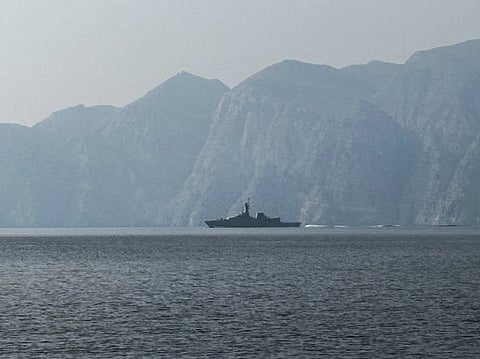
Dubai: The Philippines has reiterated that Filipino seafarers have the “right to refuse sailing” to certain high-risk waters after a Filipino crew member was reported missing following an attack on a tugboat assisting a distressed vessel near the Strait of Hormuz.
In light of this, the Department of Migrant Workers (DMW) has declared the Arabian Gulf, the Strait of Hormuz, and the Gulf of Oman as “Warlike Operations Areas”.
This follows a decision by the International Bargaining Forum (IBF), a global mechanism where maritime employers and seafarers’ unions negotiate wages, benefits, and working conditions for crews.
Stay updated: Get the latest faster by downloading the Gulf News app now - it's completely free. Click here for Apple or here for Android. You can also find it on the Huawei AppGallery.
What the ‘right to refuse sailing’ means
Under DMW Advisory No. 11, series of 2026, Filipino seafarers assigned to ships passing through the designated high-risk areas have the right to decline deployment without facing penalties.
"Increased security arrangements are also to be conducted by shipowners. Compensation is doubled for families of seafarers in the event of death and disability," said DMW secretary Hans Cacdac in Filipino.
He has also noted that the agency has already reached out to the family of the Filipino crew member, who has been missing since March 6.
"Our team a few days ago had already visited the family’s home and assured them of our full support during these difficult times while we await the results of the search and rescue at sea."
The DMW, along with the Overseas Workers Welfare Administration and regional offices, have coordinated to provide assistance to the family.
Strait of Hormuz
Authorities are currently monitoring about 6,400 Filipino seafarers working on vessels operating in the region.
So far, all of them have been accounted for and marked safe, while the DMW continues to track ships carrying Filipino crew members sailing near the Strait of Hormuz.
To recall, Iran has moved to close the Strait of Hormuz after the US and Israel have carried out missile strikes on them.
About 20 percent of the world’s oil consumption passes through the strait, making it one of the most critical channels for global energy trade.