Release of $25 billion, return of nuclear experts to Iran set: What we know so far about US-Iran deal terms
Iran agrees to no nukes, open oil lanes: VP Vance slams critics as 'America haters'
Iran will never have a nuclear weapon.
So declared US Vice President JD Vance, who defended the newly-announced framework agreement with Iran, framing it as a major foreign policy victory that fulfills President Donald Trump’s long-standing pledge to prevent Iran from acquiring nuclear weapons.
In an X post Vance stated: “The President has been clear from day one: Iran will never have a nuclear weapon. Once again, President Trump’s efforts to establish peace have paid off for the American people, despite countless attempts to thwart it by people who hate America and President Trump.”
The message included a video of Vance delivering remarks from what appears to be the White House grounds or a similar official setting, emphasising resolve and American interests.
The agreement comes following a period of heightened tensions that escalated into direct conflict earlier in 2026.
Key elements of the deal
Key elements, according to reports and administration statements, include:
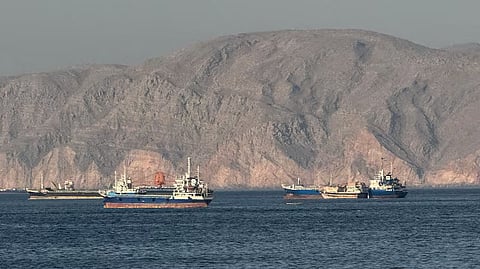
Reopening the Strait of Hormuz: This critical chokepoint for global oil shipments, which had been disrupted by mining and attacks on commercial tankers, is set to reopen fully to maritime traffic. President Trump has highlighted this as a win for lower energy prices and global economic stability.
Nuclear Commitments: Iran has reportedly agreed to freeze or limit aspects of its nuclear program in the initial phase, with further negotiations planned. The administration maintains that the deal ensures Tehran will not obtain a nuclear weapon, as per Axios.
Ceasefire and Sanctions Relief: A 60-day framework (extendable) includes lifting the U.S. naval blockade on Iranian ports, allowing Iran to sell oil more freely, and phased sanctions waivers in exchange for compliance, including mine clearance in the strait.
Broader Regional Implications: The deal aims to de-escalate conflict involving proxies and reopen shipping lanes, potentially lowering oil prices that had spiked during hostilities.
Formal signing: It is anticipated on Friday (June 19), possibly in Geneva.
Vance and Trump have positioned the pact as “peace through strength,” crediting unwavering US resolve for bringing Iran to the table.
Earlier posts from Vance echoed this, noting reopened shipping and prosperity for Americans.
However, confusion continued to swirl over the scope and timing of the interim agreement, even as Trump said the deal to end the war had already been signed digitally.
The agreement was digitally signed on Sunday (June 14), said Trump, who claimed that it includes provisions to reopen the Strait of Hormuz by Friday (June 19), when he said the accord would be formally inked on paper.
He did not immediately provide documentation or detailed terms of the agreement.


What Iran said
Iranian sources have previously described the deal as a "framework" intended to halt military operations and open a 60-day negotiating period on broader security and nuclear issues, though implementation details remain unclear.
Return of IAEA to Iran
The US-Iran deal provides for the return of International Atomic Energy Agency (IAEA) experts to Iran to "destroy" its stockpile of enriched uranium, Vance told US media.
"Yes, absolutely," he said in an interview with NBC News.
"In fact, one of the core parts of the agreement is that the [International Atomic Energy Agency] and the United States are going to help Iran destroy the highly enriched [uranium] stockpile," he emphasized.
The vice president added that this is "spelled out very clearly" in the memorandum of understanding, the Russian news agency TASS reported.
Technical details to work out
According to Vance, there are still "some technical details to work out, not related to the text of the memorandum of understanding itself, but the implementation."
This is what the US and Iran, along with mediator Pakistan, have said about what is in the preliminary deal they have announced to end the war, as per Reuters.
How the deal will be phased and what happens when
Pakistan's Prime Minister Shehbaz Sharif said both sides had declared an immediate and permanent end of all military operations.
All sides have said the memorandum of understanding on an end to the war will be signed in Switzerland on Friday (June 19).
Iran's Deputy Foreign Minister Kazem Gharibabadi said the memorandum would then be published.
Iran and the US have both said the Strait of Hormuz would start to "reopen" and the US blockade on Iranian ports start to lift as soon as the memorandum is signed.
The US naval blockade of Iran will be lifted as of June 15, and there will be an immediate and permanent cessation of military operations on all fronts, including in Lebanon.
Both sides have said negotiations on more difficult further areas of dispute — notably Iran's nuclear issue and US economic and financial sanctions on Iran — will be conducted over the following 60 days.
Strait of Hormuz and blockade of Iranian ports
US President Donald Trump said the Strait of Hormuz would be reopened on Friday and he had ordered a lifting of the blockade on Iranian ports.
A senior Iranian official said the strait would be reopened "to all commercial vessels" once the memorandum was signed.
Iran's semi-official Fars news agency reported that under the memorandum, marine traffic through the strait would be regulated by Iran in coordination with Oman.
Iran's nuclear programme
Both sides have said that Iran agrees that it will neither produce nor acquire nuclear weapons — a promise Tehran has been making repeatedly for decades.
The "senior Iranian official" quoted by Reuters said pending a final agreement Iran would freeze its nuclear activity, refraining from further uranium enrichment or the expansion of nuclear facilities.
The senior Iranian official said the US had agreed that Iran could dilute its stockpile of highly enriched uranium inside Iran under a future comprehensive agreement.
Trump said on Saturday there was no urgency to extract Iran's stockpile of nuclear material, and that the US would retrieve it "when all is calm".
Trump said there would be a strong inspections regime for Iran under any deal, but he did not give specifics.
US Senator Lindsey Graham said any final deal on Iran's nuclear programme would have to be reviewed and approved by Congress.
Sanctions and financial impact
The senior Iranian official said the US had agreed not to impose any new sanctions on Iran until a final deal was reached.
They added the US would waive oil sanctions on Iran for a specified period and that after the final agreement all US and UN sanctions would be lifted to an agreed timetable.
The senior Iranian official said the US had agreed to release $25 billion of Iran's frozen assets, including via direct cash transfers, cooperation among regional countries, and financial credit lines.
Washington, in coordination with its regional allies, would prepare a reconstruction and development plan for Iran, to be negotiated and agreed with Tehran within 60 days, they added.
Trump said Iran would not be provided with cash but that sanctions could potentially be lifted.
Lebanon
Sharif said the immediate and permanent end of all military operations would include Lebanon.
The Secretariat of Iran's Supreme National Security Council said military operations would stop permanently on Monday night including in Lebanon.
Iran's Foreign Minister Abbas Araqchi said there must be a complete halt to Israeli attacks against Lebanon and the US bears responsibility for implementing the framework deal.
Israel's Defence Minister Israel Katz said the Israeli military would remain in security zones it has captured in Lebanon, Syria and Gaza and that Prime Minister Benjamin Netanyahu had made this clear to Trump.
Before the memorandum was announced, Trump said he would bring peace to the region, including Lebanon. He said there should be no more Israeli attacks on Lebanon and no more attacks by the Iran-backed Lebanese group Hezbollah on Israel.
Analysts caution that while political statements suggest rapid de-escalation, key questions remain over verification mechanisms, enforcement on the ground, and whether all parties to the wider regional conflict will abide by any ceasefire arrangements.
Markets and shipping operators are expected to closely watch the coming days for confirmation of whether maritime traffic through the Strait resumes as scheduled or remains constrained amid lingering security concerns.


