Rapid strike or long hold? US weighs airborne assault options in Iran scenario
Elite 82nd Airborne and Marine units considered for potential operation
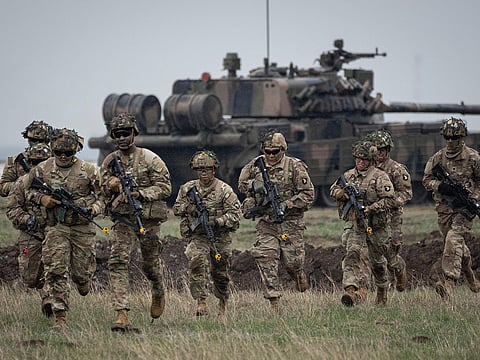
Senior US military officials are weighing contingency plans to deploy elite airborne and marine forces to support potential operations targeting Iran, including a possible move to secure key energy infrastructure, according to officials familiar with the discussions.
The planning — first reported by The New York Times — centres on the possible deployment of a combat brigade from the Army’s 82nd Airborne Division, alongside elements of its headquarters staff, as tensions in the region continue to escalate. Officials stressed that no orders have been issued by the Pentagon or US Central Command, describing the discussions as precautionary.
Immediate Response Force
At the core of the planning is the 82nd Airborne’s Immediate Response Force, a brigade of around 3,000 troops capable of deploying globally within 18 hours. One of the scenarios under consideration includes seizing Kharg Island, Iran’s primary oil export hub, in a move that could significantly disrupt Tehran’s energy flows.
Military planners are also evaluating a parallel option involving about 2,500 troops from the 31st Marine Expeditionary Unit, which is already en route to the region. Current and former officials said Marines could be deployed first, particularly because recent US airstrikes damaged the island’s airfield. Marine combat engineers would be able to quickly repair the runway and restore operational capacity.
Once the airfield is secured, additional forces and equipment could be flown in, including support from Air Force C-130 aircraft. In such a scenario, airborne troops from the 82nd could follow to reinforce and expand operations, The New York Times reported.
Strengths and limitations
Officials highlighted the strengths and limitations of both forces. Paratroopers from the 82nd Airborne can arrive rapidly but lack heavy armoured equipment, which could leave them more exposed in the event of an Iranian counterattack. Marines, while effective in initial assault and engineering roles, may not have the long-term sustainment capabilities of airborne forces.
A combined approach is therefore under consideration, with Marines leading an initial assault and repair effort, followed by 82nd Airborne units providing reinforcement and longer-term operational support.
As part of the preparations, the Army has also repositioned key command elements. A planned deployment of a 300-member headquarters unit from the 82nd Airborne to a training exercise at the Joint Readiness Training Centre in Louisiana was abruptly cancelled earlier this month. Officials said the move was intended to ensure the division’s command structure remained available for rapid deployment if required.
Rapid deployment
The division’s headquarters could play a critical role in coordinating operations in what officials describe as an increasingly complex battlespace.
The Immediate Response Force has a track record of rapid deployment, including missions to the Middle East in 2020 following the attack on the US Embassy in Baghdad, to Afghanistan during evacuation operations in 2021, and to Eastern Europe in 2022 in support of operations linked to the war in Ukraine.
While no final decisions have been made, the planning reflects growing concern within US defence circles about the potential for further escalation in the region — and the need to maintain readiness for a range of military contingencies.


