Iran fortifies Natanz site, new satellite images show, as diplomacy and pressure mount
Developments surface amid renewed US-Iran talks and military build up
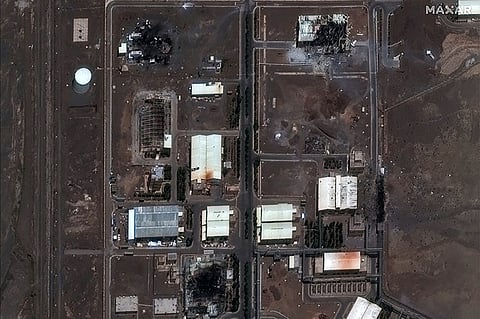
Dubai: Iran appears to be expanding fortifications at its key nuclear facilities as tensions with the United States simmer.
Fresh satellite imagery shows tunnel entrances at the Isfahan site buried under soil, along with new structures observed at Isfahan and Natanz — developments analysts say may reflect efforts to secure sensitive infrastructure.
The activity comes as diplomatic manoeuvring and military signalling intensify around Tehran’s nuclear programme.
Recent satellite imagery indicates that Iran carried out building work at the site between early December and January, suggesting possible recovery or concealment efforts months after Israeli air strikes damaged parts of the complex, BBC reported.
Photos analysed by the Institute for Science and International Security (ISIS) show a white-panelled roof erected over a section of the enrichment facility previously hit during attacks last summer. The structure appears to obscure areas that were visibly damaged, raising questions among analysts about the purpose of the modifications.
ISIS researchers say the covering may be designed to block aerial observation of activity beneath it.
“It is possible that Iran intends to carry out salvage and recovery operations to retrieve any intact machinery, equipment, or even recover any 60% highly enriched uranium that may remain inside the destroyed enrichment facility,” Spencer Faragasso, a senior research fellow at ISIS, said.
Tunnel reinforcements raise further questions
Separate satellite images also show renewed activity at an underground complex near Mount Kolang Gaz La — widely known as Pickaxe Mountain — located roughly 2km south of Natanz.
Images captured in February reveal what analysts describe as freshly poured concrete at one tunnel entrance, along with a concrete-reinforced structure added at another portal. Surrounding terrain appears to have been reshaped, with displaced soil and rock flattened near the access points.
Despite these developments, ISIS assessed that the site is unlikely to be fully operational.
“The ongoing presence of heavy construction machinery and materials indicates that the complex is likely not yet ready for operations,” the think tank noted.
Pickaxe Mountain itself was not among the facilities targeted during last year’s US and Israeli strikes, though Natanz sustained significant damage.
Activity emerges amid renewed US–Iran diplomacy
The observed construction comes as Washington and Tehran cautiously explore renewed diplomatic channels.
During Wednesday’s private meeting at the White House, US President Donald Trump said he had urged Israeli Prime Minister Benjamin Netanyahu to allow negotiations with Iran to continue, signalling a preference for diplomacy despite persistent tensions.
In a post following the talks, Trump described the meeting as productive but acknowledged that no definitive outcome had been reached.
“There was nothing definitive reached, other than I insisted that negotiations with Iran continue to see whether or not a Deal can be consummated,” Trump wrote.
Netanyahu, meanwhile, has publicly argued that any agreement should extend beyond nuclear restrictions to include Iran’s ballistic missile programme and regional activities — longstanding Israeli concerns.
The differing emphases underscore the fragile and complex nature of the diplomatic track.
Military pressure continues to shadow talks
Even as negotiations remain on the table, US military deployments and rhetoric continue to shape the regional landscape.
The United States has reinforced its presence in nearby waters, including carrier strike groups and other assets, as part of what Trump has previously described as a deterrent posture.
Analysts say this dual approach — diplomacy combined with visible military pressure — may help explain Iran’s apparent efforts to fortify and shield damaged nuclear infrastructure.
Such construction, experts note, often signals attempts to secure sensitive facilities while strategic uncertainties persist.
Broader nuclear sites under scrutiny
Beyond Natanz, ISIS and other monitoring groups have reported activity at additional Iranian nuclear-linked sites, including Isfahan, where tunnel entrances were recently covered or reinforced following earlier strikes.
While the precise nature of the work remains unclear, specialists say these patterns typically attract close attention in periods of heightened geopolitical friction.
Uncertainty over nuclear damage persists
Trump has repeatedly stated that earlier US strikes “obliterated” Iran’s nuclear capabilities. However, independent assessments have been more cautious, noting that the full extent of damage remains difficult to verify.
The latest satellite imagery has therefore renewed debate over whether Iran is attempting restoration, salvage, or precautionary reinforcement.
With diplomacy continuing alongside military signalling, developments at Natanz are likely to remain a focal point for international observers.


