Iran defies Trump Hormuz ultimatum with naval mine threat
Iran signals retaliation with drifting mines and energy targets
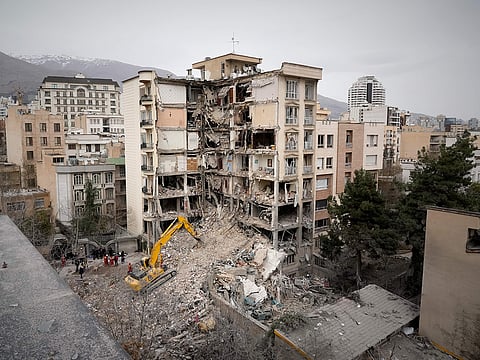
Tehran: Iran threatened Monday to deploy naval mines in the Gulf and target power plants across the region as it defied US President Donald Trump's ultimatum for the Islamic republic to reopen the Strait of Hormuz.
The ramped-up rhetoric came after stark warnings that the world faces an energy crisis worse than both 1970s oil shocks combined if the US-Israeli war with Iran drags on.
Facing a 2344 GMT deadline to reopen Hormuz, or see Trump "obliterate" its power plants, Iran gave no indication of bending to the US leader's will as the war enters its fourth week.
Instead it threatened to sow "drifting mines" across the Gulf if its coasts or islands are attacked - a tactic Iran deployed during the 1980s conflict with Iraq, with the potential to further choke the economically-vital waterway.
And it doubled down by issuing maps of potential energy targets in the region - designating Israel's two largest power plants as well as sites in Gulf countries.
"Say goodbye to electricity!" ran the title of one infographic.
"In the event of the slightest attack on the electricity infrastructure of the Islamic republic, the entire region will be plunged into darkness," said the graphic carried by Mehr news agency.
Stay updated: Get the latest faster by downloading the Gulf News app - it's completely free. Click here for Apple or here for Android. You can also find it on the Huawei AppGallery.
Unless the war ends soon, the head of the International Energy Agency said daily oil losses put the world on track for a crisis worse than the combined impact of both 1970s oil shocks and Russia's invasion of Ukraine.
At least 40 energy assets across the oil- and gas-exporting region are already "severely or very severely damaged", warned Fatih Birol, with oil prices driven above $100 a barrel.
"No country will be immune to the effects of this crisis if it continues," said the IEA boss said.
'Weeks' more fighting
Weighing in from Beijing after Trump's latest threats, China's foreign ministry warned of an "uncontrollable situation" should the war expand further, while key Iran ally Russia urged renewed diplomatic efforts to defuse the "catastrophically tense situation".
The US president has offered varying timelines and objectives for the war, saying Friday he was considering "winding down" the operation - only to later threaten Iran's power plants.
Iran has more than 90 power plants, some of them located on the Gulf coast. The country operates a decentralised electricity system, with multiple generation sites and hundreds of substations nationwide.


