Inside Iran’s Hormuz strategy: Who can pass - and who can’t
Philippines latest to secure passage as Tehran tightens control
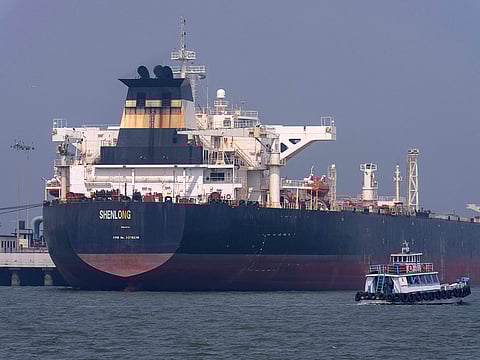
Iran has begun selectively allowing oil and cargo vessels from certain countries to pass through the Strait of Hormuz, offering rare relief to a handful of import-dependent nations even as it maintains an effective chokehold on one of the world’s most critical energy routes.
The latest to secure passage is the Philippines, which said Tehran has pledged safe transit for its oil shipments as Manila grapples with a deepening fuel crisis triggered by the ongoing Middle East war. The move underscores how access to the strait is now being shaped by geopolitical alignments rather than open maritime norms.
Traffic through Hormuz remains drastically reduced. Since early March, vessel movement has dropped to a fraction of normal levels, with just 142 ships transiting the waterway — roughly what would typically pass in a single day, according to maritime data cited by Lloyd’s List.
Which countries are being allowed through?
Philippines
The Philippines has emerged as the latest country to secure safe passage. Manila said Iran has pledged to allow oil shipments to transit through the strait, offering a critical lifeline to the import-dependent nation of 116 million people as it navigates a fuel emergency.
India
India has been explicitly named among Iran’s “friendly nations” allowed passage. Multiple LPG and crude shipments — including vessels such as Jag Vasant, Pine Gas, Shivalik and Nanda Devi — have successfully crossed the strait in recent weeks, easing concerns over supply disruptions.
China
Chinese-linked vessels account for a notable share of the limited traffic still moving through Hormuz. Around 10 per cent of ships that managed to pass were Chinese-owned or affiliated, according to shipping data. Beijing has also called for a ceasefire and stability in the Gulf.
Russia
Iran has formally authorised Russian vessels to use the strait for commercial shipping, reinforcing growing alignment between the two countries amid the conflict.
Pakistan
Pakistan has been included in Iran’s list of permitted countries. A tanker successfully crossed the strait in mid-March, although another vessel was later turned back for not complying with Iranian protocols. Following diplomatic discussions, Pakistan secured an agreement for vessels to cross the strait, according to Pakistan's Foreign Minister Ishaq Dar.
Iraq
After negotiations with Tehran, Iraq has been designated a “friendly nation”, allowing Iraqi-linked vessels to transit the waterway.
Malaysia
Malaysia has said its ships will be granted access, with reports indicating that its vessels could pass toll-free under current arrangements.
Thailand
Thailand secured passage after diplomatic coordination with Tehran. A Thai oil tanker crossed the strait on March 25 without paying a fee, officials said.
Greece-linked vessels
Greek-owned or affiliated ships make up about 15 per cent of the limited non-Iranian traffic still moving through Hormuz, according to Lloyd’s List data.
What is the latest on the blockade?
Iran continues to maintain what amounts to a selective blockade of the Strait of Hormuz — restricting access while allowing vetted vessels through under controlled conditions.
Shipping volumes have collapsed. Before the conflict, more than 100 ships passed through the strait daily. That number has now fallen to single digits on some days, with as few as three to four vessels transiting.
In some cases, ships are being routed through Iranian territorial waters under a pre-approved system that requires vetting by authorities — described by Lloyd’s List as a “toll booth” mechanism.
Around 2,000 vessels are currently waiting on either side of the strait for clearance, according to the International Maritime Organisation, highlighting the scale of disruption.
Is Iran charging ships to pass?
There are growing indications that Iran is either charging or considering charging ships for passage.
According to Lloyd’s List, at least some vessels have already paid fees, with payments reportedly settled in Chinese yuan.
Bloomberg has reported that charges of up to $2 million per voyage have been sought on an ad hoc basis, although Iran has denied demanding such payments.
Iran’s parliament has approved a bill to formally impose transit fees.
“According to this plan, Iran must collect fees to ensure the security of ships passing through the Strait of Hormuz,” an official said, according to Iranian media.
What does Iran say about who can pass?
Iran has framed its approach as conditional rather than a total closure.
“Iran FM Abbas Araghchi said: “We permitted passage through the Strait of Hormuz for friendly nations including China, Russia, India, Iraq, and Pakistan.”
In a letter to the International Maritime Organisation, Iran said:
“Non-hostile vessels, including those belonging to or associated with other States, may – provided that they neither participate in nor support acts of aggression against Iran and fully comply with the declared safety and security regulations – benefit from safe passage through the Strait of Hormuz in coordination with the competent Iranian authorities.”
At the same time, Iranian officials have made clear that vessels linked to the United States, Israel and their allies will not be allowed through.
Why is this so significant?
The Strait of Hormuz handles roughly 20 per cent of global oil and LNG trade, making it one of the most critical chokepoints in the global energy system.
Even partial disruption has already sent shockwaves through energy markets, with countries facing supply shortages, rising fuel costs and emergency measures such as reduced energy use.
What is the cost impact of the Hormuz disruption?
The disruption is already pushing up energy and transport costs globally, with effects likely to filter through to consumers.
With traffic sharply reduced and risks rising, shipping costs have increased due to higher war-risk insurance premiums, rerouting and potential transit fees.
These costs are typically passed along the supply chain, affecting fuel prices, airfares and the cost of goods, particularly in import-dependent economies.
The impact is significant given that the Strait of Hormuz carries around 20 per cent of global oil and LNG flows, making even partial disruption a major driver of price volatility.
- with inputs from agencies


