Iran war: Are Houthis fighting for Iran or pursuing their own goals?
Once a ragtag militia, the group now holds leverage over Saudi Arabia and global shipping
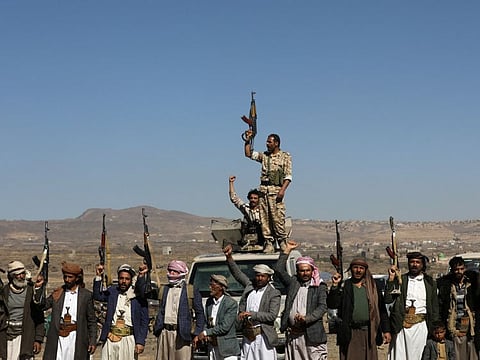
Dubai: A militia that began as a relatively small rebel movement in the mountains of northern Yemen now finds itself with the ability to influence an international war, threaten one of the world’s most important shipping routes and put fresh pressure on Saudi Arabia.
The Houthis’ dramatic rise has taken on even greater significance since their latest advances along Yemen’s Red Sea coast brought them greater influence around the Bab Al Mandab, the narrow gateway connecting the Red Sea with the Gulf of Aden.
With the Strait of Hormuz severely disrupted by the Iran war, the Red Sea route has assumed even greater importance for energy shipments.
That has transformed geography into power.
But while the Houthis are routinely described as an Iranian-backed militia, their growing role in the conflict raises a bigger question: Are they fighting primarily for Tehran — or for themselves?
The answer, according to an analysis by The New York Times, is considerably more complicated.
From rebels to regional force
In the early 2000s, the Houthis were a rebel movement fighting Yemen’s central government in the country’s north.
Two decades later, they control much of northern Yemen, including the capital Sanaa, and have developed a military capability that allows them to threaten ships far beyond Yemen’s shores.
They survived years of war against a Saudi-led coalition and subsequently demonstrated their ability to disrupt international shipping when they began attacking vessels in the Red Sea in 2023.
The New York Times described their transformation as one from a “ragtag militia” into unlikely regional power players.
Their rise has come despite confronting adversaries with vastly greater military and financial resources.
So what do the Houthis actually want?
Their alliance with Iran is important, but it does not fully explain their ambitions.
Iran has provided the Houthis with support and weaponry, and their ability to threaten shipping around the Red Sea now gives Tehran additional leverage in its confrontation with the United States, according to the Times.
But the Houthis have objectives of their own.
First, they want to rule Yemen.
The movement portrays itself as Yemen’s legitimate authority and seeks to defeat or marginalise the internationally recognised, Saudi-backed government.
Second, they want Saudi Arabia out of Yemen’s conflict.
In practice, that means Riyadh ending its backing for the Houthis’ Yemeni opponents.
Third, they want money.
Their demands include access to Yemeni oil revenues as well as compensation from Saudi Arabia stemming from the years-long war, according to the Times.
And their latest territorial advances potentially strengthen their bargaining position on all three fronts.
Why Bab Al Mandab changes the equation
The Houthis don’t need a navy comparable with America’s or an economy comparable with Saudi Arabia’s to exert influence.
They have geography.
Bab Al Mandab is one of the world’s critical maritime chokepoints. Ships passing between the Red Sea and the Gulf of Aden must navigate the narrow waterway between Yemen and the Horn of Africa.
That position becomes even more consequential when another vital chokepoint — the Strait of Hormuz — is disrupted.
The Houthis have already shown that drones and missiles can force shipping companies to reconsider Red Sea routes. Their latest territorial gains therefore potentially give them greater leverage not only inside Yemen but over regional powers dependent on maritime trade.
Why Saudi Arabia faces a dilemma
For Riyadh, confronting the Houthis again carries considerable risks.
Saudi Arabia led a military intervention against the group beginning in 2015, but years of fighting failed to eliminate the movement. The conflict caused immense humanitarian suffering in Yemen and proved costly politically and financially.
The Houthis emerged stronger.
As The New York Times notes, Saudi Arabia must now weigh whether another military confrontation could achieve what the previous campaign could not.
That calculation is particularly difficult as the kingdom pursues major economic and tourism ambitions, including hosting Expo 2030 and the 2034 FIFA World Cup.
Renewed instability on its southern border — and threats to energy infrastructure and shipping — run directly against those goals.
Iran’s ally — but not simply Iran’s proxy
This distinction may be the most important part of understanding the Houthis.
Their actions benefit Tehran. Pressure around Bab Al Mandab gives Iran another source of leverage while the US and Iran battle over Hormuz and elsewhere in the region.
But the Houthis’ interests and Iran’s are not identical.
The movement wants political dominance in Yemen, economic resources and concessions from Saudi Arabia. Iran’s support has helped it pursue those objectives, but the Houthis have their own reasons for exploiting the current conflict.
That makes them potentially harder to contain: Even a diplomatic settlement involving Tehran would not automatically resolve Yemen’s struggle for power.
Geography has become their greatest weapon
The broader lesson from the Houthis’ rise is that military strength alone does not determine power in the Middle East.
A relatively small force positioned beside a critical maritime chokepoint can impose costs on much larger states.
Iran has long exploited the same geographical advantage around the Strait of Hormuz. The Houthis are now demonstrating a similar principle around Bab Al Mandab.
And with two of the world’s most strategically important waterways caught up in the same widening conflict, a movement that began as a rebellion in northern Yemen has acquired something it once could scarcely have imagined: Global leverage.


