Houthis seize Mocha: How Yemen port gave its name to world-famous coffee
Centuries before becoming a war prize, Red Sea port sent Yemeni coffee around the world
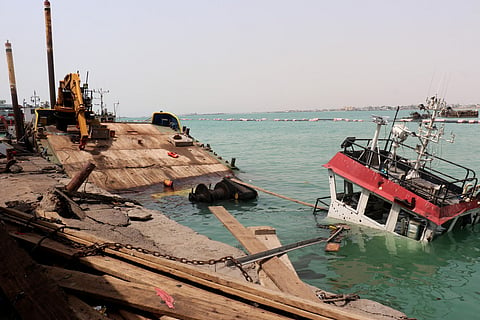
Dubai: Order a mocha in a cafe almost anywhere in the world and you are invoking the name of a small Yemeni port that once stood at the centre of the global coffee trade.
Now Mocha — also spelled Mokha or Al Makha — is in the headlines for a very different reason.
Yemen’s Iran-aligned Houthi militants seized the historic Red Sea port on Thursday, four Yemeni government military sources told Reuters, gaining further leverage over the Bab Al Mandab Strait, one of the world’s most important shipping routes.
Before its capture, Mocha was held by the National Resistance Forces led by Tarek Saleh, a vice-president in Yemen’s internationally recognised government and nephew of late president Ali Abdullah Saleh.
But centuries before Mocha became a prize in Yemen’s wars, ships leaving its harbour carried a product that would make its name famous around the world.
How Mocha gave coffee its name
Coffee was not grown in the hot, dry port itself.
Beans cultivated in Yemen’s mountainous interior were brought to Mocha and shipped across the Red Sea and Indian Ocean to markets in the Middle East, Asia and Europe.
By the 16th century, Mocha had emerged as a major centre of the international coffee trade.
Its importance grew under Ottoman rule and continued after the Qasimi dynasty expelled the Ottomans from Yemen in 1635. By the 17th and early 18th centuries, European and other foreign merchants were operating in the port.
Coffee exported from Yemen through Mocha became known overseas by the port’s name.
Eventually, “Mocha” became so closely associated with coffee that the word survived even after the port lost its commanding position in the trade.
How Mocha became a global name
Where: Yemen’s Red Sea coast, north of Bab Al Mandab
Coffee connection: Beans grown in Yemen’s highlands were shipped internationally through Mocha
Golden era: The port flourished as a coffee-trading centre from the 16th century, reaching particular prominence in the 17th and early 18th centuries
Why “mocha”? Coffee exported through the port became associated with its name
Chocolate connection: The original term did not mean coffee with chocolate; today’s café mocha developed later
Before Thursday: Mocha was controlled by Tarek Saleh’s National Resistance Forces
Now: Yemeni military sources told Reuters that Houthi forces have seized the city
So where did the chocolate come from?
The original Mocha coffee did not mean coffee mixed with chocolate.
Historically, the name referred to coffee associated with the Yemeni port and its beans.
The familiar modern mocha — generally combining espresso, chocolate and milk — came much later.
That means millions of people ordering a mocha today are unknowingly repeating the name of a centuries-old Yemeni trading port.
From coffee hub to battlefield
Mocha’s commercial dominance eventually declined as coffee cultivation spread beyond Yemen and other ports and trading centres gained importance.
In modern times, its location has again become its greatest asset.
Mocha lies on Yemen’s Red Sea coast, north of the Bab Al Mandab Strait, the narrow gateway connecting the Red Sea with the Gulf of Aden.
The city had been controlled by forces opposed to the Houthis. Tarek Saleh established his National Resistance Forces on Yemen’s west coast after breaking with the Houthis, who killed his uncle, former president Ali Abdullah Saleh, in 2017.
The Houthis’ capture of Mocha on Thursday therefore represents a significant shift along the Red Sea front.
Mocha's capture also cuts into key supply routes used by government-aligned forces, including the road to Taiz and logistics running through the port. With anti-Houthi forces withdrawing south, the Houthis are now in a stronger position to push further along the Red Sea coast towards Bab Al Mandab.
They are also attacking the strategic Hanish islands, Yemeni government military sources told Reuters, while opposing forces are moving south towards Dhubab, near the entrance to Bab Al Mandab and opposite Perim Island.
The advance has implications far beyond Yemen because disruption in the Strait of Hormuz during the Iran war has increased the importance of alternative shipping routes through the Red Sea.
Centuries ago, ships sailed from Mocha carrying Yemeni coffee to the world.
Today, control of the same coastline could help determine the security of ships carrying oil and goods through one of global trade’s most important gateways.
Mocha’s commodity has changed. Its strategic location has not.


