US secretly met Houthis; group pledges not to attack US, Israeli ships
Previously undisclosed talks held at US Embassy in Muscat as Yemen conflict escalates
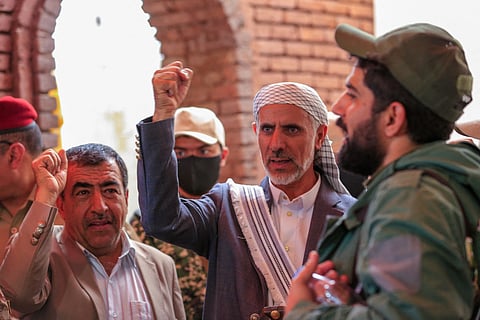
Dubai: US officials held previously undisclosed talks with representatives of Yemen’s Iran-backed Houthi militants in Oman over the weekend, days after the group seized a strategic stretch of Yemen’s Red Sea coast, Reuters reported on Wednesday.
The meeting was held at the US Embassy in Muscat, three of five sources familiar with the talks told Reuters. Oman, a longtime mediator in regional conflicts, helped organise the meeting, according to two sources.
One source said the talks took place on Sunday.
US embassy personnel represented Washington, while the Houthi delegation included senior official Mohammad Abdul Salam, who is under US sanctions, and Abdul Malik Al Ajiri, according to Reuters.
The Houthis told US officials they had no intention of attacking American vessels and remained committed to a ceasefire reached with Washington in 2025, two sources said.
In a significant assurance, the Houthis told US officials they would not attack American or Israeli vessels, or other commercial shipping, while specifically excluding Saudi ships from the pledge, according to Reuters.
The State Department did not confirm the meeting but said safeguarding freedom of navigation in the Red Sea and preventing the spread of terrorism from the Middle East remained core US interests.
President Donald Trump said on Saturday that the Houthis had contacted his administration asking Washington to stay out of the Yemen war. Vice President JD Vance said on Monday that the United States was in direct contact with the group, without providing details.
US designated Houthis terrorist group
The talks come despite the Trump administration designating the Houthis a “foreign terrorist organisation” in March 2025.
Washington nevertheless negotiated with the group later that year, reaching a ceasefire in May following two months of US strikes aimed at halting attacks on Red Sea shipping.
The latest contact comes at a particularly sensitive moment.
The Houthis last week seized effective control of Yemen’s Red Sea coastline, including the historic port of Mocha and Perim Island in the Bab Al Mandab Strait, a crucial route for international shipping.
The group has fought a Saudi-led coalition for more than a decade after seizing Yemen’s capital Sanaa in 2014. Fighting had largely eased under a ceasefire but resumed in July after the Houthis declared a blockade on Saudi shipping in the Red Sea.
Saudi warplanes have since struck Houthi positions as the group advanced against forces aligned with Yemen’s internationally recognised, Saudi-backed government and launched attacks towards Saudi Arabia.
Saudi Crown Prince Mohammed bin Salman last week sought US military support as the Houthi offensive accelerated, Reuters previously reported. Washington declined to become directly involved in the fighting, but agreed to provide intelligence-sharing and targeting assistance.
Iran alleges US hand in Hormuz delay
The secret Muscat talks also come as some Iranian lawmakers, hardline media and analysts accuse Washington of playing a role in the postponement of separate Oman-hosted negotiations over shipping arrangements in the Strait of Hormuz.
A meeting between Iran and Gulf states scheduled to take place in Oman on Monday was postponed amid escalating tensions over Yemen. Oman said the delay was intended to allow further regional consensus, while reports indicated Saudi Arabia had sought the postponement. No new date has been announced.
Some voices in Tehran have gone further, alleging that Washington sought to derail the Oman process or secure a role in negotiations over the strategic waterway.
Iranian lawmaker Fada-Hossein Maleki alleged that the United States had sought from the outset to prevent the process from advancing, while other Iranian commentators portrayed the postponement as part of an attempt to increase pressure on Tehran.
There has been no evidence establishing that Washington engineered the postponement.
The diplomatic manoeuvring comes as shipping through Hormuz remains severely restricted. Only four vessels were recorded transiting the strait on Tuesday, compared with a 10-day average of 18, according to preliminary shipping data. Before the Iran war, the waterway handled about a fifth of global oil and liquefied natural gas supplies.
The simultaneous crises around Hormuz and Bab Al Mandab have increased pressure on two of the Middle East’s most important maritime chokepoints, raising concerns over oil supplies and international shipping.


