Saudi Arabia discovers first-century Hijri Islamic mosque at Al Maallamah site
Granite-built mosque unearthed during fourth excavation season in Baha
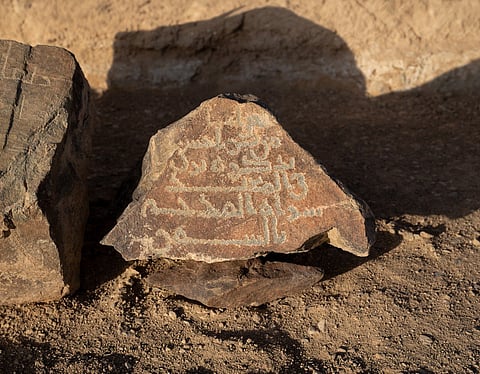
Dubai: Saudi Arabia’s Heritage Commission has discovered a mosque dating to the first century of the Islamic calendar at the Al Maallamah site in the southwestern Baha region, shedding new light on the Kingdom’s early Islamic architectural and religious history.
The mosque was uncovered during the fourth season of archaeological excavations at Al Maallamah, an ancient mining and archaeological site located in the Kingdom's Baha region and is located on the western side of its residential area, the commission said.
Get updated faster and for FREE: Download the Gulf News app now - simply click here.
Built from dressed granite stones, the mosque features an architectural layout combining simplicity and precision in the design of its mihrab, entrances and minaret.
Its walls extend 16 metres from north to south and 10 metres from east to west. Several adjoining stone rooms, believed to have served social and commercial purposes, include storage areas, basins and structural supports reflecting local building techniques.
Archaeologists also uncovered a range of artefacts, including fragments of soapstone and pottery vessels, as well as stone tools, pestles and pieces of grinding stones. The finds offer insights into the daily lives and craftsmanship of the settlement’s inhabitants.
Al Maallamah is one of Baha’s most significant archaeological sites and was historically associated with the extraction of gold, silver and copper ores.
Laboratory analysis of organic samples collected during previous excavation seasons showed that mining activity at the site dated back to the pre-Islamic period and flourished from the time of the late sixth to the ninth century AD.
The development of mining contributed to the emergence of different forms of settlements, ranging from surface mines and temporary settlements to regional smelting centres and early economic towns.
The Heritage Commission said it would continue archaeological surveys and excavations across Saudi Arabia while developing methods to document and protect discoveries as part of efforts to preserve the Kingdom’s cultural heritage.