Hamad bin Khalifa Al Thani: Architect of modern Qatar
How the former emir transformed Qatar into a global force in energy and diplomacy
Dubai: Sheikh Hamad bin Khalifa Al Thani, the former Emir of Qatar who transformed the Gulf nation into a major global player in energy, diplomacy, media and international investment, has died at the age of 74, Qatar’s state news agency announced on Sunday.
No cause of death was immediately given.
Sheikh Hamad ruled Qatar from 1995 until 2013, overseeing one of the country’s most remarkable periods of growth and international influence. Under his leadership, Qatar capitalised on its vast natural gas reserves to become one of the world’s leading exporters of liquefied natural gas, laying the foundation for its extraordinary economic growth.
During his 18 years in power, Qatar emerged as one of the world’s wealthiest nations per capita, expanded its global diplomatic role and invested heavily in infrastructure, aviation, education and international business.
He is widely credited with shaping modern Qatar through the development of its vast natural gas resources and by pursuing an ambitious foreign policy that gave the country an outsized role in regional and international affairs.
One of his most enduring legacies was the launch of the Al Jazeera satellite news network in 1996, which transformed Arabic-language broadcasting and later became one of the world’s most influential international media organisations.
Sheikh Hamad also championed Qatar’s emergence as a global investment hub. Under his leadership, the country acquired high-profile overseas assets, including London’s Harrods department store, expanded Qatar Airways into one of the world’s leading airlines and developed Hamad International Airport into a major aviation hub connecting East and West.
He also oversaw the creation of the Qatar Investment Authority, whose overseas investments helped expand the country’s economic influence far beyond the Gulf.
Key roles
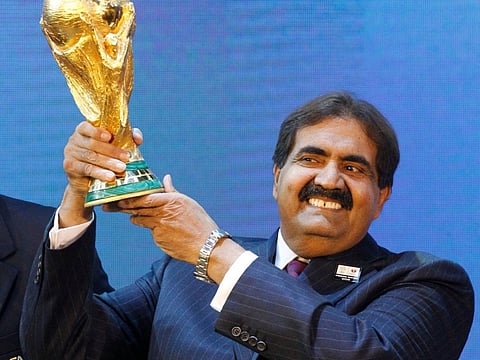
His tenure also saw Qatar win the right to host the 2022 FIFA World Cup, making it the first Arab nation to stage football’s biggest tournament.
At the same time, Qatar pursued an independent foreign policy that occasionally differed from those of some regional neighbours and Western allies. Its engagement with a range of regional political groups and its support for mediation initiatives often attracted international attention and, at times, differing views among its partners.
In June 2013, Sheikh Hamad made the rare decision to voluntarily hand power to his son, Sheikh Tamim bin Hamad Al Thani, then Crown Prince, in a peaceful and planned leadership transition. He said it was time for a new generation to lead the country.
Enduring place
Although he remained largely out of public life after stepping down, Sheikh Hamad's legacy endured as the architect of modern Qatar, having transformed the Gulf state into a global force in energy, diplomacy and investment. He was warmly received by Qataris during the opening ceremony of the 2022 FIFA World Cup, reflecting his enduring place in the country’s modern history.
Sheikh Hamad was educated at Britain’s Royal Military Academy Sandhurst before serving in senior military and government roles, including as commander of the armed forces and defence minister, prior to becoming emir in 1995.
His death marks the passing of a leader whose policies reshaped Qatar’s place on the world stage and left a lasting imprint on the Gulf region’s political, economic and diplomatic landscape.
-- With AP and AFP inputs


