Philippines: 2,000-MW Maton hydropower project, a ₱457-billion grid 'water battery' for Luzon, faces tough pushback
Project eyes huge capacity boosts for Luzon grid, faces scrutiny over community, consent
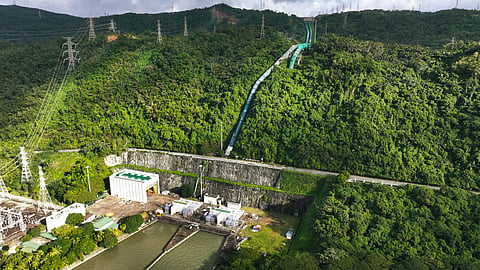
Manila: A major hydropower project in the Philippines that could provide reliable electricity for more than 2 million households is facing a major hurdle from nearby residents and indigenous people over concerns including disruption, habitat loss and water quality in the project's vicinity.
Environmentalists have also raised potential disruption to freshwater fish populations in the area.
The Maton Pumped-Storage Hydroelectric Project (Maton PSHPP), a planned 2,000-megawatt facility in Apayao province, is designed to act as a large-scale “water battery” that could help stabilise the Luzon "grid" and enables greater integration of intermittent renewables such as solar and wind.
This innovative solution is designed to pump water from a lower reservoir to an upper reservoir during low-electricity demand hours, and release the water to drive electric turbines almost instantly during high-demand hours.
The Philippine Department of Energy (DOE) approved converting the project from an initial run-of-river (ROR) to a PSHPP configuration on Dec. 27, 2024.
This formalised Maton, Pudtol's role as a grid-scale storage asset rather than a conventional hydro plant.
On April 29, 2025, the Philippines' Environmental Management Bureau (EMB) under the Department of Environment and Natural Resources (DENR) conducted "public scoping" for the Maton PSHPP in Upper Maton, Pudtol town, in Apayao province as part of the Environmental Impact Assessment (EIA) process, where a number of concerns by residents, indigenous people and their advocates were raised.
In June 2026, the Board of Investments (BOI) granted “green-lane” status to 11 renewable energy projects totaling ₱509.2 billion, led by Maton’s ₱457-billion valuation.
The move is intended to fast-track permitting and approvals.
Filipino scientist Joey Ocon, a professor of sustainability at Dela Salle University, who advocates "regenerative energy transition" said the proposed Maton PSHPP in Apayao marks a "significant step" toward strengthening the country’s energy security.
"As an energy storage facility, it can play a vital role in stabilising the grid, helping lower power costs by reducing reliance on expensive peaking power, and enabling greater integration of solar and wind into the national energy mix."
The Centre for Energy Research and Policy views the projects as "essential to achieving a reliable, affordable, and sustainable energy future."
However, in order to succeed, "large-scale infrastructure must be developed responsibly. The social and environmental safeguards, especially in ecologically and culturally sensitive areas like Apayao, must be robust, inclusive, and transparent."
If the Maton project proponents do manage to hurdle the environmental and social challenges, it will be one of just a handful of PSHPP facilities in the country.
The Philippines aims to triple its renewable energy capacity by 2030.
Coal and LNG currently, both imported, account for roughly 75% of actual electricity generation in the Asian nation.
The Philippines' long-term energy planning targets an three-fold increase in renewables from the baseline capacity recorded in 2010.
The National Renewable Energy Program (NREP) has set target of 15.3 GW from the 2010 baseline of 5.1GW. More broadly, the nation aims for renewables to make up 35% of the power generation mix at the end of the current decade.
WATER-POWERED 'BATTERY': The only existing PSHPP in the Philippines is the Caliraya-Botocan-Kalayaan (CBK) Hydroelectric Power Plant in the provinces of Laguna and Quezon, just outside Manila. The 789-megawatt facility is the first-of-its-kind powerplant in Southeast Asia, energised in 1983. In February 2026, CBK was officially turned over by the Philippine government to a consortium led by Aboitiz on a 25-year build-repair-operate-maintain-transfer (BROMT) concession under the PPP Law (RA No. 11966) with the Manila government, in a ₱36.27 billion deal. CBK serves as a critical energy buffer for the Luzon grid. Its ability to store energy (in the upper reservoir) enables it to rapidly dispatch power by flowing water from Caliraya Lake to Laguna Bay.
What to know about Maton
Capacity and function: The facility is planned at 2,000 MW of installed generating capacity, using an upper and lower reservoir system to pump water uphill during low-demand periods and release it through turbines when power is needed, providing both energy storage and peaking capacity.
Location: It will be sited in Barangays Upper Maton and Lt. Balag in Pudtol, with associated works affecting nearby Kabugao, Apayao, along the Maton River system.
Developer and contract: Pan Pacific Renewable Power Philippines Corp. (PPRPPC) holds Hydropower Service Contract No. 2022-02-918, awarded by the Department of Energy (DOE) on March 25, 2022.
Cost estimates: Baseline capital cost is estimated at ₱261.7 billion, while a higher ₱457 billion figure has been cited in Board of Investments (BOI) “green-lane” tracking for the project among a batch of renewable investments.
Latest updates (as of August 2026)
Design change approved: DOE approved converting the project from an initial run-of-river hydropower scheme to a pumped-storage configuration on Dec. 27, 2024, formalising its role as a grid-scale storage asset rather than a conventional hydro plant.
Environmental review underway: The Environmental Management Bureau (EMB) of the Department of Environment and Natural Resources (DENR) conducted public scoping for the Maton PSHPP on April 29, 2025, in Upper Maton, Pudtol, as part of the Environmental Impact Assessment (EIA) process.
Green-lane status: In June 2026, the BOI granted “green-lane” status to 11 renewable energy projects totaling ₱509.2 billion, led by Maton’s ₱457-billion valuation, a move intended to fast-track permitting and approvals.
Grid impact studies: As of early 2026, the Maton project had the highest proposed capacity among energy projects undergoing system impact studies with the National Grid Corporation of the Philippines (NGCP), underscoring its potential role in Luzon’s transmission planning.
Why it matters for the grid
Pumped-storage hydro is one of the few proven technologies capable of storing hundreds to thousands of megawatt-hours and discharging over many hours, making it a key enabler for high shares of variable renewables.
For the Luzon grid, a 2,000-MW facility could provide:
Peaking and balancing power during evening demand spikes and when solar output drops.
Frequency regulation and reserve services to maintain system stability as more wind and solar come online.
Deferred or reduced need for additional fossil-fuel peakers, supporting the country’s decarbonisation goals.
Community and consent
Large hydro projects in Apayao have faced scrutiny over Free, Prior and Informed Consent (FPIC) processes with Isnag indigenous communities, particularly for Pan Pacific’s earlier Gened 1 and Gened 2 hydropower projects, where the National Commission on Indigenous Peoples (NCIP) previously deferred decisions amid alleged "irregularities" and local opposition.
While the Maton PSHPP is a separate undertaking, its development in the same province means FPIC compliance and community engagement remain critical to project timelines and social acceptance.
The total installed electricity capacity in the Philippines reached approximately 31.04 gigawatts (GW), with total gross annual generation hovering around 105 to 110 terawatt-hours (TWh), heavily driven by fossil fuels which make up over 75% of the total mix.
Technical snapshot
Installed capacity: 2,000 MWeia.emb.gov+2
Estimated cost: ₱261.7 billion (baseline) / ₱457 billion (BOI green-lane tracking)
Site: Barangays Upper Maton and Lt. Balag, Pudtol; Kabugao, Apayao
Type: Pumped-storage hydroelectric plant using Maton River reservoirs
Service contract: HSC No. 2022-02-918, awarded March 25, 2022; design amended to pumped-storage on Dec. 27, 2024
Environmental concerns raised during Maton 'public scoping'
During the April 29, 2025 public scoping for the proposed 2,000-megawatt Maton Pumped-Storage Hydroelectric Project (Maton PSHPP) in Pudtol, Apayao, residents, indigenous groups and environmental advocates flagged a range of potential impacts tied to the project’s reservoirs, tunnels and construction activities.
Key issues raised by stakeholders
River flow and aquatic life: Concerns that diverting and cycling water between upper and lower reservoirs could alter the natural flow of the Maton and Apayao rivers, affecting fish populations, spawning habitats and downstream water quality through increased turbidity and sedimentation.
Impacts on indigenous lands and lifeways: Isnag communities and advocates warned the project could impinge on ancestral domains, restrict access to traditional harvesting and cultural sites, and disrupt livelihoods dependent on the river systems.
Water quality and groundwater: Questions were raised about potential changes in surface water temperature and quality, as well as long-term effects on soil and groundwater from reservoir operations and underground works.
Construction-related disturbance: Residents and agencies highlighted risks from tunneling, drilling and blasting, including noise, vibration, landslides and habitat fragmentation in a mountainous, forested area.
Biodiversity and species at risk: Stakeholders sought assurance that the environmental impact statement would assess effects on local flora and fauna, including any threatened or endemic species that could be affected by habitat loss or altered hydrology.
Waste, emissions and social impacts: Participants asked for details on construction waste management, air quality, worker influx, accommodation camps and how these would affect community life and public health.
Proponent and regulator response
The Environmental Management Bureau (EMB) of the Department of Environment and Natural Resources (DENR) said the scoping was intended to gather these issues to define the scope and terms of reference for the project’s Environmental Impact Statement (EIS).
Pan Pacific Renewable Power Philippines Corp. committed to incorporate the raised concerns into its EIS and to continue consultations as the review proceeds.
Other hydropower projects
The Maton PSHPP follows earlier controversies over Pan Pacific’s Gened 1 and Gened 2 hydropower projects in Apayao, where the National Commission on Indigenous Peoples (NCIP) deferred decisions amid alleged irregularities in the "Free, Prior and Informed Consent" (FPIC) process and local opposition.
Critics say the Maton project must avoid similar pitfalls and ensure robust, transparent safeguards in an ecologically and culturally sensitive area.
Dr. Ocon, said that given the public consultations, "now is the time for stakeholders to engage and ensure that this project delivers long-term benefits while protecting people and ecosystems."


