Air India pilot's drug test flagged after Phuket-Delhi mid-air plunge
Investigators also reveal jet temporarily lost pressure in all three hydraulic systems
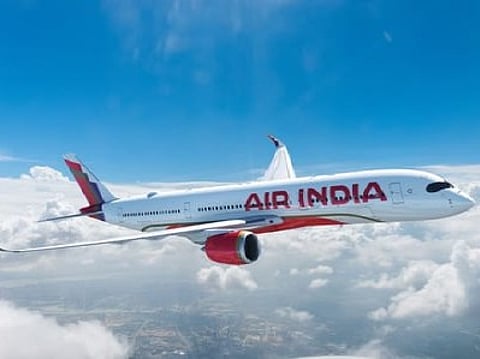
The captain of an Air India flight that suffered a dramatic altitude drop while flying from Phuket to Delhi tested “non-negative” for a psychoactive substance in a confirmatory test, according to a preliminary investigation into the accident.
The Aircraft Accident Investigation Bureau (AAIB) described the finding as a “serious concern” and recommended that the Directorate General of Civil Aviation (DGCA) take appropriate action on priority.
The co-pilot tested negative in both the initial screening and confirmatory tests.
The finding comes as investigators revealed that flight AI2379 temporarily lost pressure in all three of its hydraulic systems during the August 4 incident, affecting the Airbus A320’s flight controls.
The AAIB has not established that the captain’s test result caused or contributed to the technical failure or the aircraft’s sudden change in altitude. The investigation remains under way.
What happened at 36,000 feet
According to the AAIB’s preliminary findings, the aircraft was cruising at 36,000 feet when the flight-control system detected a loss of pressure in the Green hydraulic system.
Four seconds later, pressure was also lost in the Blue and Yellow hydraulic systems. The autopilot subsequently disengaged and a warning sounded in the cockpit. A stall warning was triggered briefly.
The co-pilot, who was flying the aircraft at the time, initially tried to control the situation before the pilot-in-command took over.
The aircraft first climbed 372 feet above its assigned altitude before falling 292 feet below it during the upset.
The Blue hydraulic system recovered first, followed seconds later by the Yellow and Green systems, restoring the operation of the flight-control surfaces.
Reuters had reported last month, citing an initial Airbus analysis, that the aircraft’s elevators and ailerons were unavailable for about four seconds after the loss of hydraulic pressure. That assessment did not establish what caused the pressure loss.
24 injured
The aircraft, registration VT-EXO, was carrying 137 passengers, including three infants, and eight crew members.
Twenty passengers and four cabin crew members were injured during the incident.
The preliminary investigation found damage to several parts of the aircraft cabin, including ceiling panels and overhead storage areas.
The aircraft stabilised after the hydraulic systems recovered and subsequently landed safely in Delhi.
The occurrence had initially been reported as a turbulence encounter. The AAIB investigation, however, has since focused on the loss of hydraulic pressure and the resulting altitude upset.
Captain’s test
Because the flight had originated outside India, both pilots underwent post-flight breathalyser examinations after arriving in Delhi. Those tests were satisfactory, according to the preliminary report.
Both pilots were also screened for psychoactive substances.
The pilot-in-command’s sample returned a “non-negative” result in the initial screening. Blood samples were subsequently sent to a laboratory for confirmation.
The confirmatory test for the pilot-in-command was also found to be non-negative, while the co-pilot tested negative in both examinations, according to the AAIB.
“The confirmation of use of psycho-active substances is a serious concern and AAIB recommends appropriate actions by DGCA on priority,” the preliminary report said.
Both pilots were taken off flying duties after the incident pending the investigation and completion of the testing process.
Hydraulic systems under scrutiny
Investigators are examining why the Airbus A320’s three separate hydraulic systems registered pressure losses within seconds of one another.
An initial Airbus assessment reviewed by Reuters last month found that the Green, Blue and Yellow hydraulic systems lost pressure in quick succession, leaving the pilots briefly unable to use the elevators and ailerons.
The assessment did not determine the cause of the hydraulic pressure loss.
Airbus asked Air India to conduct checks on the aircraft’s hydraulic systems, pressure sensors and switches and to inspect some components and wiring.
The AAIB’s investigation is continuing and the bureau has stressed that the preliminary findings do not determine the probable cause of the accident.
A final investigation report will be published in due course.
- With inputs from Reuters


