Air India Express video sparks debate: Why can’t you stand when the plane has already landed?
From viral video to global concern: The risks of standing while taxiing
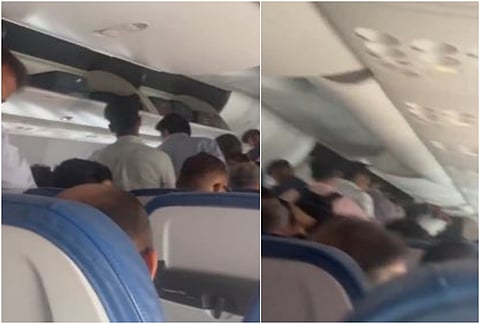
The wheels may be on the ground, but the flight is not over yet. A video showing passengers standing inside an Air India Express aircraft while it was still moving has renewed debate over a familiar cabin rule: why must passengers remain seated until the plane comes to a complete stop?
The footage, shared on X by Amitava Das, shows several passengers standing inside Air India Express flight IX 1236 as the aircraft appeared to be taxiing.
Get updated faster and for FREE: Download the Gulf News app now - simply click here.
“Passengers are standing, but the flight is moving,” Das said while recording the video. He also questioned the airline’s safety standards in his post.
Air India Express responded that it regretted any concern caused by the situation and stressed that safety remains its highest priority.
The airline said its operations are conducted in line with applicable safety procedures and regulatory requirements, adding that its cabin crew are trained to ensure safety protocols are followed throughout the journey.
Why must passengers stay seated?
Landing does not mean the aircraft has stopped moving. Between touchdown and reaching the gate, a plane can still brake, turn or make sudden movements while taxiing.
A passenger standing in the aisle could lose their balance during an unexpected manoeuvre. Opening an overhead bin also creates the risk of luggage falling on passengers.
There is another practical reason for keeping passengers seated: clear aisles allow cabin crew to move quickly through the aircraft and respond if an unexpected situation occurs.
What does the Air India Express video show?
The footage has triggered debate over both passenger behaviour and the enforcement of onboard safety rules.
Some social media users questioned how passengers were standing while the aircraft was moving. Others pointed to the responsibility of travellers to follow crew instructions and remain seated.
However, the footage does not establish why the passengers were standing or whether crew members had instructed them to sit down.
Turkey takes a tougher approach
The issue gained attention in Turkey in 2025, when authorities introduced penalties for passengers who stand up or open overhead bins before an aircraft has come to a complete stop.
Passengers can face fines of up to 2,603 Turkish lira — about $70 (Dh255) — for such behaviour.
Airlines were instructed to update their announcements to warn passengers about the penalties, while cabin crew can report violations to authorities.
Why were fines introduced?
Turkish aviation authorities cited safety and passenger-order concerns.
A moving aircraft can stop suddenly, while luggage can shift or fall when overhead bins are opened prematurely. Crowding the aisle can also make it harder for passengers and crew to move through the cabin if an unexpected situation occurs.
Turkish Airlines subsequently incorporated warnings about the penalties into its landing announcements.
Is standing during taxiing a global issue?
Standing before an aircraft reaches its parking position is one example of passengers failing to follow safety instructions.
More serious forms of unruly passenger behaviour can involve aggression or refusal to comply with crew instructions. But seemingly minor actions can also create safety concerns.
In the US, for example, the Federal Aviation Administration can impose civil penalties for unruly passenger behaviour.
What about India?
Passengers standing or gathering in the aisle immediately after landing is a familiar sight at airports.
However, standing during taxiing is not necessarily treated in the same way as more serious forms of unruly behaviour, and the circumstances of each incident matter.
The Air India Express video has nevertheless revived a wider question: should passengers face stricter penalties for ignoring safety instructions during taxiing, or is better enforcement of existing rules enough?
Why waiting a few minutes matters
For passengers, the urge to leave the aircraft quickly can be understandable, particularly after a long flight or when connecting flights are involved.
But an aircraft is not fully stationary simply because it has touched down.
Until the plane reaches its designated parking position, comes to a complete stop and the seat-belt sign is switched off, passengers are expected to remain seated and follow crew instructions.
Those extra few minutes help keep the aisle clear, reduce the risk of falls or falling luggage and give cabin crew more room to respond to an unexpected situation.
In short, landing is not the same as being ready to leave.


