‘We thought we would die’: Inside Air India’s terrifying turbulence ordeal —and what caused it
Passengers were thrown into the air as experts explain what caused the mid-air scare
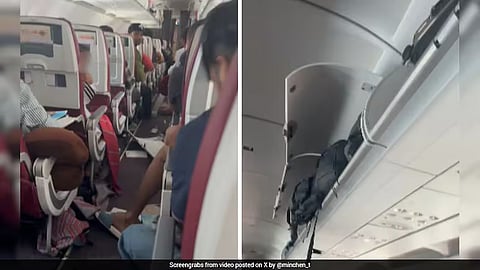
Dubai: “We thought we were going to die.”
A day after violent turbulence injured passengers aboard an Air India flight from Phuket to Delhi, many travellers are asking the same questions: What causes such incidents? Can pilots avoid them? And why do airlines advise passengers to keep their seat belts fastened even after the seat belt sign is switched off?
The frightening ordeal, which left passengers and crew members injured after the aircraft encountered severe turbulence, has once again highlighted one of aviation's most unpredictable hazards. Here's what experts say about what happened—and what every passenger should know before their next flight.
The flight landed safely in Delhi, but not before several passengers and crew members suffered injuries, according to Indian media reports. One traveller said he watched his father, who had unfastened his seat belt while drinking coffee, slam into the ceiling before crashing onto the cabin floor. Another passenger recalled her two-year-old daughter being thrown into the aisle during the violent jolts. Italian traveller Viviana said she saw her sister hurled into the air while her mother suffered a head injury.
The frightening ordeal has once again raised questions many air travellers ask after such incidents: What causes severe turbulence? Can pilots avoid it? And why do airlines advise passengers to keep their seat belts fastened even after the seat belt sign is switched off?
Here’s what aviation experts say.
What probably caused the Air India turbulence?
While investigators are yet to determine the precise cause, aviation experts say the aircraft most likely encountered severe atmospheric instability linked to monsoon weather, including powerful updrafts, downdrafts or wind shear associated with thunderstorm activity.
Turbulence occurs when an aircraft flies through unstable air. It can be triggered by thunderstorms, powerful vertical air currents, jet streams or sudden changes in wind speed and direction.
At this time of year, flights between Phuket and Delhi often pass through active monsoon weather over the Andaman Sea and Bay of Bengal, where towering cumulonimbus clouds can generate intense updrafts and downdrafts. Even when pilots avoid flying directly into storm clouds, dangerous turbulence can extend several kilometres beyond the visible clouds.
Adding to the challenge, an aircraft’s weather radar detects precipitation — not turbulence itself. That means pilots may avoid the heaviest rain yet still encounter powerful pockets of rough air nearby.
Why were passengers injured?
A commercial aircraft is built to withstand turbulence far more severe than passengers normally experience. In most cases, the aircraft itself is not in danger.
The greater risk is inside the cabin.
When an aircraft suddenly drops or is jolted upward, anyone not wearing a seat belt — and any unsecured object — can become airborne within seconds.
Passengers aboard the Air India flight described people striking the cabin ceiling before falling back into their seats or onto the aisle. Drinks, mobile phones and bags were thrown around the cabin, while crew members trying to assist passengers also lost their footing.
The US Federal Aviation Administration (FAA) advises passengers to keep their seat belts fastened whenever they are seated, even when the seat belt sign is switched off, because severe turbulence can occur without warning.
Why keep your seat belt on after the sign goes off?
Many travellers assume it is safe to remove their seat belt once the illuminated sign is switched off.
Pilots and aviation safety experts recommend otherwise.
The seat belt sign indicates that conditions are considered safe enough for passengers to move around the cabin if necessary. It does not mean turbulence cannot occur unexpectedly.
Keeping the belt loosely fastened while seated allows passengers to remain comfortable while providing immediate protection if the aircraft suddenly encounters rough air.
Cabin crew are often among the most seriously injured because they are usually standing or serving passengers when turbulence strikes.
Can pilots avoid turbulence?
Pilots receive detailed weather briefings before departure and continuously monitor onboard weather radar, satellite information and reports from other aircraft.
When rough air is detected ahead, they may alter altitude or change course.
However, not all turbulence can be detected or avoided. Some forms develop rapidly, while others occur in otherwise clear skies with little or no visible cloud.
Even when turbulence cannot be avoided, pilots are trained to slow the aircraft to its recommended turbulence penetration speed, reducing stress on the aircraft and improving passenger safety.
Is turbulence becoming more common?
Researchers have found evidence that some forms of turbulence—particularly clear-air turbulence at cruising altitude — are becoming more frequent in parts of the world as atmospheric conditions change.
Airlines are increasingly sharing real-time turbulence reports with one another to help pilots identify rough air and choose smoother routes whenever possible.
Whether those factors played any role in the Air India incident can only be determined after investigators complete their assessment.
What should passengers remember?
Aviation experts say there are a few simple steps every traveller can take:
Keep your seat belt loosely fastened whenever you are seated.
Return to your seat immediately if instructed by the cabin crew.
Avoid opening overhead bins immediately after severe turbulence, as luggage may have shifted and could fall out.
Stay calm and follow crew instructions throughout the incident.
For those aboard the Air India flight, the ordeal ended safely. But the incident is a stark reminder that while modern aircraft are engineered to withstand even severe turbulence, no pilot can eliminate every pocket of rough air.
The one safety measure every passenger controls is also the simplest: Keep your seat belt fastened whenever you are in your seat — even when the skies appear calm.


