Pilot who crashed into Beijing skyscraper wrote about ending his life: Officials
Investigation finds pilot had mental health issues before fatal skyscraper crash
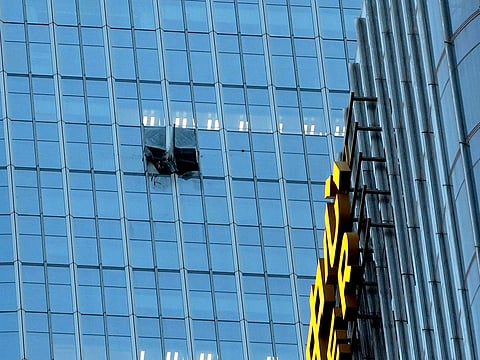
Beijing: For nearly a week, the question lingered: how did a light aircraft end up crashing into the tallest skyscraper in one of the world's most tightly controlled capitals?
On Thursday, Chinese authorities offered an answer. They said the 66-year-old pilot had struggled with insomnia and anxiety for years and had repeatedly written about ending his life in a personal diary, concluding that the crash stemmed from "personal reasons."
Get updated faster and for FREE: Download the Gulf News app now - simply click here.
The pilot, identified only by his surname Liu, died after his two-seat aircraft slammed into the 528-metre CITIC Tower — better known as China Zun — in Beijing's Central Business District on Friday evening. Thirteen people on the ground were injured. According to Chinese authorities, there were no other occupants on board. Reuters also reported the official findings, citing the Chaoyang district government.
The explanation sheds new light on an incident that stunned Beijing. It wasn't just the violence of the crash. It was where it happened.
China Zun dominates the capital's skyline. Just a few kilometres away sits Zhongnanhai, the heavily guarded compound where China's top leaders live and work. Airspace over Beijing is among the most tightly regulated anywhere in the world, making the crash all the more extraordinary.
Investigators said Liu lived alone after his divorce and had obtained a sport pilot licence in 2021 before earning a private pilot licence three years later. He worked as a freelance pilot.
On the afternoon of the crash, authorities said he departed from a general aviation airport in Beijing's suburban Pinggu district and completed both supervised and solo flights.
Then something changed.
During his final solo flight, Liu allegedly veered away from his designated flying area. Contact with the airport was lost. Minutes later, the aircraft struck the upper floors of the skyscraper.
The government said it had found repeated references to suicide in Liu's diary and concluded the crash was "an incident endangering public safety caused by personal reasons."
Witnesses described seeing debris falling from the building and smoke rising near its base. AFP journalists at the scene reported a hole punched through windows on one of the tower's upper floors. Emergency crews quickly secured the area.
Liu was flying a Sunward SA60L, a two-seat propeller aircraft commonly used for private and training flights.
The investigation remains ongoing, but the government's findings have shifted attention away from mechanical failure or security breaches toward the pilot himself — and the personal struggles authorities now say preceded one of the most unusual aviation incidents Beijing has witnessed in decades.


