'Explosive diarrhoea': Spread of parasite behind cyclosporiasis across US puzzles scientists
Mystery foodborne parasite drives severe diarrhoea outbreak across 17 US states
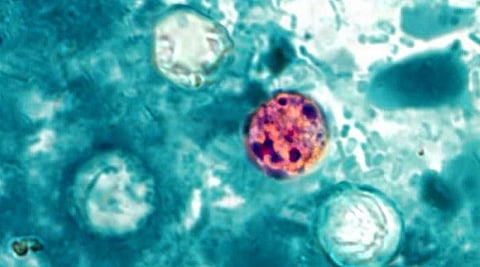
US health officials are investigating a growing outbreak of a foodborne parasitic infection that causes severe, sometimes "explosive," diarrhea, with hundreds of cases reported across multiple states and scientists still unable to identify the common source.
The outbreak involves cyclospora, a microscopic parasite that causes the intestinal illness cyclosporiasis.
Get updated faster and for FREE: Download the Gulf News app now - simply click here
Clusters of infections
The US Centers for Disease Control and Prevention (CDC), working with the Food and Drug Administration (FDA) and state health departments, is investigating clusters of infections in at least 17 states, while officials in Michigan are grappling with one of the largest state outbreaks in recent years.
Michigan has reported more than 570 confirmed cases, far above the roughly 50 cases the state typically records in an entire year.
At least 20 people have been hospitalised, although no deaths have been reported.
Health officials believe the true number of infections is likely higher because many people recover without seeking medical care.
What is Cyclospora?
Cyclospora (Cyclospora cayetanensis) is a single-celled parasite that infects the small intestine.
People become infected after consuming food or water contaminated with the parasite, most commonly fresh produce such as cilantro, basil, leafy greens, berries or green onions.
The infection is not usually spread directly from person to person because the parasite requires time in the environment before it becomes infectious.
TREATMENT: Cyclosporiasis can be treated with an antibiotic regimen of trimethoprim-sulfamethoxazole (TMP-SMX), as per CDC. Because testing for Cyclospora is not routinely conducted in most US laboratories, healthcare providers may have to specifically request testing for it.
Why is it called 'explosive diarrhoea'?
Doctors say one of the hallmark symptoms is sudden, profuse watery diarrhoea, often described by patients as "explosive."
Other symptoms include:
Severe stomach cramps
Loss of appetite
Nausea and vomiting
Fatigue
Bloating
Weight loss
Low-grade fever
CDC states that symptoms usually begin about one week after exposure but can take up to two weeks to develop.
Without treatment, illness may last for several weeks or even months, sometimes improving before returning.
Scientists still searching for the source
Investigators have not yet identified a single contaminated food item or supplier linking all of the reported cases.
According to the CDC, several separate clusters are under investigation, suggesting there may be multiple sources rather than one nationwide outbreak.
The US Centers for Disease Control and Prevention (CDC) is monitoring an expanding cyclosporiasis outbreak affecting 17 states, including Florida and Georgia. As of mid-June 2026, the agency monitored 145 confirmed cases of this intestinal illness. CDC said understanding this emerging threat is critical to protecting patients and containing transmission.
Fresh produce has been implicated in previous Cyclospora outbreaks because the parasite can survive on fruits and vegetables that are eaten raw.
Who is most at risk?
Most healthy people recover, but dehydration can become serious, particularly for:
Older adults
Young children
Pregnant women
People with weakened immune systems
Doctors warn patients to seek medical attention if diarrhoea is severe, persistent or accompanied by signs of dehydration such as dizziness, dry mouth or reduced urination.
Can washing produce prevent infection?
Health authorities recommend thoroughly washing fresh fruits and vegetables and practicing good hand hygiene before preparing food.
However, experts caution that washing alone may not completely remove Cyclospora, especially from delicate produce with uneven surfaces.
Cooking food effectively kills the parasite, but many implicated foods are typically consumed raw.
How is it treated?
The recommended treatment is the antibiotic trimethoprim-sulfamethoxazole (TMP-SMX).
Patients who cannot take sulfa drugs should consult their healthcare provider about alternative treatment options. Staying hydrated is also essential, particularly for people experiencing prolonged diarrhea.
Health officials continue tracing food distribution chains and interviewing patients in hopes of identifying the source before additional infections occur, noting that Cyclospora cases typically peak during the warmer months from May through August


