Salmonella: A ruthless invader, know the sources of contamination
Salmonella sneaks into 'superfoods': Chia seeds and chocolate bars under recall fire
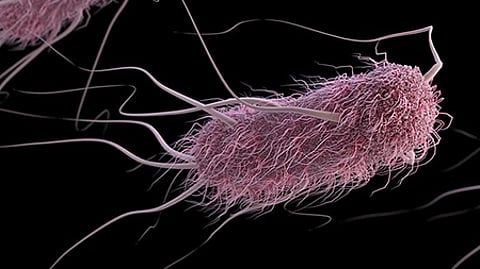
Salmonella is a ruthless, gut-wrenching invader.
Once it slips into the bodies of humans or animals, it wages war on the intestinal tract, leaving chaos in its wake.
The aftermath is rarely gentle — and almost never something anyone would choose.


In 2022, a Belgian outbreak sickened 450+ across 16 countries from Salmonella-tainted products.
In 2025, at least 64 people in 22 US states fell ill with Salmonella infections after eating raw oysters. Result: 24 hospitalisations as of late December 2025, as per US Food and Drug Administration and CDC.
In August 2025, a Salmonella outbreak in Canada in has prompted a recall of certain pistachio and pistachio-containing products, as per the Canadian Food Inspection Agency (CFIA).
Now, Salmonella has also turned up in trendy chia seeds and artisanal chocolate bars, prompting recent product recalls.
Recalls started on January 15, 2026, after 80% of cases reported consuming the suspected products.
The US Food and Drug Administration (FDA) and Centers for Disease Control and Prevention (CDC) continue investigating contamination sources.
What is Salmonella?
It is a genus of rod-shaped, Gram-negative bacteria, when ingested by humans and animals, commonly inhabits the intestines, leading to infections known as “salmonellosis”.
Sub-species: Salmonella is divided into six subspecies:
arizonae,
diarizonae,
houtenae (IV),
salamae (II),
indica (VI), and
enterica (I)
What is the usual route of salmonella contamination?
It is usually ingested through contaminated food or water.
In a CDC Food Safety warning issued in 2024, the agency warned that raw or undercooked eggs in recipes like homemade ice cream or dressings pose Salmonella contamination risks.
Leafy greens, fruits, sprouts, and processed foods like raw dough or nut butters also carry risks from soil, water, or cross-contamination.
Now, salmonella has reportedly snuck into superfoods – chia seeds and chocolate bars have come under recall fire.
Health alarms are blaring as Salmonella has turned up in trendy chia seeds and artisanal chocolate bars, prompting urgent recalls across the US.
What are the symptoms of Salmonella infection?
Salmonella infection typically triggers the following symptoms:
diarrhoea (often bloody or mucousy),
fever,
abdominal cramps,
nausea,
vomiting,
headache, and
chills within 6 hours to 6 days of exposure.
Where do the Salmonella bacteria grow and thrive?
Salmonella thrives in warm environments, with optimal growth around 35–37°C, as seen in studies where it multiplies faster at higher temperatures like 35°C compared to 25°C or refrigeration at 7°C.
CDC states that it favours neutral pH levels (around 5–7) and higher inoculum sizes, allowing it to initiate growth and multiply in nutrient-rich settings like the gut or contaminated foods.
Factors like essential oils or low temperatures can inhibit its proliferation by slowing metabolic activity.
Human effects
In humans, Salmonella typically invades the intestinal tract, causing symptoms such as diarrhoea (often bloody or mucousy), fever, abdominal cramps, nausea, vomiting, headache, and chills within 6 hours to 6 days of exposure.
Most healthy individuals recover in 4–7 days without treatment – though diarrhoea can persist up to 10 days and hospitalisation occurs in vulnerable groups like children, the elderly, or immunocompromised people.
Severe cases, especially from certain strains, can lead to typhoid fever or bloodstream infections.
Does hot sauce and lemon juice kill salmonella?
No. Officials warn that hot sauce and lemon juice do not kill the bacteria, advising consumers to cook oysters to at least 145 °F / 62 °C.
Salmonella contaminations
Based on media reports, the following are the reported cases of Salmonella infections:
#1. Multistate outbreak linked to Live It Up Super Greens dietary supplement in the US (January 2026)
A recall was issued following an outbreak linked to dozens of illnesses across 21 states, and several hospitalisations. The FDA has advised consumers to dispose of or return the recalled products.
#2. Raw oysters Salmonella outbreak sickens dozens (late 2025)
At least 64 people in 22 states fell ill with Salmonella infections after consuming raw oysters, as per CDC.
This resulted in nearly two dozen hospitalisations as of late December 2025.
#3. Canada Salmonella outbreak sickens dozens (August 2025)
Public Health Agency of Canada (PHAC) reported that a Salmonella outbreak has resulted in 52 confirmed cases across four provinces, with nine people hospitalised. The illnesses were reported between early March and mid-July.
Why Salmonella loves these foods
Dry goods like chia (seeds from Mexico/elsewhere) and chocolates thrive on Salmonella due to low moisture — hard to kill without heat.
Contamination typically starts during farming, processing, or poor hygiene.
Takeaways
Check labels/lots, discard suspects, wash hands post-handling.
Recalls spotlight supply chain gaps — global sourcing amplifies risks.
Stay vigilant as Valentine's Day nears; check announcements from health authorities.
Superfoods aren't invincible — cook smart (and well), buy recalled-free.
Symptoms strike 12-72 hours.
Seek doctor if feverish/diarrhoeal.


