Did Google predict the Venezuela earthquake? Here’s what really happened
Android phones detected first seismic waves and alerted users before shaking arrived
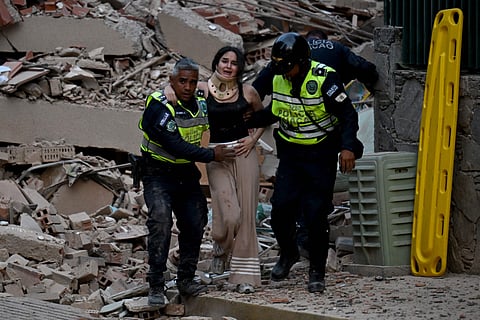
Dubai: As powerful earthquakes struck Venezuela on Wednesday, many people shared a remarkable experience on social media: Their Android phones had warned them seconds before the ground began to shake.
The alerts sparked widespread speculation that Google had somehow “predicted” the earthquake.
It didn’t.
What Google’s Android Earthquake Alerts System did was detect the earthquake moments after it began and send warnings before the strongest shaking reached millions of people. Experts say that crucial difference can save lives, even if the warning lasts only a few seconds.
According to reports multiple media reports, many Android users in Venezuela received alerts shortly before the tremors arrived. The notifications displayed the estimated magnitude of the earthquake and its distance from the user’s location, allowing people a brief window to move to safer places.
One X user wrote that the alert “saved many lives,” saying an alarm sounded on the phone seconds before the earthquake, giving enough time to rush into the garden.
How does it work?
Google’s system relies on the accelerometers built into billions of Android smartphones. These tiny sensors, normally used to detect screen orientation and movement, can also pick up the subtle vibrations caused by an earthquake.
When many phones in the same area detect similar ground movement simultaneously, Google’s algorithms analyse the data to estimate the earthquake’s location, magnitude and expected intensity. If the system determines that damaging shaking is likely, alerts are automatically sent to people in affected areas.
The technology works because earthquakes produce different types of seismic waves.
The first to arrive are primary waves (P-waves), which usually cause little damage. They travel faster than the more destructive secondary waves (S-waves) that produce the strongest shaking. By detecting the early P-waves, the system can issue alerts before the slower, more dangerous waves arrive.
“It was not Google who predicted the occurrence of the earthquake, but rather detected the very beginning signs and sent out an alert well before the intense shaking began,” Nikhar Arora, Director at BOTS.Ai by HR Anexi, told NDTV.
Arora explained that Android phones effectively function as a massive distributed sensor network. By recognising the same seismic pattern across thousands of devices, Google’s algorithms rapidly estimate the earthquake and notify nearby users.
Seconds that matter
Those warnings may last only a few seconds, but experts say they can make a significant difference.
People can move away from windows, step out of elevators, stop driving hazardous machinery, or take cover before strong shaking begins.
Hrishit Panthry, Co-founder of Envirocare Foundation, told NDTV the Venezuela experience highlights how technology is transforming disaster preparedness.
“Although it is impossible to predict earthquakes, it is possible to use technology to detect them immediately and communicate the news as quickly as possible to prevent injuries and deaths,” he said.
He added that smartphones have become a powerful channel for delivering emergency information directly to citizens and that similar early-warning technologies could strengthen preparedness for other natural disasters, including floods, storms and extreme heat.
The Venezuela earthquake has become a reminder that while science still cannot predict exactly when an earthquake will strike, modern technology can provide something almost as valuable: precious seconds that could mean the difference between danger and survival.


