When will UAE winter officially come to an end?
Spring is defined by the sun appearing directly over the equator
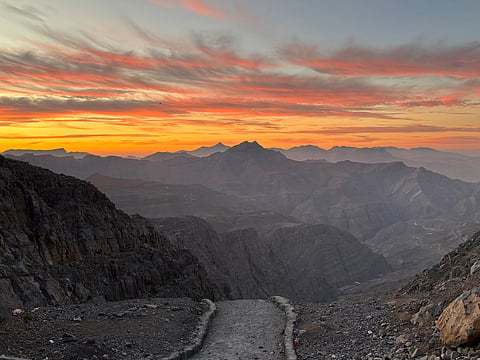
Dubai: Winter in the UAE will officially come to an end on March 20, when the spring equinox marks the astronomical start of the new season, although many residents may already feel the shift in temperatures weeks earlier.
The distinction between global scientific definitions and regional seasonal patterns helps explain why the cooler months in the emirates often seem to arrive and depart on their own timetable.
The start of winter
According to Ibrahim Al Jarwan, chairman of the Emirates Astronomy Society and a member of the Arab Union for Astronomy and Space Sciences, winter in the UAE begins astronomically with the winter solstice, when the sun reaches its southernmost point in the sky.
This year, the solstice occurred on December 21 at 7.03pm UAE time. The season will continue until the sun crosses the equator again on March 20, ushering in the spring season.
Astronomically, winter begins when the sun appears directly above the Tropic of Capricorn in the southern hemisphere. This marks the shortest day and longest night of the year in the northern hemisphere.
In the UAE, daylight hours at the start of winter fall to about 10 hours and 32 minutes between sunrise and sunset. From that point onwards, daylight gradually increases until night and day become equal at the spring equinox.
But in practical terms, seasonal change in the region is shaped less by astronomy than by climate. Meteorologists typically consider winter to begin in early December, when temperatures fall and cooler air masses dominate. In the Arabian Peninsula, the coldest period usually runs from mid-December to mid-February.
During this time, minimum temperatures in coastal areas often drop below 15°C, while inland desert and mountainous regions may record lows below 10°C. In some parts of the wider Arabian Peninsula, temperatures can fall below 5°C and even approach freezing at high elevations.
The early weeks of winter are also associated with what is known in parts of the Levant and Iraq as the “Marba’iniya”, or 40-day period of peak cold.
In the Gulf region, strong northerly and north-westerly winds become more active from January through February, sometimes bringing dust, rough seas and sudden temperature changes.
Climbing temperatures
As February progresses, temperatures begin to rise steadily. Average winter temperatures in the UAE range from lows of about 12°C and highs near 25°C at the start of the season, increasing to around 15°C to 28°C by mid-season. By the end of winter, readings typically reach 18°C to 32°C.
Spring, which begins astronomically on March 20, is defined by the sun appearing directly over the equator. At this point, day and night are equal in length. From then on, the sun moves northwards, and daylight continues to increase. Between late April and August, the sun is positioned more directly above the southern Arabian Peninsula, reaching its northernmost point at the summer solstice in June.
In the UAE, early spring is generally mild, with minimum temperatures near 18°C and highs around 32°C. By mid-season, temperatures can climb to between 21°C and 38°C, rising further towards the end of spring, when highs may reach 41°C.
The season is also marked by shifting winds and the possibility of spring weather disturbances, locally known as ‘Sarayat’, which can bring rain and thunderstorms. On average, rainfall during spring accounts for about 12 per cent of the UAE’s annual total.
Other regional weather patterns emerge during this period. Sea and land breezes become more noticeable as the temperature contrast between water and land increases. Strong north-westerly winds, known locally as “Al Arba’een Al Shamaliyah”, may occasionally carry dust.
Meanwhile, the tropical weather season in the northern Indian Ocean and Arabian Sea typically begins in early May and continues until mid-July, peaking in June. On average, at least one tropical cyclone forms in the Arabian Sea every three years, with more than 25 such storms recorded over the past half century.

