US-Iran conflict: What UAE residents need to know tonight, August 29
Tehran acknowledges sanctions are hurting trade but refuses to give ground over Hormuz
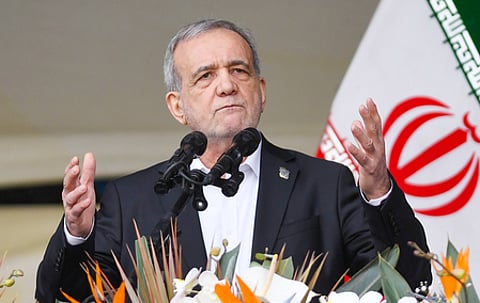
Iran has acknowledged the growing economic toll of six months of war and US sanctions, even as Tehran insists it will maintain its position on the Strait of Hormuz and remains open to diplomacy if Washington changes course.
For UAE residents, the strategic waterway remains one of the most important developments to watch, as Gulf states intensify diplomatic moves to restore freedom of navigation, while flight cancellations and delays continue across the region.
Here are the key developments this afternoon and evening.
Iran admits growing economic pressure
Pezeshkian says sanctions are hurting economy
Iranian President Masoud Pezeshkian has acknowledged that US sanctions are having a significant impact on the country's economy, after previously playing down their effectiveness.
“Some say sanctions have no effect at all; to those people, I really don't know what to say,” Pezeshkian told state television on Friday.
“We are in a war situation, and we must accept these wartime conditions,” he added.
Pezeshkian said Iran's imports and exports had fallen by between 25 and 35 per cent in recent months as Washington maintains its naval blockade of Iranian ports.
The Iranian president also raised the prospect of increasing some petrol prices as reduced trade compounds pressure on the domestic economy.
Washington stepped up its economic campaign this week, with US Treasury Secretary Scott Bessent promising what the administration has described as an effort to isolate Tehran economically.
Iran outlines priorities as war hits six months
Iran's government has also publicly acknowledged the economic effects of six months of conflict, with inflation, weaker trade and pressure on household finances emerging as key concerns.
Tehran says its priorities include reducing inflation, stabilising markets, creating jobs, backing domestic manufacturing and gradually reducing its dependence on the US dollar.
Despite the increasing pressure, Iran has shown no sign of abandoning its position over the Strait of Hormuz.
Iran's Revolutionary Guards navy said on Friday that Tehran had “full control” of the strategic waterway and rejected US assertions that the strait was open. Iran says restrictions will remain until Washington meets its commitments and ends military action against the country.
Diplomacy continues over Strait of Hormuz
Iran says return to talks still possible
Iranian Foreign Minister Abbas Araghchi said diplomacy remained possible but insisted Washington must abandon its pressure campaign.
“Putting diplomacy back on track isn't impossible,” Araghchi said in a post on X, adding that the US needed to understand that “pressure doesn't work”.
Diplomatic efforts led by Qatar, Oman and Pakistan have increased in recent days as mediators seek a way to reopen the Strait of Hormuz and revive negotiations between Tehran and Washington.
Araghchi met Qatar's Prime Minister and Foreign Minister Sheikh Mohammed bin Abdulrahman Al Thani in Tehran on Thursday, with discussions focusing on de-escalation and freedom of navigation.
Iran and Oman are also continuing work on a possible arrangement governing commercial shipping through the strait, although no final agreement has been announced.
Kuwait joins regional diplomatic push
Kuwait's Foreign Minister Sheikh Jarrah Jaber Al-Ahmad Al-Sabah has held separate calls with his Omani and Qatari counterparts as Gulf states continue efforts to reduce tensions.
The discussions covered regional developments, security and stability, and efforts to secure the safety and freedom of maritime navigation through the Strait of Hormuz.
Qatar said it continued to support diplomatic attempts to secure freedom of navigation and to create the conditions for a comprehensive regional agreement.
US blockade pressure continues
US Central Command continues to enforce Washington's naval blockade against Iran.
According to the latest figures cited by Gulf News, CENTCOM said that as of August 28, its forces had redirected 82 commercial vessels, disabled three and boarded two to enforce compliance.
The blockade has become one of Washington's main pressure points against Tehran, as direct military confrontation has eased to a level lower than earlier in the conflict.
Shipping through Hormuz nevertheless remains well below normal levels. Recent vessel-tracking data showed only seven commodity ships passing through the strait on Thursday, compared with 17 the previous day and a recent daily average of 15.
Before the war, around a fifth of global oil and liquefied natural gas supplies passed through the waterway.
Gargash hits back at campaigns targeting UAE
Dr Anwar Gargash, Diplomatic Adviser to the UAE President, has criticised what he described as media campaigns targeting the UAE.
In a post on X on Saturday, Gargash described the campaigns as “desperate”, saying they relied on distortion and rumours. At the same time, the UAE's record of determination and achievement offered a stronger response.
He said action carried greater weight than reaction and argued that challenging a successful national model was difficult for those behind such campaigns.
US diplomats begin returning to Gulf posts
American diplomats and some family members are beginning to return to US embassies across the Middle East after evacuation and staffing restrictions were imposed earlier in the war.
US embassies in Qatar, Kuwait and Bahrain announced on Friday that some family members would be permitted to return. In Bahrain and Kuwait, the change applies to adult dependants.
The US State Department has also begun easing some staffing restrictions at regional diplomatic missions.
The changes do not necessarily signal a shift in Washington's Iran policy, as the Trump administration currently places greater emphasis on economic pressure.
UAE flights operating, but some disruptions remain
UAE airlines continue to operate most services on Saturday, although passengers on some Gulf and international routes are still facing cancellations and delays.
Emirates, Etihad Airways, Air Arabia and flydubai are operating, but some services to Bahrain and Kuwait remain affected. Air Arabia has cancellations on several Gulf routes, while individual Emirates and flydubai services are also experiencing disruption.
Several international airlines continue to suspend or restrict services to and from the UAE and the Middle East into October and, in some cases, beyond.
Passengers should check their specific flight number before heading to the airport rather than relying on the general status of a route. Travellers are advised to arrive at least three hours before departure, while flydubai recommends passengers departing Dubai allow at least four hours.
Flight status alert: Always check official airline websites for real-time updates, as flight schedules and conditions can change rapidly.
Hezbollah rejects Lebanon-Israel agreement
Hezbollah chief Naim Qassem has again rejected the framework agreement reached between Lebanon and Israel, saying his group would not “surrender”.
The US-backed framework calls for Hezbollah's disarmament, a gradual Israeli withdrawal from southern Lebanon and deployment of Lebanese army forces in designated areas.
Qassem called the agreement illegitimate and rejected proposed “pilot zones” for its implementation.
A further round of Lebanon-Israel talks is expected in September.
What UAE residents should watch this evening
The Strait of Hormuz remains the main regional issue for UAE residents to monitor as competing US and Iranian claims over the waterway continue despite intensified diplomacy.
Iran's acknowledgement of worsening economic conditions could increase pressure for a negotiated settlement, but Tehran is still insisting that Washington ease sanctions and meet earlier commitments before normal navigation resumes.
For travellers, airline schedules remain fluid and individual flights should be checked before leaving for the airport.
Residents should also continue to follow official UAE announcements and trusted airline and airport channels, as regional developments can quickly affect travel and transport.


