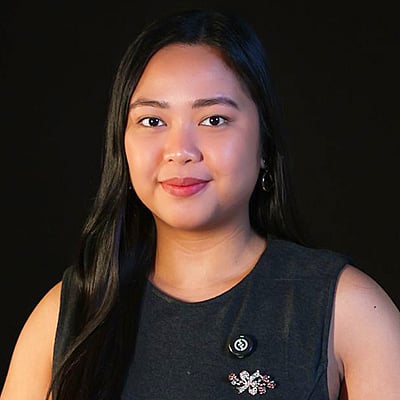
How this UAE teen is saving lives in Africa
He helps children with congenital heart disease access earlier diagnosis, specialist care

Dubai: At 15, while many teenagers were focused on school and friends, Dubai-based student Youssef Ben Mlouka was asking a very different question, why should a child’s chances of receiving life-saving heart treatment depend on their family’s financial means or connections?
A conversation with a doctor has opened his eyes to the uneven access to early diagnosis, specialist care, and treatment for congenital heart disease in Tunisia, his country of origin.
That conversation formed Awledna, a youth-led healthcare initiative that has grown rapidly in less than two years.
Get updated faster and for FREE: Download the Gulf News app now - simply click here.
Today, the initiative has raised more than $110,000, provides about 50 free cardiac screenings every month, and supports around one to two heart surgeries each month for children who might otherwise face major barriers to care.
“I was 15 and decided that my age should not be a reason to wait,” Mlouka told Gulf News.
From an idea to action
Mlouka, now 16, initially believed that having a good idea and the right intentions would be enough to get people involved. He has soon discovered that building trust in healthcare takes time.
“Doctors and hospitals did not know me and thought that I was a kid with good intentions but probably overambitious,” recalled Mlouka.
Rather than trying to convince people with words alone, he has focused on producing tangible results. He has built an extensive educational library on congenital heart disease and worked towards funding the initiative’s first surgery. That first success has become a turning point.
The project has subsequently secured the backing of Taoufik Hospitals Group, one of Tunisia’s largest private hospital operators, helping Awledna build relationships with doctors, hospitals, and other supporters.
“By communicating clearly and showing persistence, I managed to surround myself with the right doctors, public and private hospitals, and sometimes people who simply wanted to contribute their time and expertise.”
Early detection
Mlouka has noted that early detection is important because congenital heart disease can present in different ways.
“Congenital heart disease is complex and includes different conditions. Symptoms are not always uniform and clear, so it often takes a specialist’s eye to even suspect it,” described Mlouka.
Families may sometimes mistake symptoms for less serious conditions and delay seeking medical advice, potentially allowing a child’s condition to become more complicated.
“When detected early, the success rate of surgery is generally very high.”
Building a network around children
Awledna does not operate alone. The initiative has worked with public hospitals and humanitarian organisations, including Médecins du Monde, to help identify families whose children need care.
Doctors and nurses have contributed to awareness efforts, while digital and social media platforms have been used to educate families. Private hospitals have also helped organise early detection days and provide infrastructure for surgeries.
“One of the things I have learned is that meaningful healthcare impact depends on collaboration. No single organisation can do everything alone,” shared Mlouka.
Dubai education
Although Awledna has been focused on Tunisia, Mlouka bared that his upbringing in Dubai has influenced the way he approaches the initiative.
Being raised in the UAE has exposed him to people from different cultures and backgrounds, as well as an environment where ambitious ideas can be developed quickly.
“Growing up in Dubai means you only need to look around you to see what can be built in no time. The UAE is home to me, without taking away my love for my country of origin, Tunisia,” exclaimed Mlouka.
He has also credited his school, North London Collegiate School Dubai, with reinforcing the importance of social responsibility through its three Cs: care, courtesy, and consideration.
“Doing good and giving back have been just as core to my education as anything else. So I think the UAE has given me both sides of the equation, the confidence to think big, but also the responsibility to make what I do meaningful to other people.”
Learning leadership
Running a healthcare initiative while still at school has been a steep learning curve. Mlouka has mentioned that at first, he did not know where to begin and discovered that turning an idea into something that works on the ground is considerably harder than preparing a presentation.
“What I learned most about leadership is that communicating honestly and clearly, without overpromising, is what earns you trust over time,” stated Mlouka.
Moreover, he has learned that asking for help is not a weakness. Recognising his own limitations and finding people with the expertise needed to fill those gaps has allowed him to build a broader team.
For the teenager, measuring results has been equally important. He regularly asks how many families have been reached, how many children have been screened, and how many can receive immediate support.
“Focusing on tangible and measurable results is key to rallying people around you.”
Looking beyond Tunisia
For now, Mlouka’s priority is to make Awledna stronger and more sustainable in Tunisia. But he has also seen potential for the model to expand.
He believes challenges such as late diagnosis and unequal access to specialist care exist in other Arab countries and hopes that, over time, Awledna’s approach can be replicated elsewhere.
Additionally, he has expressed hope that his experience will encourage other young people to take action.
“I hope that my journey with Awledna will inspire other young students to initiate similar initiatives in the Arab world and beyond,” said Mlouka.