Video: How Dubai pushes ahead with 6,000km walkways plan
RTA launches 1st phase of Dubai Walk transforming historic Al Ras district
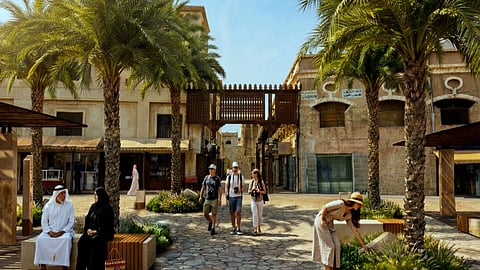
Dubai: Dubai has taken a major step towards its vision of becoming one of the world’s most walkable cities, with the Roads and Transport Authority (RTA) awarding the first contract under its sweeping Dubai Walk Master Plan.
The initiative will deliver more than 6,000 kilometres of walkways across the emirate by 2040.
Al Ras district
The launch project, centred in the historic Al Ras district, signals the start of a long-term transformation aimed at reshaping how residents and visitors move through the city, prioritising walking, cycling and seamless public transport integration.
The Al Ras development, part of Phase I of Dubai Walk, will introduce 12km of pedestrian walkways and 5km of cycling tracks, while carefully preserving the district’s historic identity through context-sensitive urban design.
‘20-minute city
Mattar Al Tayer, Director General and Chairman of the Board of Executive Directors of RTA, said the initiative represents a “step-change” in Dubai’s urban mobility landscape.
He noted that the Pedestrian Master Plan is central to achieving the Dubai Urban Plan 2040 goal of a “20-minute city”, where residents can access over 80 per cent of essential services within a short journey.
“This project goes beyond infrastructure as it enhances quality of life, strengthens connectivity between districts, and integrates cultural and creative elements into everyday mobility,” Al Tayer said.
A city built for walking
The Dubai Walk Master Plan is one of the most ambitious pedestrian infrastructure programmes globally, targeting the development and upgrade of over 6,000km of walkways spanning 160 areas across the emirate.
It also includes 110 pedestrian bridges and underpasses to eliminate barriers between communities, alongside a broader push to increase the share of walking and soft mobility trips from 16 per cent in 2025 to 25 per cent by 2040.
The first phase, running from 2025 to 2027, focuses on high-impact districts such as Al Ras, with subsequent phases expanding the network citywide through to 2040.
Reviving Al Ras
At the heart of Phase I is the Historic Al Ras Walkway, a project that blends mobility with heritage conservation in one of Dubai’s oldest neighbourhoods.
The network will connect key cultural and historical landmarks including Al Ahmadiya School, Sheikh Saeed Al Maktoum House, Al Ras Public Library, Al Fahidi Fort and Al Shindagha Historic District, creating a continuous, walkable heritage route.
Urban design interventions will prioritise simplicity and authenticity, ensuring that upgrades complement the district’s traditional architecture. Plans include wider pavements, shaded pathways, seating areas, landscaped pockets and intuitive wayfinding systems aligned with the area’s historical character.
11 metro stations
A defining feature of the project is its integration with public transport. The Al Ras walkway will connect to 11 metro, bus and marine transport stations, enhancing first- and last-mile connectivity and encouraging greater reliance on public transit.
Across the wider Dubai Walk network, smart mobility features will be embedded into the pedestrian experience. These include digital wayfinding, integrated navigation systems, interactive walkways, and real-time information through smart applications.
Climate-responsive design elements, such as shading structures, misting systems and green corridors, will also be introduced to improve comfort for pedestrians year-round.
Stay updated: Get the latest faster by downloading the Gulf News app now - it's completely free. Click here for Apple or here for Android. You can also find it on the Huawei AppGallery.
Public space activation
Beyond mobility, the project places strong emphasis on culture and placemaking. Ten artistic spaces within Al Ras will be rehabilitated in collaboration with Dubai Culture and Arts Authority, featuring contributions from Emirati and local artists.
Murals, sculptures and public art installations will be complemented by advanced architectural lighting to highlight the district’s heritage, while ongoing cultural programming and seasonal events are expected to activate the spaces and attract visitors.
The initiative also opens opportunities for youth engagement and creative input in shaping future mobility infrastructure, reflecting Dubai’s focus on innovation and community participation.
A shift in urban living
The Dubai Walk programme reflects a broader shift in urban planning, moving away from car-centric design towards human-scale, sustainable cities.
By linking residential areas with commercial hubs, cultural districts and transport networks, the plan aims to create a cohesive urban fabric where walking becomes a practical, attractive and safe option.
It also supports Dubai’s wider goals of sustainability, public health and economic vitality, as enhanced walkability is closely linked to increased retail activity, tourism and community interaction.
Project highlights
Mega vision: 6,000km of walkways across 160 areas by 2040
Phase I launch: Historic Al Ras Walkway project awarded
Walkways: 12km in Al Ras
Cycling tracks: 5km
Connectivity: Linked to 11 metro, bus and marine transport stations
Heritage corridor: Connects major landmarks including Al Fahidi Fort and Al Shindagha
Cultural boost: 10 artistic spaces to be developed with local artists
Infrastructure: 110 pedestrian bridges and underpasses planned citywide
Target: Increase walking and soft mobility share to 25% by 2040