How Dubai Autism Center’s ‘dynamic approach’ is reshaping autism education in the UAE
Shift from static services to adaptive learning environments
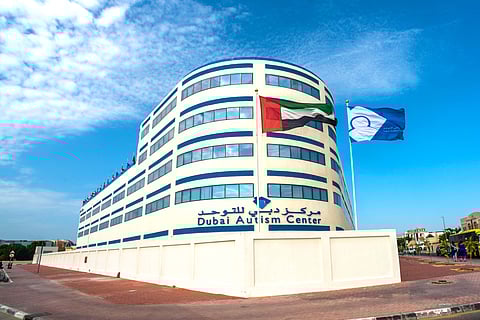
Dubai: The Dubai Autism Center (DAC) has introduced a pioneering “dynamic approach” to education and rehabilitation, becoming the first specialised institution in the Middle East to implement such a model.
The move signals a shift away from conventional support systems towards a more responsive framework designed to adapt to the needs of students with autism.
Get updated faster and for FREE: Download the Gulf News app now - simply click here.
Responsive learning
Traditionally, support for people of determination has focused on ensuring physical accessibility. With the new adopted model, the DAC has expanded this concept into what has been called as “comprehensive adaptation.”
According to Mohammed Al Emadi, director general and board member of DAC, the move is a "strategic commitment" to providing services that meet high global standards.
"We believe that empowering students with autism is not achieved through traditional, static services, but rather through a flexible educational ecosystem that adapts to their shifting needs," said Al Emadi.
He has noted that the approach aligns with efforts to position Dubai as a regional hub for comprehensive rehabilitation of people of determination.
Under the dynamic approach, the learning environment is treated as a “living” system.
"We continuously adjust educational and behavioral plans, adapt classrooms to suit each student’s sensory sensitivities, and provide specialized facilities such as sensory integration rooms, life-skills training programs, and speech therapy sessions, all within educational spaces that encourage learning through interaction and play," explained Al Emadi.
Science-led model
Meanwhile, Dr. Nicholas Orland, chief program officer of DAC, has noted that the model has been grounded in the Applied Behavior Analysis (ABA), an evidence-based approach to supporting individuals with autism.
"This approach integrates advanced ABA methodologies with flexible tools that allow us to design highly individualised interventions for each student. Our team has undergone extensive training to ensure the highest level of implementation fidelity and service quality," stated Orland.
Moreover, he has shared that early outcomes show improvements in communication, independence, and social interaction.
Orland has bared that key features include dynamic sensory regulation rooms, flexible classrooms, and life simulation spaces.
"By providing an environment that changes as their needs evolve, we enhance their self-confidence and enable them to better express their latent abilities."
Expanding reach
Currently, DAC supports 159 children with autism, with 97 enrolled in its integrated school system and 62 receiving specialised clinical services. The new approach is expected to significantly enhance both academic progress and social integration.
By creating environments that respond to each child, the DAC eyes to set a new benchmark for autism care in the region, while supporting the UAE’s wider vision of inclusion and innovation in education.