UAE updates organ transplant law to permit use of animal-derived, manufactured organs
Amendments set strict safety, testing and procedural rules, Dh2 million fines
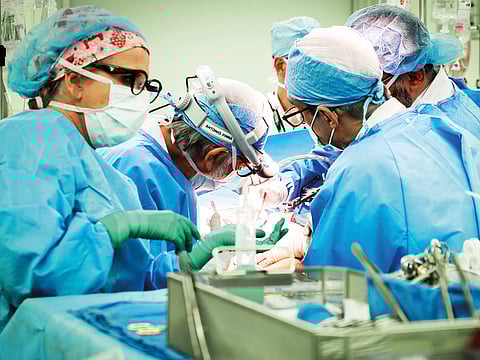
The UAE Government has issued a Federal Decree-Law introducing major amendments to the national legislation governing the donation and transplantation of organs and tissues, expanding its scope to permit the use of animal-derived or manufactured organs under stringent regulatory oversight.
The updated law replaces the title of the legislation to “Concerning the Donation and Transplantation of Organs and Tissues”. It forms part of the UAE’s ongoing efforts to advance its health legislative framework, enhance patient safety, and ensure alignment with the nation’s objectives for modernising healthcare legislation in line with the latest international medical and technical practices. The use of advanced technologies includes 3D bioprinting and tissue engineering.
Stringent procedures
Under the amendments, “non-human organs” are now formally defined to include animal and manufactured organs. Their use in transplants will be permitted only when considered the most appropriate medical option for a patient’s condition.
The decree-law mandates that no animal organ may be removed for transplantation without a licence from the Ministry of Health and Prevention (MoHAP) or the relevant health authority. Health facilities and manufacturing entities involved in producing or handling such organs must also obtain all necessary permits.
Before any transplant, specialist physicians must complete all required clinical and laboratory tests to confirm the organ’s safety, efficacy and compatibility with the patient. Specialists are obligated to clearly inform patients or their legal representatives of all known and potential health implications and secure written consent. Each procedure must also receive approval from a designated committee.
National database
The amendments stipulated establishing a national database at the National Centre to record all non-human organs used in transplantation, including their biological composition, clinical trial results and safety data. All stages of the transplant process must be documented in detail.
The UAE Cabinet has been granted authority to set the controls, procedures and conditions governing the transfer of non-human organs and tissues between health facilities within the country as well as to and from the UAE.
Strict penalties
The revised law introduces tough penalties for violations, with health facilities, manufacturing entities or physicians found breaching the rules facing imprisonment or fines ranging from Dh100,000 to Dh2 million.
The amendments reflect the UAE’s commitment to advancing health legislation that keeps pace with scientific progress in organ manufacturing and biomedical innovation while maintaining the highest standards of patient protection.


