UAE ranks world's safest for walking alone at night, Gallup 2026 report finds
Survey finds equal safety perceptions among men and women across the country
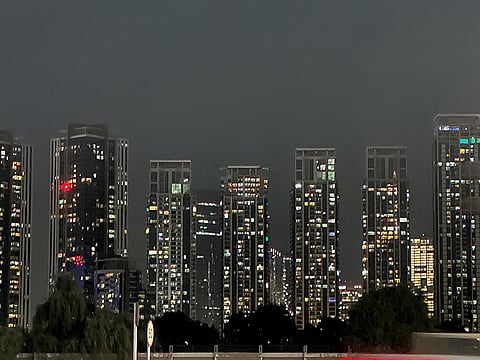
The UAE has reinforced its position among the safest countries in the world, securing first place globally in the personal safety index, according to the Global Safety Report 2026 issued by Gallup. The report revealed that 96% of adults in the UAE feel safe walking alone at night in the areas where they live, placing the country jointly at the top of the global rankings with Singapore and ahead of the vast majority of countries worldwide.
The report, titled Personal Safety in a World of Conflict, noted that the UAE returned to the top global position for the first time since 2020, with the proportion of residents feeling safe rising to 96% in 2025, an increase of six percentage points compared with 2024. This also surpassed the country’s previous record of 95%, registered in 2020.
Get updated faster and for FREE: Download the Gulf News app now - simply click here.
Gallup highlighted that levels of perceived personal safety in the UAE have remained exceptionally high over many years, with the percentage of adults who said they felt safe walking alone at night never falling below 90% in any of the available measurements since 2006. This reflects the sustained level of public confidence in everyday safety across the country.
Citizens and residents
The report’s findings showed that the sense of safety in the UAE is shared across different segments of society, with remarkably similar results among Emirati citizens and expatriate residents, women and men, as well as people across different income groups.
According to the data, 98% of Emirati citizens said they felt safe walking alone at night, compared with 96% of non-citizens. The figure was identical among women and men, with both groups recording 96%.
One of the most notable findings was the significant improvement in perceived safety among people in lower-income households. The proportion of individuals in the lowest household-income bracket who reported feeling safe surged from 84% in 2024 to 95% in 2025, marking an increase of 11 percentage points.
These findings demonstrate, according to the report, that the UAE’s high levels of personal safety extend across different population groups and are not limited to citizens or higher-income residents.
UAE jointly leads global rankings with Singapore
The UAE ranked first globally with a score of 96%, sharing the top position with Singapore, which recorded the same percentage. The report noted, however, that the difference between the two countries was not statistically significant.
The report also highlighted the strong presence of Gulf Cooperation Council (GCC) countries among the world’s safest nations, noting that four GCC members featured in the global top 10 in 2025: the UAE, Saudi Arabia, Kuwait and Bahrain.
Saudi Arabia ranked second globally with 95%, followed by Kuwait with 93% and Bahrain with 92%, underscoring the prominent position of Gulf countries among nations with the highest levels of perceived personal safety worldwide.
The data also showed that the Middle East and North Africa (MENA) region recorded a personal safety rate of 74%, placing it among the world’s highest-performing regions, alongside Western Europe and post-Soviet Eurasia.
Minimal security concerns
The positive indicators identified in the report extended beyond perceptions of personal safety to residents’ views of the challenges facing their country.
According to Gallup, only 1% of adults in the UAE identified crime, violence or public safety as the most important problem facing the country in 2025. Meanwhile, approximately one-third of the population, or 32%, said the country faced no major problems.
These findings reflect the relatively low prominence of crime-related and personal security concerns among residents compared with other challenges that societies may face.
Law and order index
In addition to measuring perceptions of safety when walking alone at night, the report includes a broader indicator known as the Law and Order Index, which assesses several aspects of everyday security and quality of life.
The index is based on four key questions relating to whether people feel safe walking alone at night, whether they have confidence in their local police, and whether they have experienced theft of money or property, or physical assault or robbery during the previous 12 months.
Positive responses to these questions are combined to produce a score for each country ranging from zero to 100, with higher scores indicating greater perceived safety, stronger confidence in law enforcement and lower exposure to crime.
Under this index, the UAE scored 95 out of 100, ranking third globally alongside Singapore, which recorded the same score. Tajikistan topped the ranking with 96 points.
Bahrain ranked fifth globally with 93 points, while Saudi Arabia and Kuwait shared seventh place with 92 points each.
Globally, the average Law and Order Index score stood at 80 points in 2025, down three points from 2024. Scores ranged from 96 in Tajikistan to 55 in both Liberia and Sierra Leone.
Gallup’s methodology
The Global Safety Report 2026 is based on nationally representative public opinion surveys conducted in 140 countries and territories during 2025, covering 143,620 adults aged 15 and above.
The primary personal safety ranking was based on a direct question posed by Gallup to survey participants: “Do you feel safe walking alone at night in the city or area where you live?”
Gallup used the percentage of respondents answering “yes” to determine the perceived level of personal safety in each country, enabling comparisons and the establishment of global rankings.
The Law and Order Index, meanwhile, draws on four dimensions: personal safety, confidence in the police, experience of theft, and experience of physical assault or robbery. Responses are then converted into a final score out of 100 points.


