FIFA World Cup fever leads to sports injuries among UAE residents, doctors warn
As World Cup mania peaks in UAE, doctors flag injuries among young and old, share tips
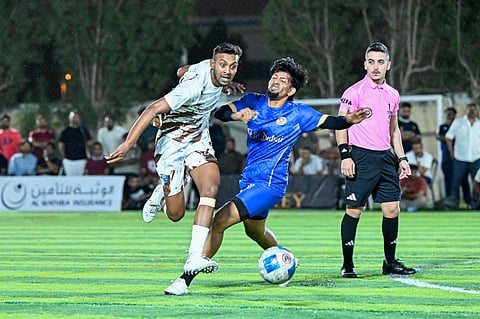
Dubai: With football fever gripping homes, schools, academies and community pitches across the UAE, more children are lacing up like their World Cup heroes and more adults are dusting off boots they haven't worn in years.
But orthopaedic surgeons in the UAE say the surge in enthusiasm is bringing a matching surge in injuries.
With some sports injuries being serious enough to require surgery and months of rehabilitation, two doctors have highlighted common mistakes made on the field and shared tips for preventing injuries.
Not "just a sprain"
Dr Ahmed Dohiem, Consultant Orthopaedic Surgeon at Medcare Orthopaedics and Spine Hospital (MOSH) in Dubai, says one of the most common mistakes he sees is an ankle injury being dismissed too quickly.
Get updated faster and for FREE: Download the Gulf News app now - simply click here.
He recalls treating a teenage football player who twisted his foot during a match and was initially told by a general doctor it was likely a growing or overuse injury and allowed to keep playing. When the pain and swelling worsened, further assessment revealed a stress fracture near the ankle.
In another case he has managed, a teenager written off as having a "simple sprain" turned out, on closer assessment, to have a cartilage injury involving the ankle joint that needed surgery. A third case, initially treated as a sprain and put in a cast, was later found to be a complete rupture of the Achilles tendon. It required surgery, followed by immobilisation and a structured rehabilitation programme before the patient returned to football.
"The key lesson is not to assume every ankle injury is 'just a sprain,' especially in children," Dr Dohiem told Gulf News.
"If a child cannot walk properly, has significant swelling, or the pain isn't improving, they should be assessed early."
Knees under pressure
Beyond ankles, doctors point to the knee as the joint most vulnerable in football, largely because of the sport's constant pivoting, sprinting and sudden changes in direction.
Dr Dohiem said football places considerable stress on the knee, with ligament sprains, meniscus tears, patellofemoral pain and tendon-related overuse injuries among the most common in children and amateur players. Younger athletes are also prone to growth-related conditions such as Osgood-Schlatter disease.
Dr Alameldin Sobhe, Specialist Orthopaedic Surgeon at Burjeel Hospital, Abu Dhabi, lists a similar spread of injuries: ankle sprains, ACL and MCL tears, meniscal tears, hamstring and quadriceps strains, groin injuries, contusions from contact, and fractures of the wrist, clavicle or lower limb after falls.
In children, he flags injuries to growth plate or physeal as needing particular attention because they can affect future bone growth if missed.
The ACL threat
Both specialists single out anterior cruciate ligament (ACL) tears as among the most serious injuries football can cause. Dr Dohiem explains that the ACL stabilises the knee, and a tear can leave it too unstable for sprinting, cutting or sudden direction changes, often requiring surgical reconstruction and six to twelve months of rehabilitation.
Most ACL injuries, he notes, happen without any contact from another player. It typically happens on an awkward landing or a sudden twist with the foot planted.
Dr Sobhe puts the recovery window at nine to 12 months and warns that ACL tears often come with associated damage to the meniscus and cartilage, raising the long-term risk of early knee osteoarthritis. Returning to sport too soon, he said, significantly increases the risk of re-injury.
A pop and the pain that followed
He shared the case of a 16-year-old who twisted his knee while changing direction, with no contact involved. The player heard a "pop", developed immediate swelling and could not continue. An MRI confirmed a complete ACL rupture along with a meniscus tear.
He underwent arthroscopic ACL reconstruction and meniscal repair, followed by structured rehabilitation, and returned to competitive football after ten months with excellent knee stability.
"Non-contact ACL injuries are common and are often preventable with neuromuscular training programmes," Dr Sobhe said.
Common mistakes
Both doctors agree the single biggest mistake is playing through pain. Children and amateur players often dismiss discomfort as a minor sprain and continue, worsening the injury. Returning to football after a long break without rebuilding fitness, strength and flexibility is another frequent misstep, Dr Dohiem said.
Dr Sobhe adds a longer list of preventable risk factors: skipping warm-ups, poor landing and cutting technique, weak core and hip muscles, muscle imbalance between the quadriceps and hamstrings, inadequate fitness, overtraining without recovery, returning to play before full rehabilitation, wrong footwear, poor playing surfaces and ignoring early pain or swelling.
Red flags to watch
Both specialists urge parents and players not to ignore certain warning signs: severe swelling, inability to bear weight, visible deformity, a popping sensation, knee instability or locking, and pain that doesn't ease after a few days.
Head injuries need urgent attention if there is dizziness, vomiting, confusion, a severe headache or loss of consciousness.
Immediate first aid, both doctors say, should follow the RICE approach — rest, ice, compression and elevation — with ice applied for 15 to 20 minutes at a time in the first 48 hours, and no forcing of movement or return to play on the same day.
Prevention pays off
Warm-up matters more than most players realise. Both doctors recommend structured programmes such as FIFA 11+, which research shows can cut ACL injuries by up to half. Strengthening the hamstrings, glutes and core, improving balance and proprioception, practising proper landing technique, staying flexible, wearing appropriate footwear and avoiding overtraining all help reduce risk, alongside adequate hydration, nutrition and sleep.
Coaches and parents matter
Both specialists stress that coaches should build age-appropriate programmes focused on strength, balance and mobility alongside skills, and should watch training loads carefully.
Parents are urged to take complaints of pain seriously rather than dismissing them, ensure good nutrition and rest, and resist pushing children back onto the pitch before rehabilitation is complete.
As Dr Sobhe put it, prevention should get as much attention as treatment: "Protecting young athletes today helps preserve healthy joints for the future."


