Abu Dhabi cultivates more than 302,000 new coral colonies this year
Artificial reefs boost marine life as Abu Dhabi expands coral restoration
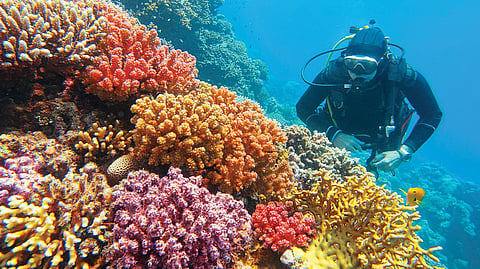
The Environment Agency – Abu Dhabi (EAD) has cultivated more than 302,000 new coral colonies since the start of the year as part of the Abu Dhabi Coral Gardens Project, one of the largest coral reef restoration initiatives in the Middle East.
According to EAD, 302,415 coral colonies have been established during the first half of the year, bringing the total number of coral colonies cultivated since the project’s launch to around 1.8 million.
The initiative is part of the agency’s efforts to protect marine ecosystems, restore coral reefs and strengthen biodiversity across the emirate.
Get updated faster and for FREE: Download the Gulf News app now - simply click here.
EAD said it has also expanded its coral rehabilitation programme by deploying more than 12,700 artificial reef modules. These environmentally friendly structures provide a stable surface for coral growth while creating new habitats for marine life.
The Abu Dhabi Coral Gardens project also supports the emirate’s fisheries sector by providing safe environments for locally farmed fish to grow and reproduce naturally.
The agency said the project aims to produce more than five million kilograms of pelagic and demersal fish annually, helping restore fish stocks, support recreational fishing and strengthen food security. It also contributes to protecting coastlines and islands from the effects of climate change while supporting blue carbon ecosystems.
Running from 2025 to 2030, the initiative plans to install 40,000 artificial reef modules across Abu Dhabi’s coastal and offshore waters, particularly in areas that lack natural coral reefs or seagrass habitats. The coral gardens are expected to cover around 1,200 square kilometres.
According to EAD, studies have shown that the artificial reef modules attract marine life at rates up to three times higher than natural coral reefs, helping improve biodiversity and increase fish populations.
The agency said trials carried out across 30 marine sites using seven different reef designs confirmed the effectiveness of the structures in restoring marine habitats and supporting sustainable fisheries.
The project forms part of the UAE’s wider environmental efforts to protect coral reefs and preserve marine ecosystems for future generations.
Earlier, H.H. Sheikh Hamdan bin Zayed Al Nahyan, Ruler’s Representative in Al Dhafra Region and Chairman of EAD, directed the expansion of the coral rehabilitation programme to cultivate more than four million coral colonies in Abu Dhabi’s waters by 2030.
The expanded project is expected to cover more than 900 hectares, making it the world’s largest coral reef rehabilitation programme.
EAD said it had already achieved its previous target of restoring one million coral colonies across eight sites in the emirate, with rehabilitation projects recording a success rate of more than 95%.


