Navigating Abu Dhabi on foot: The gap between proximity and accessibility
Exploring how accessible Abu Dhabi's neighbourhoods are for pedestrians
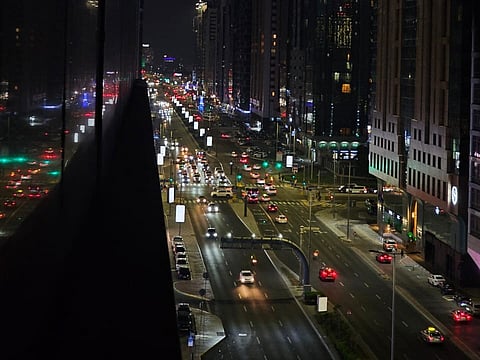
Abu Dhabi- As Abu Dhabi puts greater emphasis on liveable, connected communities, the everyday journey to a supermarket, bus stop or nearby clinic raises a practical question: how easy is it to get around on foot?
For some residents living in areas like Abu Dhabi city, a short trip to the supermarket or the nearest bus stop may seem like a simple part of the day. But the experience of walking around in other parts of Abu Dhabi can depend on more than the distance shown on a map.
"When I lived in Mushrif, transportation was tough. Taxis came rarely and buses were frequent, "said UmmuNusla, a housewife, now living in Al Khalidiya.
The experience can also differ within the same neighbourhood. One residential block may have direct access to shops and public facilities, while another may be separated from them by a busy road or a limited number of crossing points.
"Some places are easy to reach on foot. I usually go to nearby shops or parks when I want to take a walk," Sushma Tamang, a barista, living in Hamdan Street.
When a short journey becomes a longer walk
Many factors determine whether walking is a convenient everyday option or whether a resident feel compelled to use a car or taxi even for a relatively short trip.
According to Mohammed Sahad, Sales Assistant, living in Madinat Zayed, in Abu Dhabi bus is the easiest and cheapest option. "But considering the traffic sometimes walking is also an option," he added.
For people who depend on public transport, the walk to and from a bus stop is particularly important. A bus service may connect a neighbourhood to the rest of the city, but reaching the stop can become a barrier if the pedestrian route is indirect or difficult to navigate.
"I usually travel around Abu Dhabi by bus because it is convenient. Sometimes, the bus stop is a little far from my home, but I can manage," said Tamang.
In Abu Dhabi, where neighbourhoods sit alongside major roads and expanding residential developments, these everyday journeys tell the story of how well local infrastructure connects people to the places they use most.
More than a question of pavements
Walkability for Abu Dhabi city has many parts, including continuous footpaths, safe crossings, accessible surfaces, subways and convenient connections to public transport.
Abu Dhabi's own planning guidance recognises these considerations. The emirate's planning framework highlights pedestrian comfort, safe and clearly marked crossings, shades, subways, accessible surfaces and connections between public spaces.
"If I could improve one thing, I would like to have more pedestrian-friendly paths, shaded walkways, and bus stops closer to residential areas," said Tamang.
Its pedestrian and cycling infrastructure guidance also emphasises direct, safe and comfortable routes for people with different mobility needs.
In June 2026, Abu Dhabi City Municipality announced a project to plant 5,000 trees along walkways and corridors across Abu Dhabi Island and the mainland, following the planting of more than 2,000 trees in 2025. The project aims to expand green cover and provide shade along walking, cycling and running routes.
The initiative highlights the role of pedestrian infrastructure in the city's public realm.
What does the journey look like for different residents?
Residents who walk to bus stops experience the route differently depending on the time of day, the amount of shade available and how easily they can cross surrounding roads.
"In this summertime lack of shades is a problem for walking and other outdoor activities," said Sahad.
Abu Dhabi continues to place greater emphasis on the quality and connectivity of its communities.
In August 2026, the Department of Municipalities and Transport introduced its Livability by Design Framework for major urban development accommodating more than 2,000 people.
The framework includes walkable neighbourhoods, connected mobility, universal accessibility and public spaces among its planning priorities.
In September 2026, the department also launched Phase 2 of the emirate's Liveability Strategy, with a greater focus on the operational quality of community facilities and their impact on residents' daily lives.
The final stretch matters
A neighbourhood can have shops, clinics, parks and public transport nearby without those destinations necessarily being easy to reach on foot.
Understanding the gap between proximity and accessibility requires looking beyond the map and examining the streets people actually use.
Ultimately, the measure of a walkable neighbourhood is not just how close its destinations are, but how easily people can reach them.

