Mohamed bin Zayed Water Initiative funds project to extract water from air
Innovative UAE project aims to extract water from air using advanced technology
Abu Dhabi has emerged as a global pioneer in adopting forward-looking and innovative solutions to address the challenges of water security and climate change. Atmospheric water generation is among the most promising technological and environmental innovations, further strengthening the emirate’s position as a global hub for sustainability and technological advancement.
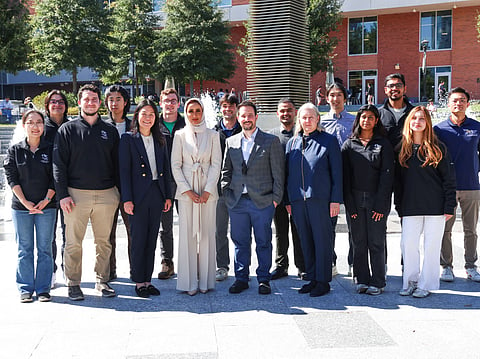
As part of its continued efforts to promote innovative solutions to water security challenges, the Mohamed bin Zayed Water Initiative has announced the signing of an agreement for the first research grant under its Water Catalyst Research Grant Programme. The grant will support a two-year joint research project involving the United Arab Emirates University (UAEU), the Georgia Institute of Technology (Georgia Tech), and the Massachusetts Institute of Technology (MIT), aimed at developing an innovative, energy-efficient technology to extract water directly from the atmosphere.
Get updated faster and for FREE: Download the Gulf News app now - simply click here.
The agreement was signed at Georgia Tech as part of the research collaboration between the three institutions. The partnership will leverage their complementary scientific expertise in the UAE and the United States to accelerate the technology’s development, testing and validation, helping bridge the gap between scientific innovation and practical application.
The project seeks to develop a promising new approach to strengthening sustainable water supplies and expanding access to water in regions facing scarcity.
Accelerating innovation to address water scarcity
Aisha Al Ateeqi, Executive Director of the Mohamed bin Zayed Water Initiative, stressed that water is fundamental to life and the stability of communities, adding that addressing water scarcity requires accelerating innovation and strengthening cooperation among relevant stakeholders.
She noted that as researchers around the world work to develop promising solutions that could significantly transform how water is produced, managed and accessed, the Initiative plays a key role in supporting such innovations and building partnerships that can move them from research and development into practical application, delivering tangible benefits to communities.
“We are pleased to announce the first research grant under the Water Catalyst Research Grant Programme through a partnership bringing together the United Arab Emirates University, Georgia Tech and MIT to develop innovative atmospheric water harvesting technologies,” Al Ateeqi said.
“This collaboration highlights the importance of uniting research efforts and exchanging expertise to develop practical solutions to address the challenges of water scarcity.”
International team of atmospheric water generation experts leads project
The research project is led by Dr Bashir Al-Feel, Assistant Professor at the George W. Woodruff School of Mechanical Engineering at Georgia Tech.
The project brings together scientific expertise from the UAE and the United States in atmospheric water generation, advanced materials and systems design to develop an integrated technology that does not rely on energy-intensive operational processes. The system will enable water to be extracted directly from the atmosphere under varying humidity conditions.
The technology combines salt-infused hydrogel materials, which absorb moisture from the air, with specially engineered mesh membranes designed to harvest water from fog under high-humidity conditions.
By integrating these two mechanisms into a single system, the technology aims to ensure reliable water production across a range of environmental conditions while minimising energy consumption.
Professor Ahmed Ali Al Raisi, Chancellor of the United Arab Emirates University, said the grant reflects the university’s strategic commitment to conducting impactful scientific research that contributes to addressing global challenges.
He noted that water scarcity represents an urgent priority and that achieving meaningful progress in this field requires academic partnerships that bring together complementary expertise, advanced infrastructure and shared ambitions.
Innovative solutions for water harvesting
Matthew McDowell, Associate Dean for Research at the George W. Woodruff School of Mechanical Engineering, said the project, led by Dr Bashir Al-Feel, brings together materials research, technology development and practical applications to deliver innovative water-harvesting solutions.
Dr Bashir Al-Feel, Assistant Professor at Georgia Tech, said ensuring access to clean water for everyone, everywhere and under all conditions requires rethinking existing water extraction technologies, from the materials used to the design of the systems themselves.
He explained that the project focuses on developing water-absorbing materials and devices through an integrated approach.
Professor Evelyn N. Wang, Vice President for Energy and Climate at the Massachusetts Institute of Technology (MIT), highlighted the critical importance of water as one of the world’s most vital resources, emphasising its close connection to the resilience and security of communities, economies and ecosystems.
Accelerating innovation
The collaboration represents the first research project to receive support under the Water Catalyst Research Grant Programme, which adds a new dimension to the Mohamed bin Zayed Water Initiative’s portfolio of programmes.
These include the XPRIZE Water Scarcity competition and the Water for Agriculture Challenge, all designed to accelerate innovation and advance pioneering water technologies.
Applications for the research grant are open to eligible researchers, innovators and institutions from around the world through the Initiative’s official website under the Water Catalyst Research Grant section.
Why atmospheric water generation matters?
The Arab region faces significant water-related challenges, particularly the depletion of groundwater resources and continued reliance on conventional desalination plants, which require substantial amounts of energy and contribute to carbon emissions.
Against this backdrop, Atmospheric Water Generation (AWG) technology is emerging as a promising and potentially sustainable solution, offering several important advantages:
● A renewable and naturally available resource: Harnessing moisture present in the atmosphere and converting it into fresh water suitable for drinking and agricultural use.
● Reducing dependence on conventional water sources: Easing pressure on groundwater reserves and conventional seawater desalination facilities.
● Potential integration with clean energy: Many such projects can be powered by renewable energy sources, particularly solar power, helping reduce their environmental footprint and improve long-term sustainability.
Pioneering projects and practical applications in Abu Dhabi
Abu Dhabi has witnessed the development and introduction of innovative initiatives and projects exploring ways to extract water from atmospheric moisture. Potential applications include:
1. Sustainable agriculture projects: Using atmospheric water to irrigate crops in arid and semi-arid environments, opening new opportunities for desert agriculture without depleting groundwater reserves.
2. Commercial and community-based production facilities: Deploying advanced technologies, potentially powered by solar energy, to condense atmospheric moisture and produce high-quality purified water that meets stringent international health and safety standards.
Strategic and environmental dimensions
These initiatives are aligned with the UAE’s Net Zero by 2050 Strategic Initiative and Abu Dhabi’s broader development vision, offering several important strategic benefits:
● Future water security: Establishing an independent and resilient source of water that can help communities withstand climate-related disruptions.
● Technological innovation: Encouraging international and local companies to advance clean-technology research and development and establish these capabilities in Abu Dhabi.
● Reducing emissions: Promoting environmentally friendly solutions that can minimise harmful environmental impacts and avoid some of the marine ecosystem challenges associated with conventional desalination processes.
Abu Dhabi’s efforts to transform atmospheric moisture into fresh water reflect a forward-looking vision that views environmental challenges as opportunities for innovation. These efforts further reinforce the emirate’s role as a global model for the sustainable management of water resources.