A wearable pilot in Abu Dhabi looks for Multiple Sclerosis before symptoms are obvious
Abu Dhabi pilot explores wearable solutions for early MS detection and treatment
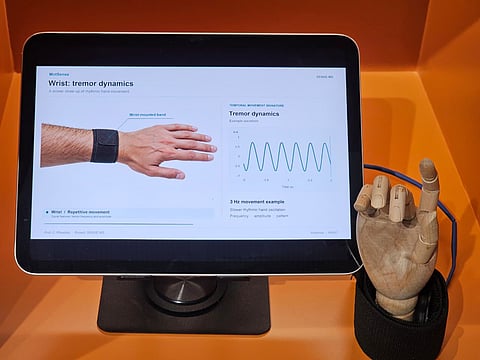
Abu Dhabi: A wearable device being developed at Khalifa University could help doctors spot changes in the way people with multiple sclerosis walk or keep their balance, Dr. Charalampos Pitsalidis, Assistant Professor at Khalifa University spoke at Future Health Summit, held at ADNEC, Abu Dhabi.

“Our aim is to give healthcare professionals a clearer picture of how a person’s movement changes over time, including between appointments,” saidDr. Charalampos Pitsalidis, Assistant Professor at Khalifa University
The device is intended to help users track rehabilitation progress, identify difficulties with exercises and personalise therapy. Pitsalidis said monitoring people with MS was one potential application.
“With clinical validation, the technology could also support rehabilitation at home, making follow-up more convenient and helping people maintain mobility and independence,” he added.
What led to the innovation
“One of my strongest motivations is personal. I have a close relative with multiple sclerosis, and I have seen how it has changed their everyday life,” Pitsalidis added.
That experience prompted Pitsalidis to explore how wearable sensor research could help people living with MS. The potential to track small changes in movement is also relevant to treatment decisions, according to Yasmin Mitwally, Research and Advocacy Manager at The National Multiple Sclerosis Society (NMSS).

The earlier you’re able to sense these very small changes in gait (a person's manner of walking), this can be then translated to your doctor, and your doctor will then be able to enhance or augment your treatment plan accordingly.Yasmin Mitwally, Research and Advocacy Manager at NMSS.
Building UAE-focused research
Beyond its potential use in monitoring movement, the project forms part of NMSS’s wider effort to build understanding of MS in the UAE.
The NGO, under the Ministry of Community Empowerment, funds UAE-focused research aimed at improving the understanding of the condition and care for people living with it.
Mitwally said local studies were needed because data from other populations might not fully reflect the experiences of people living with MS in the UAE.
She said, “The more you’re able to train them with data that’s relevant to the local population, the more likely that you will have more precise outcomes, and the less likely that you’ll have biases.”
Towards remote monitoring
For the Khalifa University team, the focus is on assessing movement.
Dr. Pitsalidis said, “We are developing a flexible wearable device that combines movement sensors with artificial intelligence to help assess walking, joint movement and rehabilitation exercises.”
The sensor is intended to detect subtle changes in gait and balance that may signal worsening symptoms. Its accuracy and effect on patient care have yet to be established.
In the longer term, Pitsalidis hopes affordable, personalised movement monitoring could become part of everyday life, support rehabilitation and allowing clinicians to track progress remotely.
The team also aims to reduce the need for some routine monitoring visits, he said. Developing the technology at Khalifa University could help turn local research into solutions that benefit communities across the UAE.
Whether those aims translate into practical benefits for patients remains to be established through clinical validation. The project is at the pilot stage and is not yet available to the public.
NMSS also says it has funded 15 studies and committed about 15 million through 2027 to address the shortage of data reflecting people with MS in the UAE.
Several other AI-related innovation in the Abu Dhabi includes LAMINATE, an AI- supported MRI analysis project by New York University Abu Dhabi.
The NGO’s research priorities include understanding “the environmental and genetic risk factors of MS” as well as “understanding the epidemiology and characteristics of MS” for the residence, Mitwally said.


