98 days paid maternity leave proposed for UAE public sector
Maternity leave in the UAE differs between the government and private sectors
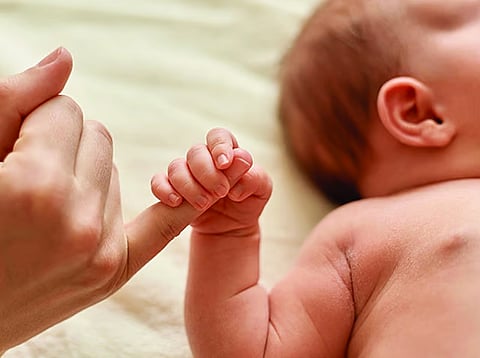
The Federal National Council (FNC) has recommended extending maternity leave in the government sector to a minimum of 98 fully paid days, in line with global best practices. The recommendation was made during discussions on the Family Protection and the Concept of the Family Unit report, prepared by the Committee on Social Affairs, Labour, Population and Human Resources, and attended by Minister of Family Affairs, Sana bint Mohammed Suhail.
The Council’s recommendations emphasized the importance of striking a balance between the participation of Emirati mothers in the labour market and their family responsibilities. This includes issuing a regulatory decision for federal entities to establish a clear national classification of jobs based on their suitability for flexible work and remote work, as well as defining specific timeframes for processing related requests. The recommendations also called for the mandatory implementation of flexible and remote work arrangements in both the public and private sectors, particularly for priority groups such as mothers of children under the age of 12, caregivers of the elderly, and persons of determination.
In the area of protecting families and their members from domestic violence, the Council recommended amending Federal Decree-Law No. 13 of 2024 on Protection from Domestic Violence. Proposed amendments include mandating psychological and behavioural assessments prior to concluding any reconciliation, prohibiting settlement offers in cases of repeated abuse, or when the victim is a child, a person of determination, a pregnant woman, or an elderly person. The recommendations also stressed the need to strengthen family awareness programmes on domestic violence and prevention mechanisms, and to review the Family Protection Guide to ensure it includes an integrated system for post-care support and rehabilitation of domestic violence victims.
Additional recommendations included allowing maternity leave to be divided after childbirth, particularly in cases involving premature infants, and activating Ministerial Resolution No. 19 of 2006 on the establishment of nurseries in institutions that have yet to comply. The Council further called for achieving parity between working women in the private and government sectors through the launch of a national programme offering incentives—such as tax exemptions, priority in government procurement, fee reductions, and institutional recognition—to organisations that adopt family-friendly and supportive workplace policies.
Maternity leave in the UAE
Maternity leave in the UAE differs between the government and private sectors. Government employees are entitled to 90 days of maternity leave on full pay, in addition to two hours of paid breastfeeding breaks per day for six months following childbirth. In the private sector, female employees are granted 60 days of maternity leave (45 days on full pay and 15 days on half pay), and are also entitled to paid breastfeeding breaks of up to two hours per day for six months. Abu Dhabi further supports Emirati mothers working in the private sector to ensure they receive up to 90 days of paid maternity leave.
Federal Government Sector (under the New Human Resources Law):
Leave duration: 90 days on full pay for permanent female employees, starting from the date of delivery.
Breastfeeding hours: Two paid hours per day (as one period or two separate periods) for up to six months from the date of childbirth.
Special cases:
A 60-day leave in the event of a miscarriage after the 24th week of pregnancy.
The employee is entitled to maternity leave even during the probation period, in accordance with the law.
Private Sector (under the Federal Labour Law):
Leave duration: 60 days (45 days on full pay and 15 days on half pay).
Breastfeeding hours: One or two paid breastfeeding breaks per day, not exceeding a total of one hour, for six months from the date of childbirth.
Special cases:
A leave of 30 days on full pay, followed by an additional 30 days without pay, for a female employee who gives birth to a sick child or a child of determination requiring continuous care, subject to a medical report.
Maternity Leave Support for Emirati Women (Abu Dhabi):
The Abu Dhabi Department of Community Development provides supplementary financial support to Emirati women working in the private sector, ensuring they receive paid maternity leave of up to 90 days. The service is implemented by the Abu Dhabi Social Support Authority.