Apple Upgrade launches: Lease iPhones, Macs and iPads from $11.99 a month
Apple replaces its iPhone Upgrade Program with a broader leasing service for devices
Buying an Apple device has followed the same script for years. Pick your model. Pay upfront or spread the cost over monthly instalments. Eventually own it. Then decide, on your own schedule, when it's time to upgrade.
Apple is rewriting that script.
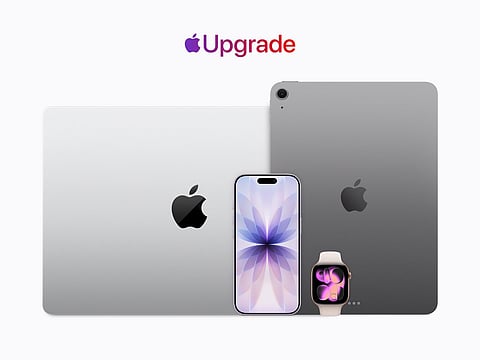
The company has launched Apple Upgrade in the United States, replacing its decade-old iPhone Upgrade Program with something much broader. Instead of financing just an iPhone, customers can now lease an iPhone, iPad, Mac or Apple Watch, then choose what happens when the term ends: upgrade to something newer, buy the device outright or simply return it. The programme is powered by Klarna, the Swedish buy now, pay later company.
Get updated faster and for FREE: Download the Gulf News app now - simply click here.
At first glance, it doesn't look revolutionary. You're still making monthly payments. You're still walking out of an Apple Store with a new device.
What's changed is the assumption underneath it.
Apple is no longer building the experience around ownership. It's building it around access.
That may sound like a subtle distinction, but it's already transformed industries from streaming and software to cars. Now it's arriving in consumer electronics.
The programme covers more than just phones. Customers can lease iPhones and Apple Watches over 12 or 24 months, while Macs and iPads are offered on 24- or 36-month terms. Monthly pricing starts at $17.99 for an iPhone, $11.99 for an Apple Watch, $24.99 for a Mac and $11.99 for an iPad. Existing devices can be traded in to reduce those payments.
One notable difference from the old programme is what isn't included.
AppleCare+ no longer comes bundled into the monthly payment. Customers who want accidental damage coverage or extended service will have to add it separately, giving buyers more flexibility but also another decision to make.
The timing makes sense.
Apple's devices have become steadily more expensive, and analysts expect the next iPhone generation to face additional pricing pressure because of rising manufacturing costs and tariffs. Lowering the upfront cost without lowering the sticker price gives Apple a way to keep premium devices within reach while protecting its margins.
There's another reason this matters.
Apple has spent years turning one-time purchases into recurring relationships. Music became Apple Music. TV became Apple TV+. Storage became iCloud+. Fitness, games and news all shifted to subscriptions. Hardware was always the exception.
Not anymore.
Bloomberg, which first reported details of the initiative before Apple's announcement, described the move as one of the company's biggest changes to hardware sales in years. A leased device is more likely to return to Apple, where it can be refurbished, resold or recycled through the company's existing channels. It also gives Apple a more predictable upgrade cycle instead of waiting for customers to decide when they feel like buying something new.
Klarna plays a central role in making that work. Customers complete a soft credit check before leasing, while Klarna handles the financing behind the scenes. From Apple's perspective, it keeps the retail experience largely unchanged while outsourcing much of the lending infrastructure.
Not every product is eligible. Apple has limited the programme to selected premium devices, leaving out lower-priced models such as the Apple Watch SE, entry-level iPad, iPhone 16 and MacBook Neo. That keeps the focus on products where leasing is likely to have the biggest commercial impact.
Whether the programme saves customers money depends largely on their habits.
If you're the type who buys a new phone every year or two, leasing could make the process simpler and spread the cost more evenly. If you tend to keep a Mac or iPhone for five years or longer, buying outright may still be the cheaper option over time, consumer finance analysts have noted.
Apple isn't replacing traditional ownership. Customers can still pay in full or finance devices through other payment options.
But the direction is becoming clearer.
For years, Apple sold hardware and let customers decide when to come back. Apple Upgrade quietly flips that relationship. The company isn't just selling a device anymore. It's trying to become part of the moment you decide it's time for the next one.


