Samsung unveils pricier Galaxy Z Fold8 phones and new Galaxy Watch9 lineup
New foldables and AI-powered smartwatches debut as rising chip costs push up prices
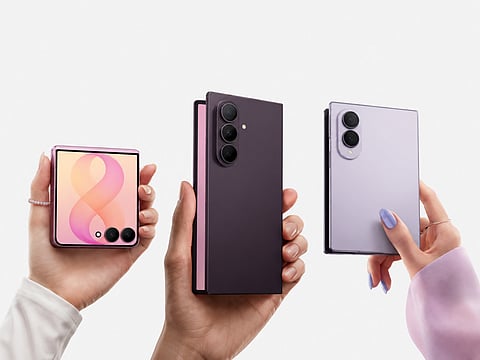
Samsung has spent years trying to show consumers that foldable phones are more than just a futuristic novelty. Now, with artificial intelligence changing the smartphone industry, the company is betting that people will pay even higher prices for these devices.
At its Galaxy Unpacked event in London on Wednesday, Samsung revealed its newest devices, including the Galaxy Z Fold8, Galaxy Z Fold8 Ultra, and Galaxy Z Flip8. The company also launched two new smartwatches: the Galaxy Watch9 and Galaxy Watch Ultra2, expanding its AI-powered ecosystem beyond phones. These new products are thinner, lighter, and more closely connected with Google's Gemini AI. However, they come with higher prices as memory chip costs keep rising and make premium electronics more expensive.
Get updated faster and for FREE: Download the Gulf News app now - simply click here.
The main device is the Galaxy Z Fold8, a redesigned book-style foldable that is only 4.5mm thick when open. This time, Samsung chose a wider, passport-shaped design with a 7.6-inch inner screen in a 4:3 aspect ratio. This gives it a tablet-like experience for multitasking, reading, and watching videos. The starting price is Dh7,199.
The new Galaxy Z Fold8 Ultra is Samsung's most advanced foldable so far. It is 4.1mm thick and weighs 215g, making it the top model in the foldable lineup with better cameras, a bigger battery, and improved AI features. Prices start at Dh7,999. The smaller Galaxy Z Flip8, designed for people who want a compact phone for photos and social media, starts at Dh4,699.
AI is changing how smartphones are priced and sold
Samsung says much of the price increase is due to rising memory chip costs, which are a result of the AI boom.
High-bandwidth memory and advanced storage chips are now more valuable as tech companies rush to build AI systems. These parts are also used in high-end smartphones, which drives up manufacturing costs. Apple mentioned the same reasons when it raised prices on some Mac and iPad models earlier this year.
All three new foldable phones focus on AI, coming with Google's Gemini assistant and software features designed to use the larger screens for multitasking, handling documents, and creating content.
New Galaxy Watches expand Samsung's AI ecosystem
Samsung updated its wearable lineup with the Galaxy Watch9 and Galaxy Watch Ultra2, presenting both as AI-powered health and fitness companions that work well with the new foldable phones. The Galaxy Watch9 starts at Dh1,449, and the Galaxy Watch Ultra2 starts at Dh2,669, putting Samsung in the premium smartwatch market alongside Apple's latest models.
The Galaxy Watch9 is designed for everyday users, with a sharper display, lighter build, and better health tracking. The Galaxy Watch Ultra2 is for outdoor fans and athletes, offering a bigger battery, stronger build, and more advanced workout and recovery tools. Samsung says both watches add new AI-powered wellness features, such as more personalized heart, sleep, and fitness insights.
These watches are part of Samsung's larger plan to create a connected Galaxy ecosystem. In this system, phones, wearables, and AI services share information to give users more personalized health insights, productivity tools, and helpful assistance.
Watching for Apple's next move
Samsung's launch comes as rumors keep growing about Apple's long-awaited foldable iPhone, which analysts now think could be released later this year.
Samsung started the modern foldable smartphone trend with the first Galaxy Fold in 2019 and has stayed the market leader since then. However, analysts think that when Apple finally enters the market, it could attract many new customers instead of just splitting the current ones.
"Apple is about to do for foldables what it has done for every category it has entered, which is legitimise it for the mainstream," IDC analyst Francisco Jeronimo told AFP.
This expectation is one reason Samsung keeps expanding its product lineup. Instead of just one high-end foldable, it now offers three different models for different users, from people who want a small phone for daily life to professionals who need a tablet-like device for work.
Foldable phones are still a small but growing market
Foldable smartphones still make up only a small part of global phone sales, but analysts expect this category to grow faster than the rest of the smartphone market.
IDC predicts that foldable phone shipments will grow by about 20% in 2026, even though the overall smartphone market may shrink by around 14%. Samsung hopes its wider range of foldables will help it capture more of this growth, even with higher prices.
For Samsung, the challenge is no longer to prove that foldable phones work. Now, it must convince people that the thinner designs, bigger screens, and AI features are worth prices that can reach or even go over $2,000, especially before Apple joins the competition.


